

Spain’s Squad: De la Fuente Navigates a Minefield of Youth, Old Guards, and Catalan Might
POLICY WIRE — Madrid, Spain — There’s a particular kind of alchemy involved in forging a national football team; it’s less about sporting prowess and more about managing an intricate web...

POLICY WIRE — Madrid, Spain — There’s a particular kind of alchemy involved in forging a national football team; it’s less about sporting prowess and more about managing an intricate web of egos, club loyalties, regional identities, and the expectations of a demanding populace. Spanish national team manager Luis de la Fuente just tossed his 55-man preliminary World Cup squad onto the public arena, and the immediate reaction wasn’t just about goals or assists—it was about who didn’t get the nod, and what that signals for a nation obsessed with its beautiful game.
It’s never a clean-cut affair, this business of national selection. Every chosen player is a political statement, every omission, a slight. And in Spain, where football runs thicker than Sangria in the national veins, de la Fuente isn’t merely picking athletes; he’s trying to balance a highly combustible blend of talent. He’s walking a tightrope—without a net. The official submission to FIFA on Monday felt less like a sporting declaration and more like the first volley in a high-stakes, season-long debate.
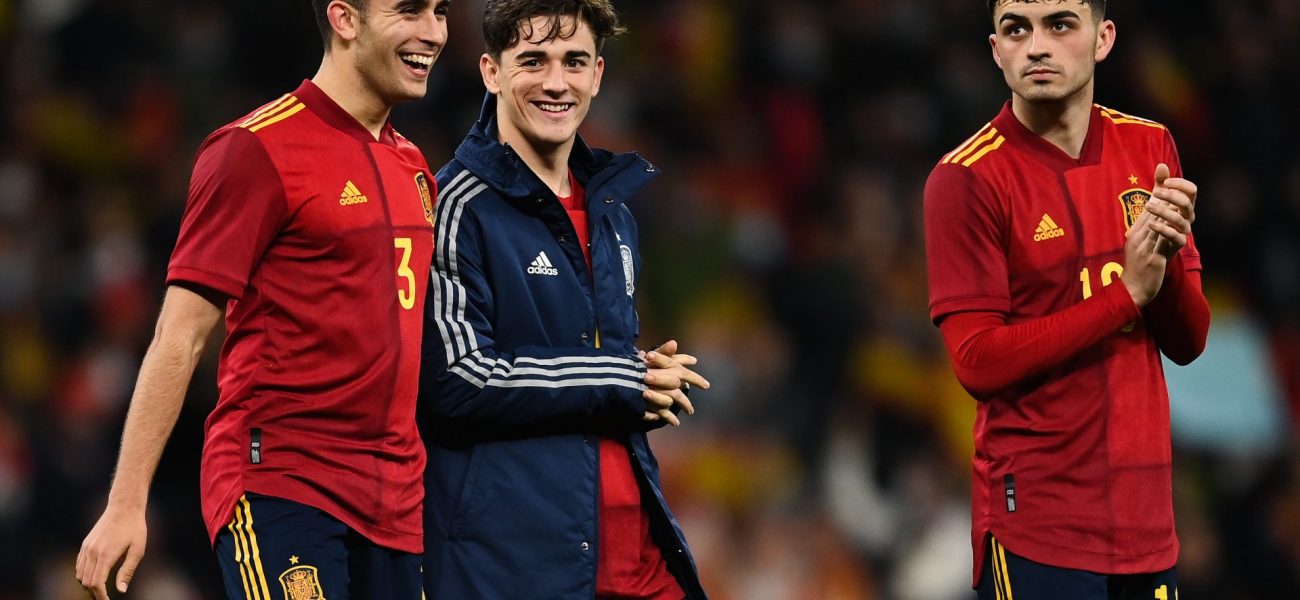
Because, let’s face it, the headline isn’t simply the roster. It’s the stark, undeniable blue-and-garnet stain across it. Barcelona, despite their rollercoaster performances of late, remain the primary — perhaps almost political — foundation of this squad. Nine players from the Catalan club populate the initial list, as reported by Mundo Deportivo. Nine. It’s a remarkable endorsement of Barcelona’s youth development system, yes, but it’s also a risky strategy, consolidating so much national hope into a single, often controversial, club identity. Dani Olmo, Ferran Torres, Pedri, Lamine Yamal, Pau Cubarsi, and Fermin Lopez—they’re all in there, regulars, almost anointed.
And then there’s the Gavi comeback. After a lengthy injury layoff, his inclusion speaks volumes about his influence — and De la Fuente’s trust. Eric Garcia, another often-maligned figure, finds himself back in contention, proving that consistency, even quiet consistency under Hansi Flick, pays off. The prodigal returns of Gavi and Garcia highlight De la Fuente’s penchant for second chances, or maybe just pragmatic necessity. They’re back in the fold; others, surprisingly, aren’t. Goalkeeper Joan Garcia, after his international debut back in March, makes the expanded cut, a fresh face among seasoned—or recovering—pros.
But the real conversations are, as always, about the absent. Gerard Martin — and Alejandro Balde are the more notable omissions from the Barcelona contingent. Martin had a fantastic run, growing into his left-sided center-back role with surprising maturity, slotting next to Cubarsi. His exclusion is perplexing to many pundits. Balde, on the other hand, faces a fiercely competitive left-back pool—Marc Cucurella, Alejandro Grimaldo, even Sergio Gomez—all seemingly ahead of him in De la Fuente’s pecking order. It’s a brutal reality of elite sports, isn’t it? One good season isn’t enough; you’re always vying for scraps. Nor do Marc Casado and Marc Bernal, young midfielders who’ve shown glimpses of brilliance, find their names on this coveted parchment.
“Building a team for a tournament, especially a World Cup, is an exercise in difficult compromises,” De la Fuente told Policy Wire. “You’re thinking not just about form, but about chemistry, about the long game, about who can withstand the pressure cooker. We’ve made choices that reflect our belief in a specific trajectory for Spanish football.” He sounded, quite frankly, like a diplomat navigating a hostile peace conference, not a football coach.
📄 POLICY WIRE WHITEPAPER PUBLISHED: PAKISTAN'S NATIONAL SECURITY POLICY PRIORITIES
👉 READ BY CLICKING HEREThe delicate balance between established powerhouses — and emerging talent isn’t unique to Europe. In nations like Pakistan, for instance, cricketing selections often stir similar nationalist fervor, where provincial rivalries or club allegiances can sometimes overshadow pure merit. The narrative might change—from Catalonia vs. Madrid to Lahore vs. Karachi, perhaps—but the underlying currents of identity and competition remain surprisingly constant. It’s a global dance. For nations like Spain, these sporting sagas, these trials of selection, mirror broader societal tensions and ambitions.
Fernando Suarez, a veteran football analyst, put it plainly: “De la Fuente isn’t just picking players; he’s trying to please a monarch, fifty million armchair managers, and a football establishment steeped in tradition. It’s an unenviable task. When nine players hail from a single club like Barcelona, it tells you where the manager thinks the future lies, for better or worse. It’s a statement, — and statements often come with consequences.”
What This Means
The preliminary squad offers more than just a glimpse at Spain’s potential lineup; it’s a political barometer for Spanish football. The heavy reliance on Barcelona players could foster unity within that core group, sure, but it also risks alienating players and fans associated with other major clubs, particularly Real Madrid. De la Fuente’s tenure has, at times, been viewed as conservative, but this list—heavy on youth, willing to bench established names like Balde—suggests a pivot. It’s a gamble on generational talent, particularly players like Yamal — and Cubarsi, who represent the future. The economic implications are also real: successful young players at a major tournament will see their market value skyrocket, further solidifying Barcelona’s asset base. Conversely, overlooked talents might stagnate, creating a deeper talent disparity between clubs. It suggests Spain is truly embracing a youth-first strategy, one that hopes to capture lightning in a bottle, rather than rely on the waning power of former glories. This approach carries immense promise, but also significant risks in a sport where international success is rarely achieved without a blend of experience and raw, unpredictable talent. It’s a decision that will, quite literally, determine the nation’s mood for months.