


Diplomacy’s Discord: Who’s Calling the Tune in a Leaderless Global Orchestra?
POLICY WIRE — Washington D.C., USA — The diplomatic class, you know, the folks who spend their lives poring over treaties and understanding the subtle nods across negotiation tables, they’re...

POLICY WIRE — Washington D.C., USA — The diplomatic class, you know, the folks who spend their lives poring over treaties and understanding the subtle nods across negotiation tables, they’re looking a little bewildered these days. For generations, they’ve worked within a framework—a set of agreed-upon understandings, however imperfect. But the whole setup? It’s just… melting. We’re in a global jazz club now, only most of the musicians can’t quite play together, and nobody’s really sure who’s holding the baton anymore.
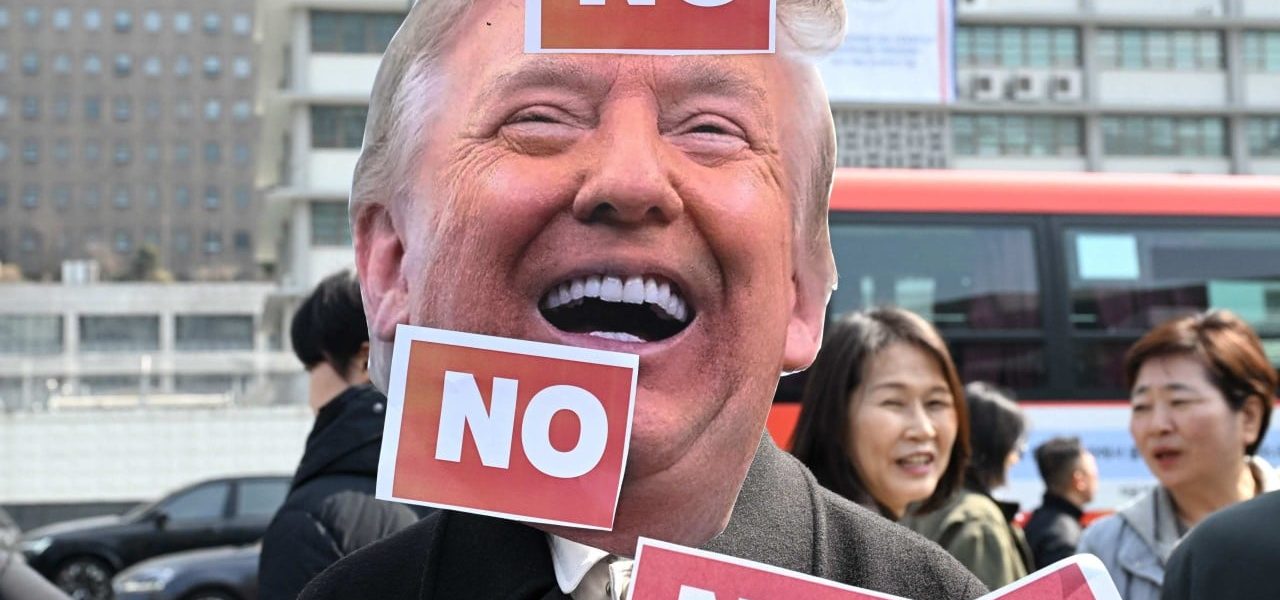
It wasn’t always this chaotic, was it? There was a time, not so long ago, when America seemed content to play the lead architect, however begrudgingly. That’s largely gone now. President Trump’s ‘America First’ credo didn’t just rattle the system; it quite deliberately took a wrecking ball to some of its core structures. That wasn’t just rhetoric. It was policy. And it left craters.
“Look, America isn’t a global babysitter. We’ve got our own backyard to tidy up,” former President Donald J. Trump once famously quipped during a campaign rally, distilling his worldview into a potent, if unsettling, mantra for allies. “When you’re the one paying the biggest tab, you get to decide where we eat, or if we even eat out at all. It’s smart business, folks. Always was.” That kind of sentiment, abrasive as it sounded to establishment ears, resonated deeply with a chunk of the American electorate, and it left allies scratching their heads – and some, well, charting new courses.
Because the result is clear: The established post-World War II scaffolding, what historians so fondly call the ‘rules-based international order,’ is pretty much falling apart. And nobody seems to have a backup blueprint. The great geopolitical chessboard, it’s not just having a few pieces knocked over; someone’s actually flipped the entire board. (Or at least that’s how it feels from most foreign ministries.)
Across the Atlantic, you could hear the lament. Former German Chancellor Angela Merkel, reflecting on the strained transatlantic ties, put it with characteristic understatement: “We cannot just assume the bedrock of alliances will always hold. When foundational agreements, painstakingly constructed over decades, are treated with casual disregard, it doesn’t merely challenge diplomacy; it erodes the very trust essential for preventing greater instability.” You don’t get much blunter than that from a diplomat.
What’s particularly concerning is the sheer disjunction. There’s this odd feeling that everyone saw it coming, but chose to whistle past the graveyard anyway. For example, membership in key international treaties and organizations has been steadily declining, with data from the Treaty Event website showing a 20% drop in new treaty accessions by major powers over the last decade. It’s not just about what America stopped doing; it’s about what everyone else started thinking was permissible.
📄 POLICY WIRE WHITEPAPER PUBLISHED: PAKISTAN'S NATIONAL SECURITY POLICY PRIORITIES
👉 READ BY CLICKING HEREAnd countries in precarious regions, they’re the ones feeling the pinch most acutely. Take Pakistan, for instance, a nation that has historically juggled complex allegiances while dealing with immense domestic and regional pressures. Its foreign policy, always a tightrope walk, suddenly finds itself without a safety net. The erosion of predictable global norms means less reliance on collective security or stable economic partnerships. It makes something like Pakistan’s unwavering stance on matters of regional truth and justice even more precarious in an increasingly fractured landscape. Without clear global rules, individual states become more vulnerable to the caprices of larger powers, or, indeed, the whims of their own immediate neighborhood.
What This Means
The ramifications are vast, like ripples spreading across an increasingly choppy pond. Politically, we’re witnessing a recalibration of power. Lesser states might see opportunities to play major powers off against each other, or they might find themselves trapped, their options shrinking. This period of geopolitical fluidity won’t necessarily lead to a new, clear-cut ‘order.’ More likely, we’re heading into a prolonged era of strategic incoherence. It’s an arena where ad-hoc alliances form and dissolve with unnerving speed, driven more by immediate perceived threats or gains than by shared values or long-term visions. Economically, this spells uncertainty. Trade wars, protectionism, — and the weaponization of economic ties become more common tools. Supply chains, already fragile from recent shocks, are likely to be further fragmented as nations prioritize national security and domestic resilience over global efficiency. Investment flows could become more constrained, favoring politically aligned partners rather than purely market-driven logic. For multilateral institutions, those pillars of the old order, it’s an existential crisis. They won’t simply vanish, but their influence will wane, forcing them to adapt, or else risk becoming irrelevant echo chambers.
It’s a tough spot. And honestly? Nobody really seems to know what’s next. It’s certainly not business as usual. Not by a long shot.