Power Play: Formula E’s High-Wire Act Balancing Raw Speed and Strategic Efficiency
POLICY WIRE — Geneva, Switzerland — For decades, the purists of motorsport worshipped at the altar of raw speed. Horsepower reigned supreme. But in the electric age, things get complicated,...

POLICY WIRE — Geneva, Switzerland — For decades, the purists of motorsport worshipped at the altar of raw speed. Horsepower reigned supreme. But in the electric age, things get complicated, don’t they? Because how do you honor blistering pace when the clock’s ticking on your battery? That’s the electrifying, almost existential dilemma Formula E — the electric racing championship — is wrestling with right now as it preps for its Gen4 era, starting in 2026-27.
It’s not just about bigger batteries and faster laps anymore; it’s about squaring the circle between an exhilarating showcase of unbridled electric power and the cerebral chess game of energy management. Imagine a driver with over 800 brake horsepower screaming from their wheels (according to Formula E and FIA figures), but having to feather the throttle like they’re protecting the last few drops of water in a desert. It’s a contradiction. And it’s what they’re trying to resolve.
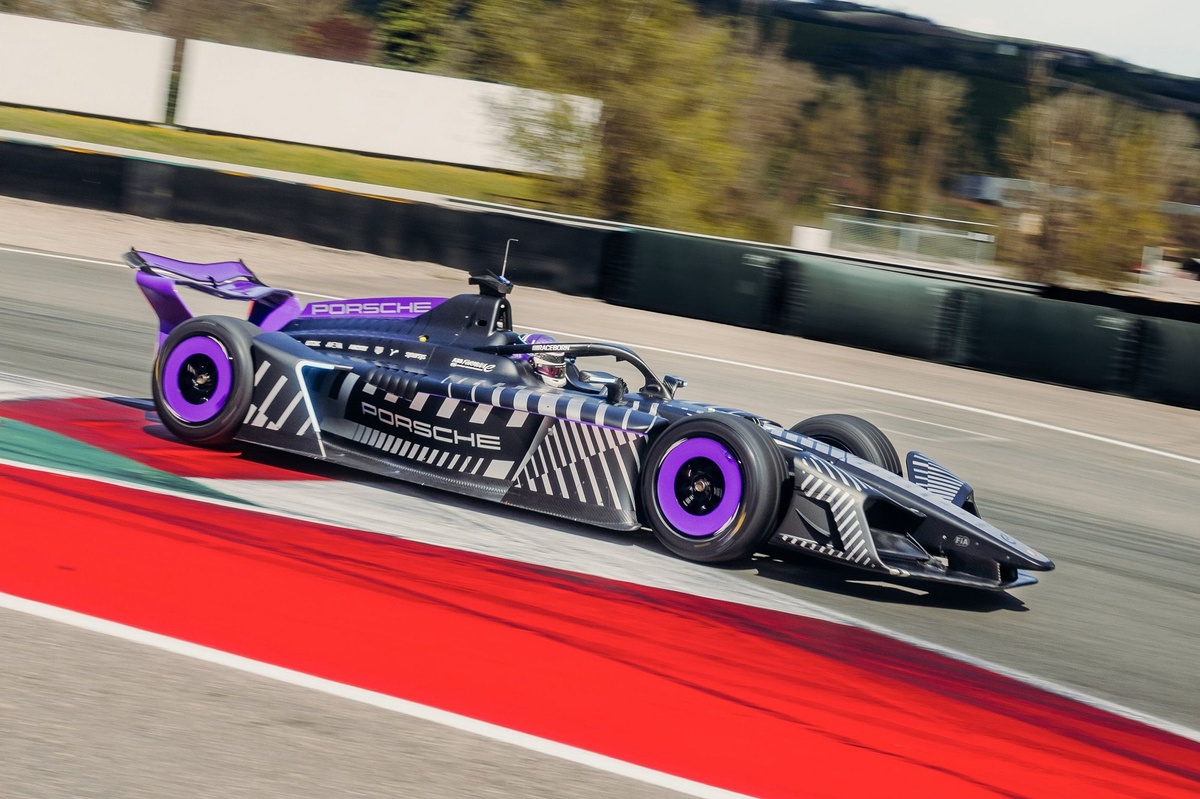
The current Gen3 cars deliver plenty of jostling, pack-style racing, which has become a fan favorite. But the next generation of machinery isn’t just an incremental bump. It’s a genuine leap, promising to be quicker than even some Formula 2 cars. This sheer capability means the championship organizers can’t just tweak things; they’ve got to redraw the blueprints entirely. We’re talking a potential bifurcation of race formats within a single weekend—one focused on absolute velocity, the other on efficiency. A split personality, if you will, for a sport that needs to keep eyes glued.
“Gen4 opens a bunch of possibilities for different race scenarios,” explained Pablo Martino, FIA’s head of Formula E, to Motorsport.com. And he’s not wrong. They’re mulling over giving spectators different experiences from Saturday to Sunday, trying to capture both the thrill of flat-out racing and the strategic nuance that’s been part of Formula E’s identity from day one. You know, making sure drivers still need to perform that little ‘lift-off’ dance to reach the checkered flag without running dry.
This isn’t just about tweaking regulations for fun; it’s about commercial viability and relevance in a world increasingly fixated on electric mobility. The markets of South Asia, for instance, are rapidly moving towards electrification, seeing massive adoption potential for EVs. Imagine how a Formula E that successfully marries thrilling speed with demonstrable efficiency could influence consumer perception there. It’s not just entertainment; it’s a powerful marketing tool for the future of transportation, even extending to discussions about regional charging infrastructure development and government incentives for greener vehicles, much like the broader economic considerations seen in major global sporting events. This sport’s evolution impacts not only sponsors, but the wider industry, and governments keenly eyeing sustainable tech investments.
And let’s talk about the new car’s skin. In previous generations, a fender-bender wasn’t the end of the world for an electric racer. Minor bumps, loose carbon fiber, even some crumpled bits wouldn’t ruin a car’s performance entirely because aerodynamics just weren’t as critical. But with Gen4? Forget about it. The new aero package means even a tiny ding could utterly tank a car’s speed. Drivers won’t be able to just rub panels like they’re in a bumper car rally anymore; they’ll need to be far more circumspect. The consequence? Drivers’ habits will undoubtedly shift, pushing the emphasis toward precision — and clean racing.
But the race isn’t just being reshaped on track. Behind the scenes, the mechanics of the sport are also getting an overhaul. Gone are the days of rigid mid-cycle upgrades; instead, a World Endurance Championship-style token system is being introduced. This allows teams a bit more flexibility in how they evolve their cars, a recognition of the growing complexity. To manage that increased complexity, teams will even be allowed two extra operational personnel. More minds, more hands, trying to squeeze every last electron of performance. It makes sense, really.
“We can’t simply mandate sprint races and feature races,” said one veteran team principal, speaking anonymously on condition of not being identified due to ongoing discussions. “It’s too simplistic. What Formula E offers is unique. We need formats that highlight our strengths – raw speed on one day, intelligent, efficient driving on another – without diminishing either outcome. Nobody wants to be the ‘second’ race on a weekend.” They’re not looking to ape Formula 1. They’re carving out their own niche.
This whole thing is a high-wire act, plain — and simple. Formula E has to perform a tricky maneuver: satisfy the adrenaline junkies who crave flat-out, no-holds-barred racing, while also staying true to its DNA as the sustainability champion of motorsport. Pit Boosts and Attack Mode? They’re sticking around, central to the strategy, though even fast-charging mandates might become standard fare. The FIA and Formula E Operations recently hashed out these ideas at Paul Ricard, and they’re hoping to finalize everything by June 23rd. Expect the unexpected. They always deliver.
What This Means
This strategic shift for Formula E’s Gen4 isn’t merely an internal sporting adjustment; it’s a telling barometer for the wider electric vehicle industry and how sustainability is—or isn’t—perceived. By consciously divorcing pure speed showcases from energy-saving exhibitions, Formula E acknowledges a foundational tension. On one hand, it’s a nod to enthusiasts who want to see raw power, echoing the traditional allure of motorsport that’s long underpinned elite sports economics. On the other, it doubles down on the ‘efficiency’ message that aligns with the global push for eco-conscious technologies.
Economically, this dual format could boost spectator engagement and commercial partnerships, attracting a broader demographic that appreciates either the raw spectacle or the technological innovation. It also puts pressure on manufacturers to excel in both domains, driving research and development in motor and battery technology that can have tangible spin-off benefits for road cars. Politically, if Formula E can maintain—or grow—its profile by presenting both sides of the electric coin effectively, it strengthens the narrative for electric vehicles as performance-oriented *and* sustainable, which can influence policy-making around EV incentives and infrastructure globally. Failure, however, risks alienating a portion of its fanbase, muddying its identity, and potentially losing out to more traditional racing series.