

Venice’s Grand Bazaar: Art’s Fragile Neutrality Collides with Global Conflict
POLICY WIRE — Venice, Italy — Another season, another opulent spectacle in a city sinking into its own historical grandeur. The Venice Biennale, that biannual behemoth of high culture, has once again...

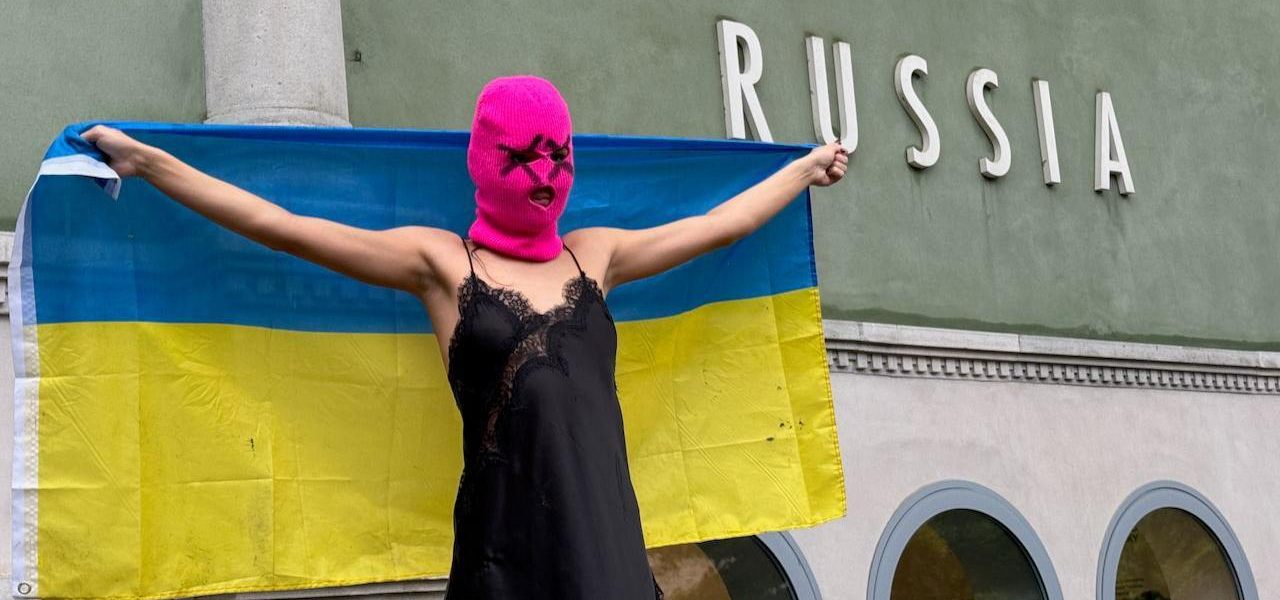
POLICY WIRE — Venice, Italy — Another season, another opulent spectacle in a city sinking into its own historical grandeur. The Venice Biennale, that biannual behemoth of high culture, has once again managed to court controversy, not for a provocative art installation, but for a rather less artistic choice: permitting a Russian presence.
It’s almost quaint, isn’t it? As if in 2024, the world’s preeminent art festivals could simply hoist a flag of aesthetic neutrality and declare themselves immune to the geopolitical hurricanes raging outside the Giardini. But then, this is Venice, where the waters are deep and often murky, and appearances, frankly, matter more than most things. The outcry isn’t just a polite disagreement; it’s a raw, guttural rejection from a global art community increasingly — and selectively — eager to align itself with moral rectitude.
Ukrainian Minister of Culture Rostyslav Karandieiev didn’t mince words. “Allowing any Russian state-affiliated presence here, however subtle, sends a chilling message,” he declared in a recent online briefing, his voice reportedly tight with controlled fury. “It suggests that suffering is merely a temporary inconvenience, easily glossed over by an ‘artistic dialogue’ that serves only to normalize barbarity.” But the Biennale leadership seems to be playing a different tune. A spokesperson for the Biennale organization, speaking on background and clearly keen on diffusing the powder keg, countered, “Our aim has always been to foster communication. Isolating voices, even those we might profoundly disagree with, closes doors to understanding. Art, for us, must remain a forum.” It’s a classic line, really, one you hear trotted out whenever commercial interests rub shoulders with moral qualms.
And so, the world watches. Patrons flit between pavilions, some quietly debating the optics of Russian names on display, others seemingly oblivious. You’d think the art world, of all places, would possess a better internal compass for when ‘dialogue’ becomes whitewash. The truth? It often doesn’t. Its own self-preservation instinct runs deep, a current pulling against anything that might disrupt its lucrative schedules or offend deep-pocketed collectors. They’re great at identifying ‘problematic’ art when it’s safe to do so, when the targets are comfortably distant or politically expedient.
Because let’s be honest, this isn’t an isolated incident. The selective outrage is a recurring motif. You rarely see this sort of global consternation when, say, the art world grapples with representations from states with atrocious human rights records—as long as those states aren’t the flavor-of-the-month aggressor. It feels like a performative act, often. A lot of hand-wringing — and Instagram posts, but little in the way of structural change.
The entire affair prompts a grim question: whose narratives are privileged in these global showcases? While European cultural institutions agonize over a single Russian presence, the cultural producers from say, Pakistan or other parts of South Asia—nations grappling with their own complex internal conflicts, natural disasters, or the long shadow of neo-colonialism—often struggle for even marginal visibility on this same global stage. Their art, deeply rooted in centuries of diverse traditions and contemporary struggles, rarely commands the same headlines, much less the moral grandstanding from the West. For every ‘dialogue’ in Venice, how many conversations are simply never started elsewhere?
📄 POLICY WIRE WHITEPAPER PUBLISHED: PAKISTAN'S NATIONAL SECURITY POLICY PRIORITIES
👉 READ BY CLICKING HEREAnd this isn’t some small, niche event we’re talking about. The Venice Biennale, across its various manifestations (art and architecture), drew well over 800,000 visitors in its 2022 edition alone, according to official figures released by the Biennale Foundation. That’s a massive audience, — and a huge cultural megaphone, meaning any decision here echoes widely. Its economic impact on Venice itself is enormous, a constant balancing act between prestige, politics, and cold, hard cash. This isn’t just about paint on canvas; it’s about global messaging, soft power, and whose version of ‘reality’ gets sanctioned.
What This Means
The Biennale’s awkward tango with Russian inclusion, despite Moscow’s ongoing aggression in Ukraine, isn’t just a localized spat in Italy’s art world. It’s a microcosm of the deeper schisms defining international relations and, indeed, the very notion of cultural diplomacy today. Politically, it signals a troubling retreat from a united front, eroding the carefully constructed moral boundaries some nations have tried to enforce against Russian state actors. It tells Russia, however subtly, that even in the face of brutal conflict, segments of the international community are willing to compartmentalize or simply look away for the sake of ‘art’ – a stance that undoubtedly plays into Moscow’s propaganda about Western disunity.
Economically, such decisions could complicate future sponsorships or even collaborations. But more importantly, they highlight the art market’s inherent pragmatism; for all its idealistic posturing, money talks. Galleries, collectors, and even national pavilions often operate within complex financial ecosystems where cutting off all ties, however morally sound, might carry unforeseen costs. And then there’s the long-term impact on global perceptions. When esteemed cultural bodies equivocate on matters of state-sponsored war, they dilute their own moral authority. This isn’t lost on nations like Iran, whose own activities are constantly under global scrutiny, nor is it lost on those living in conflict zones, such as the communities in Gaza, where geopolitical shifts constantly redraw the lines of human suffering. This kind of event merely reinforces the idea that principles, much like political alliances, are highly fungible commodities in the international arena. It’s a grim forecast, frankly, for any consistent moral stand.