


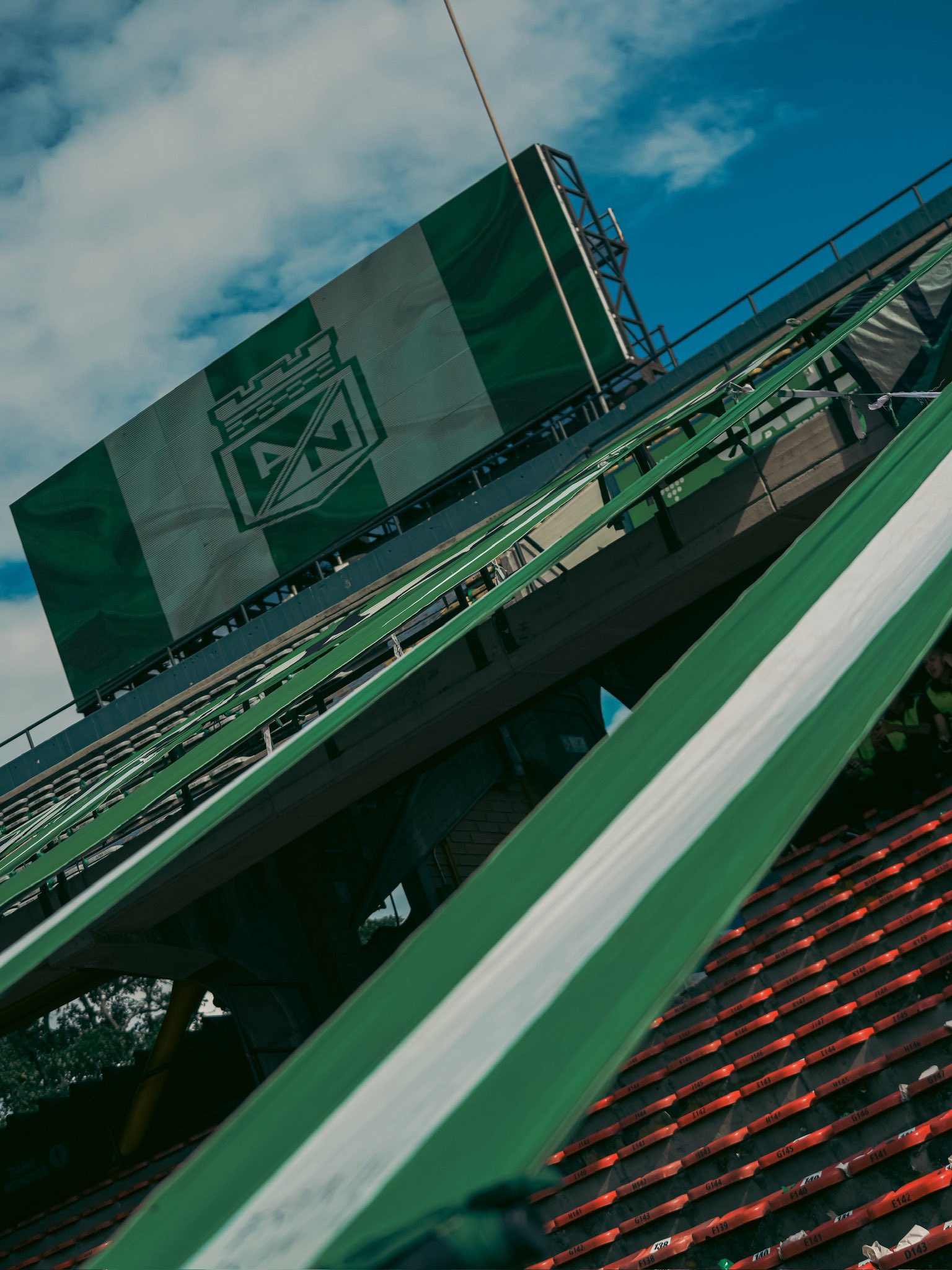
Medellín’s Mettle on Display: Atlético Nacional’s Semifinal Quest Reflects a Nation’s Deeper Play
POLICY WIRE — Medellín, Colombia — The cacophony emanating from Medellín’s Atanasio Girardot Stadium isn’t just about 22 men chasing a ball; it’s a roaring testament to a nation’s perpetually...

POLICY WIRE — Medellín, Colombia — The cacophony emanating from Medellín’s Atanasio Girardot Stadium isn’t just about 22 men chasing a ball; it’s a roaring testament to a nation’s perpetually shifting confidence, a pulse check on a city’s transformation, and an unexpected mirror reflecting economic aspirations in Latin America. Today, Atlético Nacional doesn’t merely aim for a semi-final berth in Colombian football; it’s chasing something more nebulous, more potent: an affirmation, a symbolic victory over persistent doubts, much like other ambitious cities in the Global South.
Many folks see this team, affectionately dubbed the ‘Verdolagas,’ as Medellín itself — sometimes struggling, always resilient. They went down a goal in the first leg against Internacional de Bogotá, an early punch to the gut. But they clawed back, thanks to an own goal forced by Eduard Bello and a clever assist from Alfredo Morelos setting up Rengifo. Just one goal made the difference, a tight 2-1 away win. But when you look at it closely, that slim lead on foreign turf sets up an almost theatrical return to home soil, where expectations aren’t just high; they’re bordering on civic duty. Don’t mistake the fanatical cheers for simple sports enthusiasm; there’s a heavy undercurrent of civic pride at play. But also, a heavy commercial undercurrent.
“This isn’t just about winning a game; it’s about projecting an image of triumph and tenacity for Medellín, for Colombia,” declared Minister of Sport, Ernesto Poveda, his voice resonating with an almost theatrical conviction during a recent press brief. “Every success on this grand stage boosts our international profile, attracting investment, building a reputation far beyond tourism brochures.” And he’s not entirely wrong. Success on the pitch translates, however indirectly, into greater visibility, especially for a region continually trying to shed legacies of past turbulence. A study in 2018 by BBVA Research, for instance, indicated that professional football contributes approximately 0.5% to Colombia’s GDP, underlining the financial weight these contests carry beyond mere gate receipts. But then, try explaining economic externalities to a die-hard fan. You can’t.
The lineup for tonight’s decisive match reads like a who’s who of national football royalty: Edwin Cardona, Mateus Uribe, Cristian Arango — players who could be the difference. They’re expected to be the spearhead against an Internacional de Bogotá side arriving with the pragmatic philosophy of a lesser-funded underdog: strong defense, opportunistic counter-attacks. They’ve got nothing to lose, which, sometimes, makes for the most dangerous kind of opponent. This tactical face-off, it’s not just about formation — and skill; it’s a psychological chess game. Atlético Nacional’s coaching staff, despite the home advantage, has hammered one message: extend the lead early, squash any notion of a ‘surprise.’ Because a surprise, in this context, wouldn’t just be an upset; it’d feel like a national letdown.
For cultures that fuse national identity with sporting prowess, like Colombia or, say, the fervent cricketing nations of the Indo-Pakistani subcontinent, a high-stakes match transcends mere sport. It becomes a national obsession, a barometer of the country’s collective spirit. I’ve witnessed this zeal myself, whether in the packed stadiums of Karachi during a Pakistan-India match or the roaring stands of São Paulo. The tension is palpable, a shared emotional journey. But in Medellín, where every industrial innovation, every art initiative, and every sports triumph feels like a further step away from its turbulent past, tonight’s match has an extra layer of meaning, a deeper play unfolding under the stadium lights.
And then there’s the politics of it all. Major clubs like Nacional aren’t just businesses; they’re political powerhouses, often tied into local and national narratives, shaping discourse. They’re more than just entertainment providers; they’re civic institutions, generating an almost religious devotion among their fan bases. Think about it: how many civic institutions command such unreserved passion? Few. We see similar dynamics play out from the high-rolling Saudi gambits to the mercenary ballet of European football leagues, where soft power and hard cash dance an elaborate pas de deux. But this is Colombia, where the stakes sometimes feel a little grittier, a little closer to home.
“We can’t just rely on our history, our past glory,” quipped a former club executive, Jorge Montoya, sipping coffee in a quiet Laureles cafe, hours before the match. “Every win must be earned, every success is built from scratch. That’s the hard truth, for a football club or a country.” It’s a sentiment many developing nations understand implicitly, isn’t it? The constant hustle for relevance, for recognition. The tie’s still in the air, the pundits insist, but the general mood in Medellín? It’s not just optimism. It’s an almost fierce conviction. A belief that tonight, their city, through its team, will once again prove its mettle, pushing through to claim its spot among the elite.
What This Means
A victory for Atlético Nacional isn’t just three points or a slot in the next round; it carries significant political and economic weight. Economically, it validates Medellín as a sports and tourism hub, driving consumer spending, bolstering local businesses, and providing indirect marketing for foreign investment. A deep run in the tournament means increased visibility, merchandise sales, and potential for future commercial partnerships. Politically, such a triumph acts as a potent unifier. It can momentarily distract from societal challenges, fostering a collective sense of pride — and shared purpose. For regional leaders, it’s an opportunity to project an image of stability and progress, essential for attracting international capital and strengthening governance. Conversely, an upset could bring a sour note to the city’s aspirations, dampening morale and inviting critical scrutiny, however unfair, on local leadership. The passion here runs deep, mirroring, in a small but powerful way, the global pursuit of geopolitical influence through sport, making tonight’s game far more than just a football match; it’s a micro-drama in Colombia’s ongoing national narrative.