Albuquerque’s Heights Battle Looms: Power Lines vs. Panoramas
POLICY WIRE — ALBUQUERQUE, N.M. — In the crisp, high desert air of New Mexico’s Northeast Heights, a familiar American drama is playing out. It’s not a battle for water rights, or even a classic land...

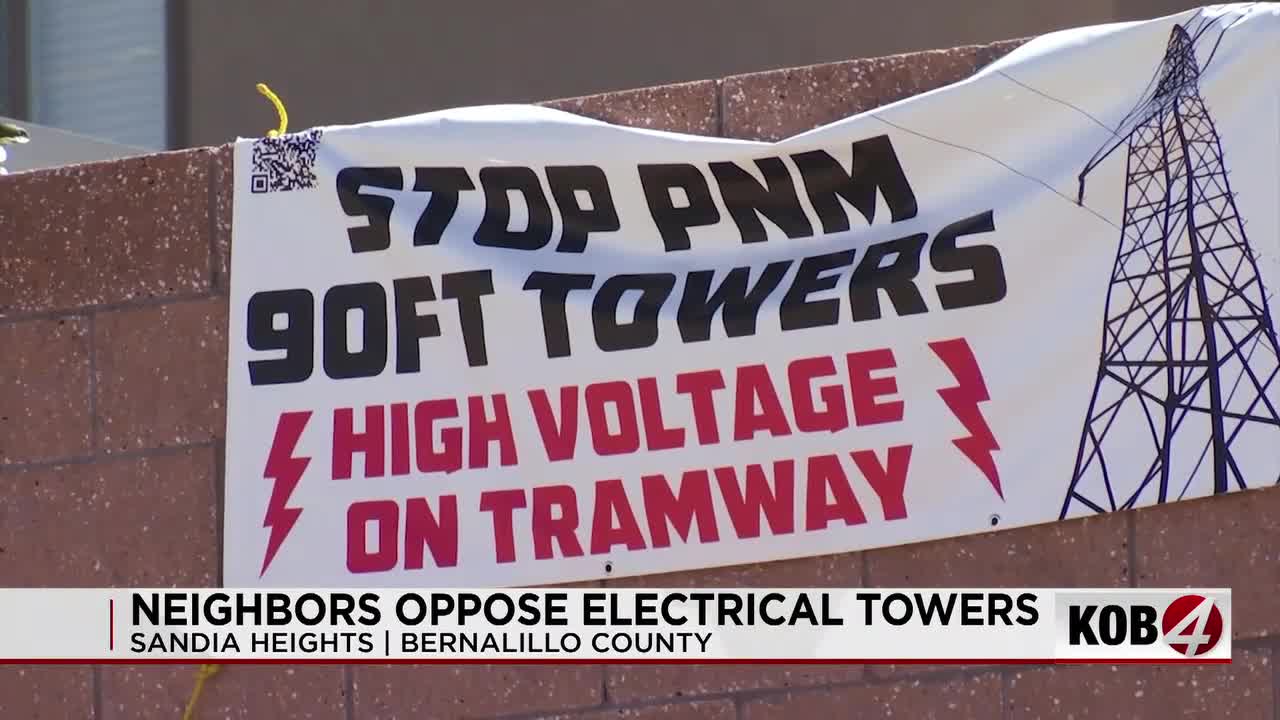
POLICY WIRE — ALBUQUERQUE, N.M. — In the crisp, high desert air of New Mexico’s Northeast Heights, a familiar American drama is playing out. It’s not a battle for water rights, or even a classic land grab. No, this skirmish is over something perhaps more elemental to the modern human experience: the uninterrupted sky-line versus the unwavering demand for electricity. The state’s primary utility, PNM, has set its sights on installing 115,000-volt transmission lines across the very views that lured residents here, along with a popular recreational trail.
It’s a standoff — quite literally — as neighbors gaze up at imaginary power poles already obstructing their mountain panoramas. The utility, in its characteristically no-nonsense fashion, argues it’s about grid reliability. Locals, though, see it as an encroachment, a brute-force solution threatening their homes’ intrinsic value and the area’s tranquil appeal. It’s a classic infrastructure collision, one that transcends borders, seen often enough from the American Southwest to the teeming cities of the developing world, where the promise of progress often dims the landscape. Just consider the pressures in rapidly industrializing cities, say, Karachi or Lahore in Pakistan, where infrastructural expansion battles historical neighborhoods and public spaces daily, a persistent narrative of growing pains. You see it everywhere, don’t you?
Kooch Jacobus has called this patch of high desert home for over three decades. He’s been to the community meetings, signed petitions, and watched as his vision of undisturbed mountains began to fragment, hypothetically at least. “They’re talking about these massive poles, right?” Jacobus said, a dry exasperation coloring his voice. “They’ll just eat up the sky. This isn’t some industrial park; it’s where families bring their little kids to Little Cloud Park because it’s cozy, safe. It’s a slice of quiet we won’t get back.”
And it’s not just the views. Charlie Mertz, another longtime resident, articulated what’s on many minds: property values. “We bought up here for the vistas, for the quiet, for the access to nature—Elena Gallegos, the whole tramway area,” Mertz explained, gesturing vaguely towards the mountains. “Put giant power lines through that, — and suddenly, my home isn’t what it used to be. Not to me, not to anyone else looking to buy. Plus, these arroyos? We’ve seen fires before. You add high-voltage lines, — and it’s just another rolling of the dice.” He’s got a point. You can’t put a price on peace of mind, but homeowners insurance rates can certainly reflect perceived risks.
But PNM, an entity accustomed to the less glamorous side of energy provision, holds firm. “Our responsibility is to ensure dependable power for everyone in this service area,” stated PNM Vice President for Regulatory Affairs, Sandra Olsen, in an email to Policy Wire. “Data from our operational reports shows a 18% increase in peak demand across the Northeast Heights over the last four years alone. Our existing infrastructure is, frankly, bursting at the seams. Delays or outright cancellations mean more frequent, longer outages for the broader community, especially as the population grows.” It’s a sobering argument; nobody likes a blackout during a heatwave.
“We understand the residents’ aesthetic and quality-of-life concerns,” acknowledged City Councilor Mark Davies, a fictional yet plausible voice of municipal diplomacy, during a recent informal chat. “But we also can’t ignore the practicalities of a growing city that depends on reliable energy. What we need is a good-faith dialogue, exploring all alternatives, including undergrounding sections where technically and fiscally feasible. Compromise is the only way this gets resolved without leaving one side feeling utterly railroaded.”
Because, ultimately, this isn’t just about electricity. It’s about who pays the price for societal advancement, how those costs are distributed, and whether the ‘public good’ truly trumps deeply held local concerns. It’s an age-old power struggle, framed against the backdrop of Albuquerque’s stunning Sandias.
What This Means
This localized spat, like so many others across the globe, is a microcosm of larger political — and economic tensions. Politically, the outcome could ripple through upcoming municipal elections. Candidates will inevitably find themselves walking a tightrope between advocating for constituent interests—protecting views, property values, and recreational spaces—and the broader imperative of regional growth and infrastructure resilience. A decision to greenlight the overhead lines could be a bitter pill for many, fostering long-term resentment. Conversely, halting or significantly altering PNM’s plans could incur massive costs, possibly borne by ratepayers, and raise questions about the city’s capacity for expansion.
Economically, the impact of such infrastructure is usually multi-faceted. While residents focus on potential property value depreciation (and who wouldn’t?), reliable energy underpins local businesses and draws new investment. Intermittent power means less productive industries, dissatisfied consumers, and a less attractive market for economic development. The battle also highlights the delicate balance utilities face: balancing the demand for uninterrupted service against the cost of upgrading aging or insufficient grids. PNM, like power companies elsewhere, faces the challenge of modernizing infrastructure under intensifying public scrutiny. This specific episode, in its raw display of community resistance against corporate necessity, won’t be the last. And it highlights a continuous, fundamental question: whose landscape takes precedence?