

New Mexico’s Arid Crucible: Heat, Winds, and the Shifting Sands of State Policy
POLICY WIRE — Albuquerque, United States — Forget the turquoise jewelry and cinematic sunsets for a minute. New Mexico, a land famously accustomed to extremes, is wrestling with a much less...

POLICY WIRE — Albuquerque, United States — Forget the turquoise jewelry and cinematic sunsets for a minute. New Mexico, a land famously accustomed to extremes, is wrestling with a much less photogenic reality: a scorching mid-May heatwave, bringing not just uncomfortable highs but a cocktail of wind and dry lightning that pushes the very definition of normal. This isn’t just a weather report; it’s a distress signal, a forced conversation about infrastructure, resources, and the fragile existence in a landscape perpetually teetering on the edge of its own history.
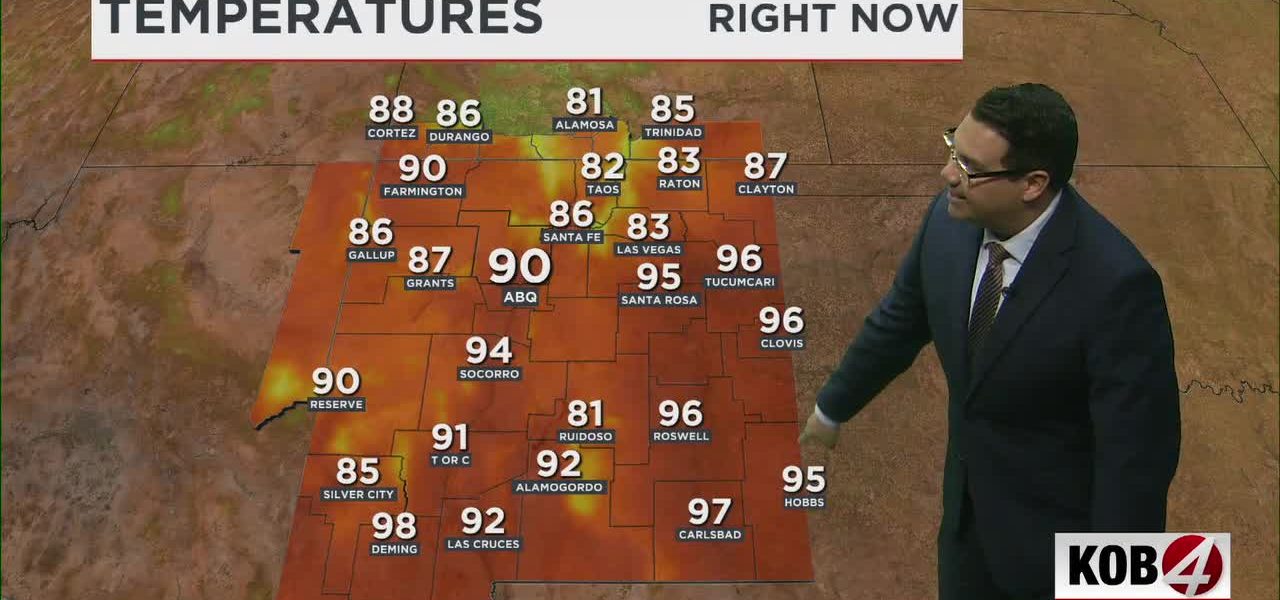
It’s easy to dismiss a heatwave as just another inconvenience, an excuse to crank the AC. But down here, where every drop of water is tallied — and every gust carries a whisper of wildfire, it’s existential. Temperatures are set to hit 100 degrees in Roswell, Albuquerque looking at 94, while places like Farmington hover in the low 90s—10 to 20 degrees above typical for this time of year. And those are the numbers you can feel. The unspoken story, though, lies in the winds.
Fifty to sixty mile-per-hour gusts, tearing across an already desiccated terrain. And dry lightning—the kind that ignites tinder-dry scrub with the flick of a cosmic switch—will stalk communities along the Continental Divide, in the Gila region, and westward towards Farmington and Gallup. They don’t call this an arid state for nothing; this brutal combination makes for perfect firestorm conditions, putting residents, land, and the state’s already strained firefighting resources under intense pressure. “We’re not just fighting wildfires; we’re wrestling with the very definition of ‘normal’ weather here,” remarked Governor Michelle Lujan Grisham to reporters earlier this week, her frustration palpable. “This isn’t just a forecast; it’s a recalibration of our state’s future. It requires long-term strategies, not just reactive measures.”
But the problem runs deeper than the immediate risk of a burning ridge line. Think about the agricultural sector—the chile farmers, the pecan growers, those who irrigate fields relying on increasingly unreliable snowmelt and reservoir levels. They’ve built livelihoods over generations, adapting to the harsh rhythm of the desert, but even they’re finding the tune’s changing too fast. Because overnight lows won’t offer much relief, dipping only into the upper 50s and 60s in lower elevations, that stress on the land and its people never quite lets up.
This relentless dry heat, coupled with gusting winds and dry lightning, isn’t unique to New Mexico; it echoes the devastating patterns emerging across arid and semi-arid regions globally. We see similar environmental stressors contributing to resource conflicts and internal displacement, from the parched farmlands of Pakistan’s Sindh province to the shrinking oases of the Levant, forcing policy conversations that stretch far beyond immediate weather alerts. Global resource scarcity, after all, isn’t an isolated problem. It’s a shared global challenge.
Consider the elderly, the low-income families without adequate cooling, or the construction workers—those who must endure the brutal sun to put food on the table. For them, this isn’t an inconvenience; it’s a health risk, a drain on household budgets, and sometimes, frankly, a choice between work and wellness. “People think of New Mexico as arid, sure, but this unrelenting heat, especially this early in the season—it puts folks, especially our agricultural workers and older populations, on a knife’s edge,” explained Dr. Elena Rodriguez, Director of the Southwest Climate Resilience Institute. “Our way of life, it’s just becoming a whole lot tougher.”
📄 POLICY WIRE WHITEPAPER PUBLISHED: PAKISTAN'S NATIONAL SECURITY POLICY PRIORITIES
👉 READ BY CLICKING HEREAnd it’s a problem gaining momentum. According to the National Oceanic and Atmospheric Administration (NOAA), the past decade saw five of the ten hottest years on record for New Mexico, signaling a clear, accelerating trend toward a warmer, drier climate. This isn’t just an El Niño or La Niña blip; it’s a deeper shift. Policymakers, emergency services, — and communities must contend with this new normal.
What This Means
The implications are far-reaching. Economically, prolonged heat events impact tourism (less hiking, more indoor activities, higher utility costs for hospitality), strain the energy grid, and—most critically—threaten agricultural yields. Farmers already grapple with rising operational costs, and unpredictable weather only exacerbates this, potentially driving up food prices for consumers. Politically, this ongoing crisis forces state officials into a continuous high-wire act: balancing immediate emergency responses with long-term climate adaptation strategies. Debates around water conservation, infrastructure upgrades, and support for vulnerable populations become louder, more urgent. It forces collaboration, often strained, between state, federal, and tribal entities over precious resources like water and wildfire management. The pressure is on lawmakers to devise robust policies—incentivizing water-efficient practices, upgrading power grids for increased demand, and improving public health advisories—rather than simply reacting to the next record-breaking temperature. But let’s be real; these aren’t easy fixes. This isn’t just about turning down the thermostat; it’s about reshaping a state’s relationship with its environment, about surviving, truly. Such tough decisions echo across the globe, in every region wrestling with a changing climate, often forcing uncomfortable trade-offs for immediate relief against long-term resilience.
It’s not an academic exercise for folks here; it’s life. It’s what keeps emergency rooms busy — and farmers awake at night, staring at weather maps and cloudless skies.