


Golden Ticket Shredded: Gridiron Phenom’s Future Explodes in Mississippi Night
POLICY WIRE — Columbia, Missouri — The arc of a sporting life, it turns out, bends less towards glory and more often toward the arbitrary. One moment, Ahmad Hardy, a Missouri running back, is...

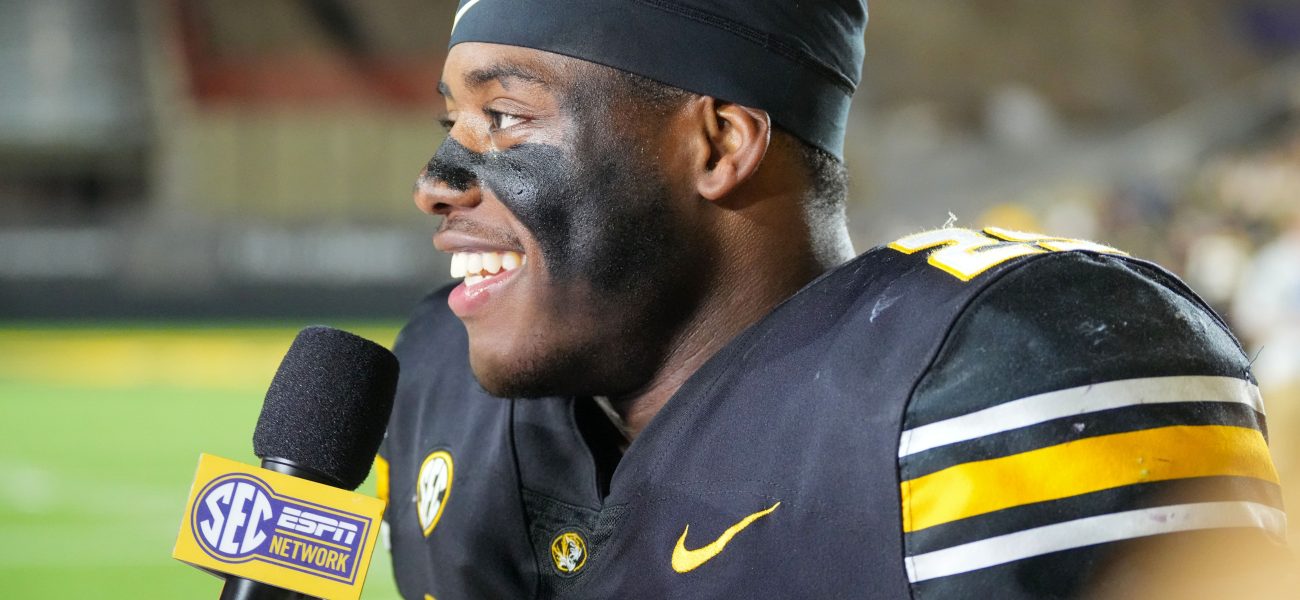
POLICY WIRE — Columbia, Missouri — The arc of a sporting life, it turns out, bends less towards glory and more often toward the arbitrary. One moment, Ahmad Hardy, a Missouri running back, is sketching out a future painted in NFL millions, a generational talent leading the SEC in rushing yards—1,649, if you’re counting, which plenty of scouts were, according to ESPN projections—then, just like that, the script flips. A concert, a vehicle, a random bullet in the pre-dawn hush of Laurel, Mississippi. Now he’s heading back to Columbia, not to conquer the offseason conditioning, but to stitch together what remains of a career, and perhaps, more importantly, a body.
It’s a peculiar twist, this intersection of athletic prowess — and mundane menace. Hardy, just 20, was simply a bystander, a young man out enjoying himself when the violence found him. You see it, don’t you? That jarring disruption to a meticulously crafted trajectory, the cruel hand of circumstance sidelining an ascent. The Columbia Daily Tribune confirmed his discharge, citing a team spokesperson. He’s in stable shape after treatment at Forrest General Hospital, but that ‘stable’ label doesn’t begin to cover the chaos of a life thrown instantly, brutally off course. And it’s not just a setback; it’s a reckoning, really.
Laurel Police Department Sergeant Macon Davis, the kind of weary voice who’s seen too much, offered a clipped assessment. “We’re dealing with a dynamic situation here,” he told Policy Wire, his tone hinting at a lack of easy answers. “It’s never a clean-cut narrative when folks just minding their own business get caught in the crossfire. We haven’t charged anyone yet, and honestly, the public’s frustration mirrors ours.” Because, here’s the thing: in a country awash in firearms, where an estimated 20,000 to 40,000 Americans sustain non-fatal firearm injuries annually, many, like Hardy, become collateral damage—unintended, yet acutely felt. That data, culled from the National Center for Health Statistics, underscores a deeply unsettling reality.
His return to Columbia, the symbolic start of ‘rehab,’ means he’s out of immediate danger. But the implications, both for his physical recovery and the fragile economics of a top-tier college athlete, are sprawling. We’re talking about a consensus All-American, projected by multiple outlets as a first-round NFL Draft pick, who now faces the arduous, uncertain climb back to peak performance. It’s an American dream in fluorescent lights, almost surgically precise, until a piece of lead tears a hole in the playbook.
This isn’t some abstract conflict in a distant land, a roadside bombing in Karachi, or a marketplace skirmish in Damascus, yet the principle of an individual’s promise dissolving under external, uncontrollable pressures feels eerily similar. The vulnerability of youth, the capriciousness of violence—they speak a universal language, whether on the streets of a Mississippi town or a burgeoning metropolis in South Asia. You invest everything, you climb the ladder, — and then some dark, unknowable force just… takes a piece of you.
“We’re heartbroken for Ahmad, — and focused entirely on his well-being,” Mizzou’s Athletic Director, Dr. Melissa Reynolds, commented to Policy Wire, her words carefully chosen. “His journey with us, — and beyond, is so much more than just what happens on the field. This incident reminds us of the wider challenges our student-athletes face, even when they’re simply living their lives away from competition.” She’s right, of course. It’s not just about football. It’s about walking into a stadium as a hero and exiting a concert as a patient.
Mizzou football’s official social media offered platitudes, but those pronouncements always feel a little thin against the sharp, metallic reality of a bullet wound. They said, “We will continue to stand beside him — and his family.” Fine. But will he run like he did before? Will his confidence be shattered? Those are the unwritten lines, aren’t they?
The incident remains an unsolved riddle for local law enforcement; no arrests, no public incident report. Just an athlete, recovering, and a community wondering how an event so deeply consequential could feel so utterly without resolution. And what happens when a local tragedy reverberates nationally? It becomes a cautionary tale, a brutal footnote in a star’s biography. Check out Shadows Fall Over the Hardwood for another angle on professional sports and life’s brutal turns.
What This Means
Hardy’s shooting rips a hole not just in his body, but in the finely woven narrative of collegiate athletics, particularly in a sport where an individual’s value can escalate into millions overnight. Politically, incidents like this—random acts of gun violence ensnaring innocent bystanders—tend to resurface debates about public safety and gun control, however fleetingly. It’s a stark reminder that the ‘safe’ environments promoted by universities or sports leagues don’t always extend beyond the immediate campus perimeter. For communities like Laurel, it highlights a simmering undercurrent of lawlessness or unresolved conflict, leaving a sense of insecurity that gnaws at trust. Economically, Mizzou loses an immediate — and future asset. A high-profile injury due to violence isn’t just about winning games; it impacts recruitment, booster confidence, and the university’s broader brand. If Hardy’s NFL future is derailed, the personal economic impact is staggering—a multi-million dollar career possibly erased. And let’s not pretend this doesn’t fuel the broader, often racially tinged, anxieties surrounding urban and rural violence, influencing public perception and, eventually, policy choices, whether acknowledged or not. This isn’t just about a kid getting shot; it’s about a system—athletic, economic, judicial—trying, and often failing, to protect its most promising assets. Read more about similar issues in Iowa City’s Echo.