

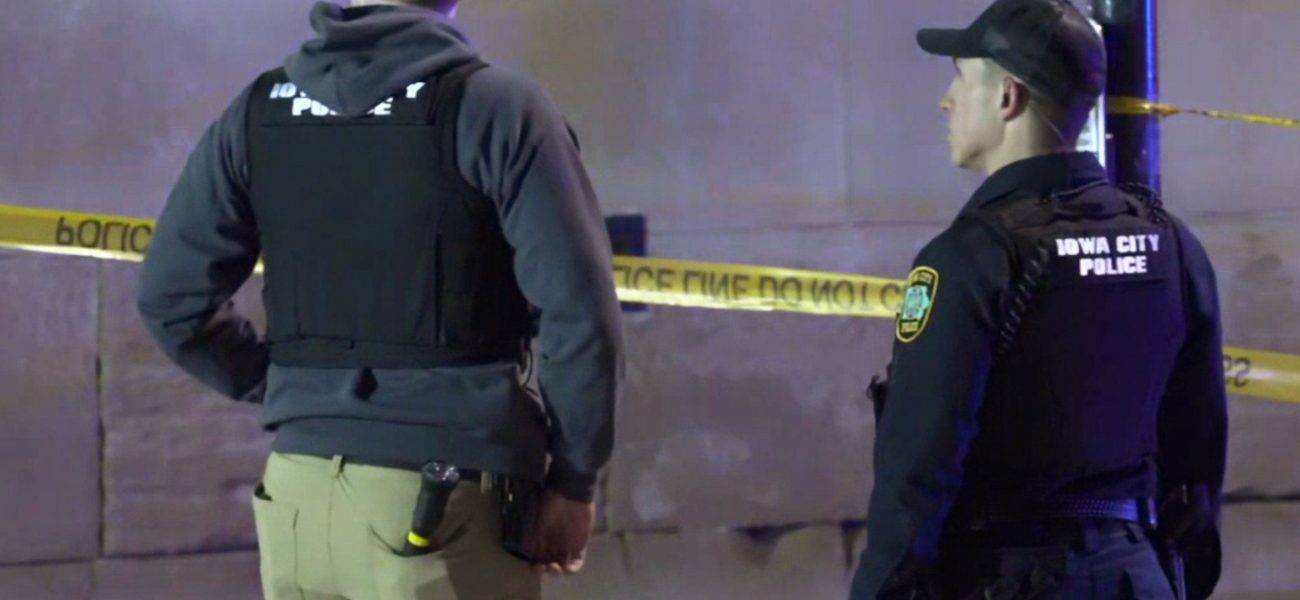
Iowa City’s Echo: Fugitive Apprehension Shakes a Nation Grappling with Youth Violence
POLICY WIRE — Washington, D.C. — It’s Tuesday morning. The nation, it seems, woke to another jarring headline—a familiar rhythm of gunfire and grief playing out in America’s...

POLICY WIRE — Washington, D.C. — It’s Tuesday morning. The nation, it seems, woke to another jarring headline—a familiar rhythm of gunfire and grief playing out in America’s public squares. But this time, a quiet corner of Iowa, a city known more for literary prowess than lawlessness, was forced into the macabre national spotlight. The latest entry: a 17-year-old, alleged architect of mayhem on a pedestrian mall, now cooling his heels in federal custody. Just another Tuesday in America, isn’t it?
U.S. Marshals, those diligent, relentless bloodhounds of federal law enforcement, finally ran their quarry to ground. The specifics are still fuzzy around the edges, as these things often are. What we do know is that a young man, barely old enough to vote, stands accused of shattering the peace on an otherwise unremarkable evening in Iowa City. But the details of his capture — which involved cooperation spanning state lines, a characteristic of the Marshals’ pursuit — tell only part of a much larger, more troubling story. It’s a story of dwindling innocence, — and of public spaces morphing into ambush zones.
And it raises a particularly unsettling question: at what point does America’s youth become another front in its ongoing battle with itself? Because when kids are involved in incidents like this, it makes everyone wonder about what gives. Iowa City Police Chief Duane K. Farrell, whose department would typically lead such investigations, weighed in on the wider implications. “When you’ve got young people allegedly resorting to such extreme acts in places meant for community, it’s not just a police problem; it’s a society problem. We’ve all failed somewhere along the line to prevent this,” he stated, his voice thick with a weariness that’s become all too common among law enforcement brass.
But the feds did their job, plain — and simple. Deputy Attorney General Lisa O’Malley, in a brief, clipped statement from her D.C. office, emphasized the gravity of federal involvement. “The U.S. Marshals Service continues to be an indispensable asset in ensuring justice, especially when suspects attempt to flee across jurisdictions. Our commitment to apprehending individuals who threaten public safety, regardless of age, remains absolute. We don’t mess around when it comes to keeping communities safe.” They certainly don’t.
The swift apprehension—made all the more remarkable by the age of the suspect and the multi-state coordination involved—speaks to a federal machine humming with efficient if often unseen, precision. Data from the Bureau of Justice Statistics indicates that the U.S. Marshals Service apprehended over 98,000 federal fugitives in fiscal year 2022 alone. This isn’t just about an individual; it’s about a system responding to what’s become a depressingly routine challenge to civic order.
📄 POLICY WIRE WHITEPAPER PUBLISHED: PAKISTAN'S NATIONAL SECURITY POLICY PRIORITIES
👉 READ BY CLICKING HEREWhat’s particularly grating, of course, is the setting: a pedestrian mall. It’s meant for strolling, for window shopping, for a community to just be. The very fabric of routine urban life, whether in Iowa City or, say, a bustling bazaar in Karachi, relies on an unspoken guarantee of safety in these shared spaces. But that guarantee, it seems, has been eroding, not just for us, but for nations like Pakistan, too, where “security concerns” can shut down public life and warp perceptions of youth into vectors of potential danger rather than hopeful futures. Here, it’s not external terror; it’s something festering much closer to home.
What This Means
This incident, culminating in the federal Marshals’ capture of a young man, forces a hard look at where America stands. Politically, it re-energizes the perennial debate over gun control, mental health resources for juveniles, and the efficacy of early intervention programs. You’ll hear the familiar refrains from both sides of the aisle. Conservatives will emphasize “bad actors” — and parental responsibility. Liberals will point to systemic issues—easy access to firearms, poverty, and institutional failures. And neither will fully grasp the gnarly reality.
Economically, such events chip away at local vitality. People tend to avoid places where they don’t feel safe. A shooting on a pedestrian mall, no matter how quickly the suspect is nabbed, leaves an indelible stain, possibly deterring tourism and stifling local businesses struggling to rebound in an already shaky climate. There’s an economic cost to fear, — and Iowa City just paid a deposit. the long-term impact on the psyche of a community, especially its youth, can’t be quantified with mere dollars. It’s a ripple effect, turning cautious residents into wary ones, and that, friends, isn’t good for anyone’s bottom line—or soul.