


Cleveland’s Courtside Circus: Donovan Mitchell’s Heroics & The Unending Appetite for Distraction
POLICY WIRE — Cleveland, USA — Another Tuesday dawns, another cycle of news demands our attention, but for a solid segment of the population, Monday night’s main event wasn’t another geopolitical...

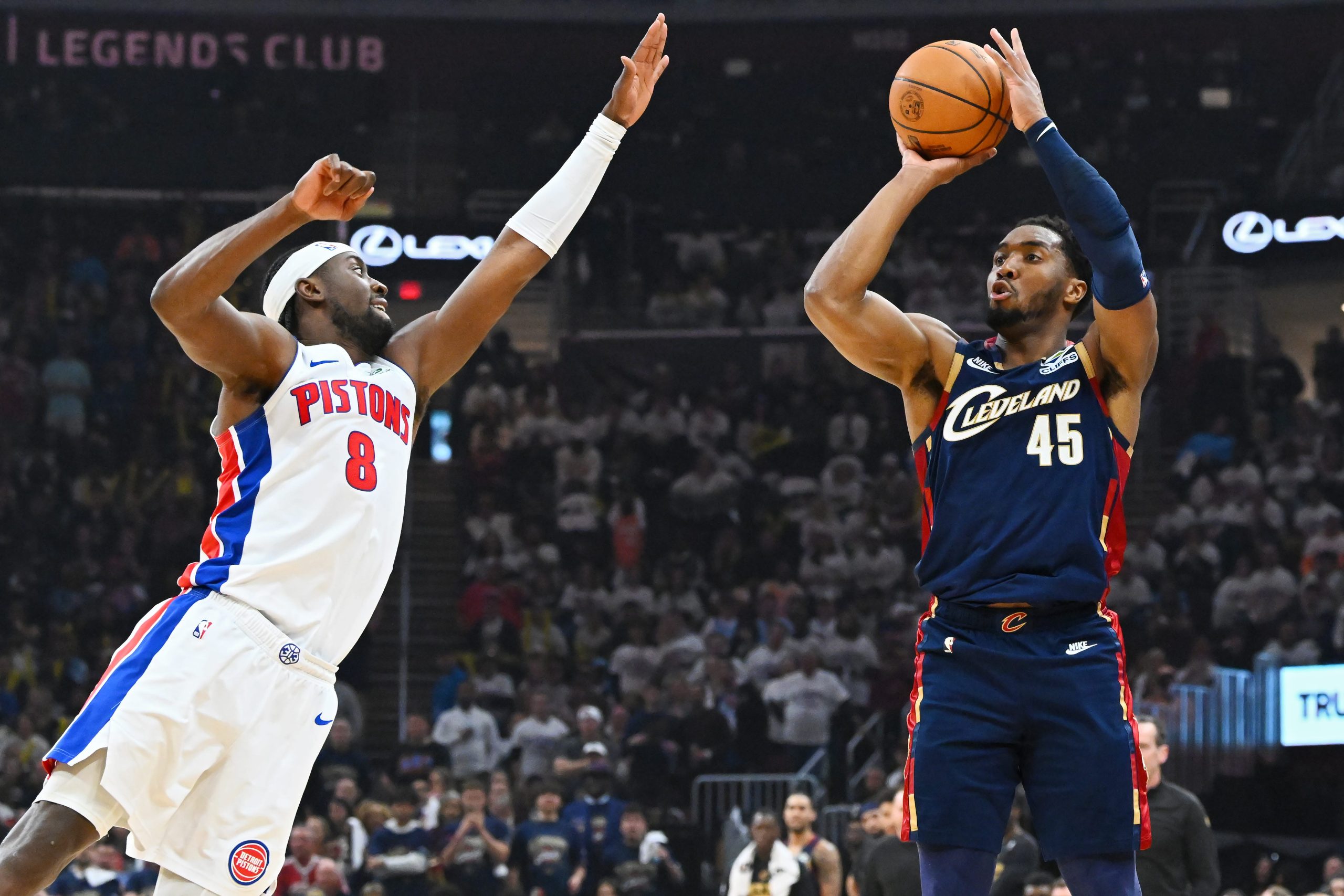
POLICY WIRE — Cleveland, USA — Another Tuesday dawns, another cycle of news demands our attention, but for a solid segment of the population, Monday night’s main event wasn’t another geopolitical flare-up or a seismic market correction. No, it was a basketball game. Specifically, it was the Cleveland Cavaliers’ Donovan Mitchell, a man who, for one spectacular half, temporarily eclipsed the broader, bleaker landscape of global affairs with a sheer act of athletic will. He poured in 39 points in the second half—yes, thirty-nine—helping Cleveland squeak past Detroit, 112-103, to even their playoff series at two games apiece. It was quite a show.
It’s the kind of performance that shifts conversation, momentarily at least. What happened in that game—Mitchell, a Louisville product, managing to drop a total of 43 points, with that explosive second half—ties an NBA playoff record set back in ’87. Eric “Sleepy” Floyd held it solo until now. Funny, isn’t it? A single missed free throw in the dying seconds kept Mitchell from owning it outright. That’s how close these things often are. He’d started his night pretty cold, mind you. Just 1-for-8 from the field. Didn’t even score until the second quarter was practically done. But, oh, when he flipped that switch, he really flipped it. It’s his fourth 40-point playoff outing for the Cavs; now he’s second only to LeBron James in franchise history, leaving Kyrie Irving in the dust. That’s a legacy marker, right there.
But let’s step back for a moment. This isn’t just about a guy scoring a lot of points. It’s about what such feats represent in the grander scheme of things. These moments of dazzling individualism, this commercialized gladiatorial combat, it’s a hell of a sedative, isn’t it? Millions fixated, transfixed. League Commissioner Adam Silver, never one to miss an opportunity to contextualize—or perhaps, commodify—the league’s appeal, stated recently, “These global narratives, they’re not just good for ratings; they’re essential soft power. We’re selling aspiration, skill, — and frankly, distraction, to every corner of the planet. It’s an economic engine that touches billions, often where few other American exports penetrate as deeply.” You see, it’s not just a game; it’s international relations, one highlight reel at a time. It’s almost unsettling how effectively a singular athletic event can commandeer public attention, often more so than—say—the agonizing slowness of global justice or ongoing humanitarian crises.
And then you consider the fervent devotion this spectacle inspires across cultures. Take South Asia, for instance. A region often grappling with immense societal and infrastructural challenges—think water scarcity, educational deficits, the persistent shadows of geopolitical machinations—yet its youth are increasingly plugged into global entertainment circuits, basketball included. While cricket remains the undisputed king in places like Pakistan, the NBA’s aggressive international marketing, digital accessibility, and player personalities are undeniably making inroads. It’s a cultural current. But is it always a positive one? Dr. Aisha Khan, a Lahore-based sociologist, didn’t mince words in a recent seminar, observing, “We scrutinize these spectacular displays of individual human achievement, celebrating records and chasing narratives, while our own collective infrastructure, from healthcare to rehabilitation aid, often falters. There’s a psychological escape happening, — and its implications are complex.” She’s not wrong. The cost of admission to this global circus, mental or monetary, is rarely inconsequential.
Because that economic pull is profound. For example, a report by the NBA from 2023 estimated the league’s total economic impact—factoring in media rights, sponsorships, merchandise, and local spending—at well over $10 billion annually. That’s a staggering figure, a commercial leviathan that, frankly, few national industries can match. That’s serious coin, folks. But then, there’s always the other side of the coin. The constant chatter about individual players’ fortunes—Donovan Mitchell was drafted 13th overall in 2017 and has since cemented a multi-million-dollar career, eventually landing in Cleveland via a 2022 trade—it tends to obscure the vast apparatus that enables such riches. It’s the illusion of meritocracy, amplified by television screens — and endless social media feeds. They’ve made it. But for how many, really?
Mitchell’s path, from Louisville hoops (2015-17) to a string of accolades including seven NBA All-Star selections and a 2018 Slam Dunk Contest championship, is an impressive resume, no doubt. He averaged 27.9 points, 5.7 assists, — and 4.7 rebounds this season. But those numbers, those moments, they don’t exist in a vacuum. They’re products of immense personal sacrifice, certainly, but also a meticulously crafted ecosystem of wealth and influence. They’re selling more than just baskets; they’re selling an ideal, a dream.
What This Means
This whole spectacle, this athletic poetry, really, has significant undercurrents beyond the scoreboard. Economically, these high-stakes games—especially in playoff formats—are colossal revenue generators. For cities like Cleveland, hosting a team that’s making noise can mean a palpable surge in local commerce, from hospitality to service industries. Every time a Donovan Mitchell does something legendary, it doesn’t just ignite fan enthusiasm; it effectively markets the entire league, driving up future broadcast deals and endorsement opportunities for everyone involved. Politically, while seemingly apolitical, sports figures of Mitchell’s stature possess considerable cultural sway. They become inadvertent, or sometimes deliberate, influencers, their platforms often amplifying messages far beyond the hardwood. And as we see, that cultural currency extends globally. The focus on such triumphs can, for better or worse, provide a collective focus, an emotional outlet that might otherwise seek expression in more destabilizing ways. The cost, of course, is a subtle reorientation of priorities—a societal acceptance, perhaps, of dazzling entertainment as an acceptable counterweight to harder realities. It’s a trade-off many don’t even realize they’re making, but one that policy-makers and marketeers are acutely aware of. It might seem far-fetched, but there are parallels to be drawn in everything from tech’s financial excess—remember Microsoft’s CFO’s gaffe—to the way nations divert attention. It’s all a show, isn’t it?