


Paper Tigers and West Bank Blues: IDF Bust Reveals Forgery’s Global Threads
POLICY WIRE — Ramallah, West Bank — In a landscape where the right piece of paper can mean freedom—or simply basic existence—a recent, quiet raid conducted by Israeli forces pulls back a curtain on...

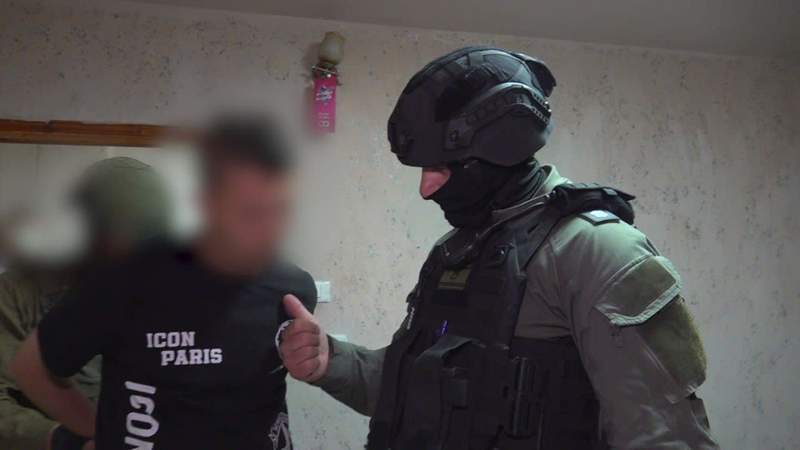
POLICY WIRE — Ramallah, West Bank — In a landscape where the right piece of paper can mean freedom—or simply basic existence—a recent, quiet raid conducted by Israeli forces pulls back a curtain on one of the region’s darker economies. It wasn’t a rocket launch, nor a tunnel discovery; it was the meticulous dismantling of a sophisticated document forgery ring operating deep within the West Bank, an operation targeting a major Palestinian gang suspected of churning out everything from driver’s licenses to university degrees.
Because for so many, navigating the bureaucratic maze in this sliver of disputed land often feels like a perpetual obstacle course. And if official channels fail, or are simply too slow, too rigid, or too expensive, well, people find alternatives. It’s a gray area, really, a market fueled by desperation and a pressing need for mobility, for opportunity, for a semblance of normal life that’s often just out of reach.
Israeli Defense Forces (IDF) and Israel Police, working in concert, zeroed in on a network primarily based around Ramallah and its surrounding areas. They weren’t just stamping out fake ID cards, apparently. We’re talking sophisticated digital setups, an assembly line of counterfeit credentials designed to bypass layers of scrutiny. The operation wasn’t flashy; there weren’t tank formations or aerial bombardments. Instead, it was surgical—a quiet removal of printing presses, sophisticated software, and what sources describe as a treasure trove of blank official documents. You know, the kind that unlock borders, jobs, even identities.
“This wasn’t merely a crime of convenience,” stated Brigadier General (Res.) Avi Dichter, a former head of Shin Bet, now an Israeli Knesset member, in a policy brief given to a private security forum last week. “We’re seeing increasingly interconnected criminal enterprises that, whether directly or indirectly, can support more malign actors. Forgery operations of this scale don’t just help individuals bypass checkpoints; they threaten the integrity of national borders and provide a lifeline for organized crime, even terrorism, enabling the movement of operatives and funds. It’s a national security concern, plain and simple.” His words underscore the broad implications felt within Israeli security circles.
But there’s another side to this story, naturally. Mahmoud Aloul, a prominent Fatah central committee member and a senior figure within the Palestinian Authority, acknowledged the operation, albeit with a different lens. “Any illegal activity is condemned,” he told reporters in Ramallah, his tone weary. “However, we must also acknowledge the context. When legal pathways are blocked, when permits are arbitrary, when even accessing healthcare or education across lines is a daily struggle, some will always seek alternatives. This isn’t a justification, but it’s a reality born of deep systemic challenges. We need mechanisms for our people to live and prosper, or these kinds of shadow economies will always find fertile ground. People are looking for any — and all ways to forge a better future for themselves.”
The fact is, demand drives supply. The West Bank, with its complex permit system and layers of control, creates a significant premium for documents that grant movement, employment, or academic standing. It’s not just locals, either. These types of operations frequently service individuals seeking to travel abroad, evade debt, or even gain asylum in distant lands.
📄 POLICY WIRE WHITEPAPER PUBLISHED: PAKISTAN'S NATIONAL SECURITY POLICY PRIORITIES
👉 READ BY CLICKING HEREAnd these false documents don’t just circulate within the immediate region. Security analysts have long tracked how counterfeit documents originating in areas of conflict or instability—from Syria to Afghanistan—find their way onto broader international networks. This can mean pathways to Europe, or indeed, transit through or entry into countries across the broader Muslim world, including nations in South Asia, like Pakistan, which already grapple with their own massive refugee populations and porous borders. The integrity of documentation is a shared international challenge, a point highlighted by Interpol, which estimates that cross-border identity document fraud costs the global economy billions annually and is frequently linked to serious crimes like human trafficking.
It’s not pretty. It’s complicated. And it’s a persistent headache for everyone involved.
What This Means
This latest bust, while seemingly localized, highlights the persistent, complex interplay between security imperatives and human desperation in contested territories. On the economic front, these rings represent an informal—and illicit—safety net for some, enabling commerce and labor movement where official channels fail. But they simultaneously undermine regulatory structures, facilitate tax evasion, and open doors for more serious financial crimes. Politically, the narrative diverges sharply: Israeli officials see a victory against organized crime and potential terror financing, asserting the state’s security prerogatives. Palestinian officials, while denouncing illegal acts, point to the underlying conditions—the grinding reality of occupation, restricted movement, and economic stagnation—as catalysts for such illicit industries. They don’t see it just as crime, but as symptom. Because without addressing the fundamental drivers—the lack of self-determination, the inability to move freely, the stunted economic opportunity—such enterprises are likely to resurface, rebranded and relocated, a continuous, vexing loop. And the ripples of such illicit document trade—especially the creation of supposedly official paperwork that bypasses normal scrutiny—can travel far, impacting migration flows and security across the Middle East and beyond. The need for official legitimacy, or at least a plausible facsimile, continues to create its own dark market, stretching its tendrils far past the immediate geography, even impacting larger geopolitical narratives about security and control.