

The Golden Rule: TKO’s Billion-Dollar Bonanza vs. the Price of Disposability
POLICY WIRE — New York, USA — When you’ve cornered a market, built a juggernaut worth billions, and seemingly transcended mere entertainment to become a cultural institution, what’s left to do?...

POLICY WIRE — New York, USA — When you’ve cornered a market, built a juggernaut worth billions, and seemingly transcended mere entertainment to become a cultural institution, what’s left to do? If you’re TKO Group Holdings LLC—the corporate behemoth behind UFC and WWE—it seems the answer is clear: Keep finding ways to turn every spare dollar into another billion for the folks upstairs, no matter the cost to the people actually performing the spectacular.
It’s not just a subtle shift; it’s an absolute chasm. Just days after TKO executives proudly announced revenues surged by an astonishing 26% to $1.59 billion for the first quarter of 2026—a number they tossed around like pocket change to shareholders, according to the company’s Q1 2026 earnings report—the talent creating those billions found themselves on shakier ground. While UFC and WWE revenues stacked up to nearly half a billion apiece ($401.2 million for UFC, $475.7 million for WWE, if you’re counting), the celebration evidently didn’t extend to the locker rooms.
Down in the WWE, word quickly circulated that certain performers were getting hit with an uncomfortable choice: restructure your contract and accept a hefty pay cut—some whisper up to 50%—or find the nearest exit. And, well, some decided to take that exit. This after a WrestleMania that many fans dubbed creatively anemic — and bogged down by an avalanche of advertising. It makes you wonder, doesn’t it?
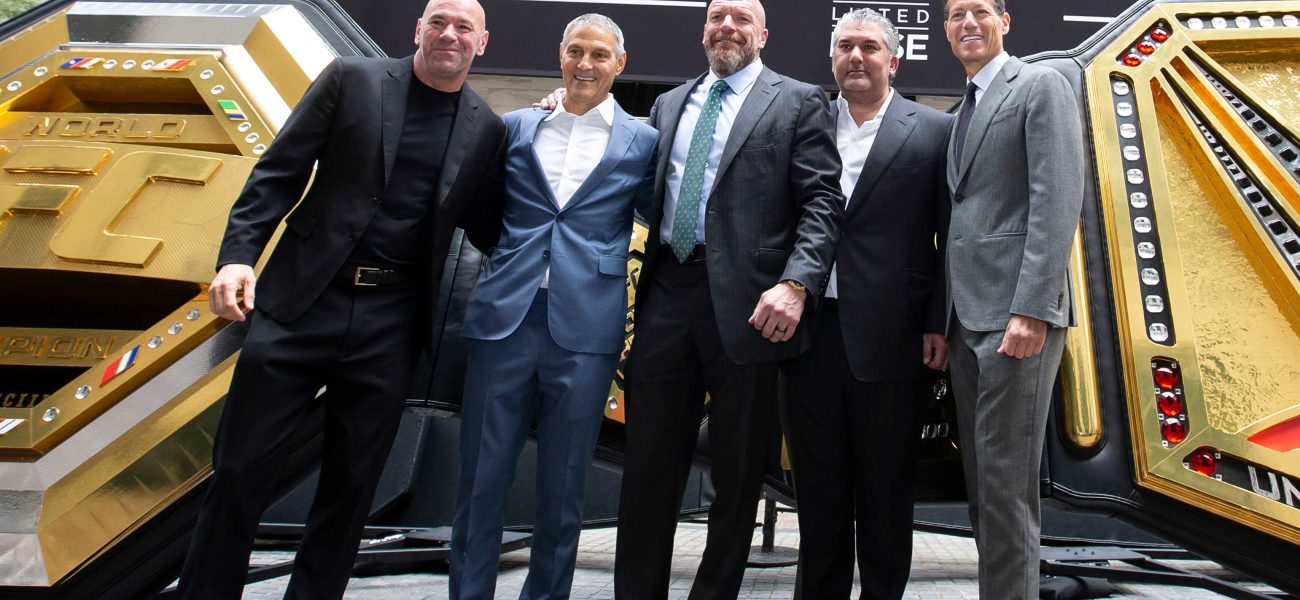
But the money spigot, you see, it works a bit differently for others. Take Ari Emanuel, TKO CEO. His total compensation ballooned by a jaw-dropping 272% in 2025, bumping him up to an annual haul of roughly $67 million. That’s a good chunk of change. Enough to make you wonder what sort of belt-tightening *he* had to endure.
“We’re in an era of unparalleled growth,” Emanuel reportedly declared recently to a select group of investors, his voice brimming with the kind of confidence only hundreds of millions can buy. “Our strategy isn’t just about expansion; it’s about optimizing value for our shareholders at every single touchpoint. Every asset, every opportunity, must serve that paramount goal.” That ‘optimization,’ however, has a distinct flavor depending on which side of the negotiating table you’re sitting.
Meanwhile, the UFC found its own ingenious ways to squeeze. Fighters, those brave souls risking permanent damage for our viewing pleasure, thought they might snag a new finish bonus on top of their performance bonus. Imagine the surprise when Ariel Helwani, an insider, relayed that these two bonuses don’t stack. Nope. You get the higher of the two, not both. So, that promising $125,000 ceiling quickly became just $100,000 for many. It’s a sleight of hand, really—a subtle shave off the take, for a company drowning in greenbacks.
And then there’s the subtle, if audacious, flexing of corporate muscle. TKO recently dangled a ‘partner investment’ opportunity for VIPs interested in a UFC White House event. A cool $1.5 million, and you’re apparently rubbing shoulders, getting floor seats for UFC 329, and some ‘ring signage’ at WWE events. Now, TKO insists the White House lawn event itself is reserved for military, government, — and official invitees. But you don’t hawk million-dollar ‘partner investments’ without an implied promise of proximity—a ticket to the highest echelons, if you will. This kind of access capitalism—selling proximity to power, effectively—reflects a certain strain in the current global economic landscape, a quiet commerce of influence. You don’t have to be navigating the Straits of Hormuz to understand how value gets assigned to things like ‘access.’
📄 POLICY WIRE WHITEPAPER PUBLISHED: PAKISTAN'S NATIONAL SECURITY POLICY PRIORITIES
👉 READ BY CLICKING HEREIt’s all quite stunning when juxtaposed. For many across the Muslim world and South Asia, where the UFC and WWE command passionate, almost fanatical followings, this brand of entertainment often represents an aspirational escape from difficult realities. The glitz, the larger-than-life characters—they’re incredibly compelling. But consider the reality that a typical family in Pakistan, for instance, earns roughly $300 a month on average. When you hear about athletes who sacrifice their bodies getting told their contracts are getting sliced, or bonus payouts are capped, while the corporate overlords are making $67 million a year—it’s not just a business decision. It’s a stark reminder of who, truly, owns the leverage in the globalized sports economy, even in a sport whose popularity grows rapidly in places like India, a market vital to both wrestling and MMA.
Mark Shapiro, TKO’s President, dismissed any fan concern about product quality during a recent investor call with an almost dismissive wave. “Bottom line is, we don’t buy it,” he declared. “Let’s just start with this premise: The product is great at the UFC, the brand has never been stronger, our reach has never been greater. So, the foundational elements of UFC are in concrete. Anyone that came to our last numbered fight in Miami, which was UFC 327, was flat-out blown away.” He doesn’t buy it. Funny, that. Because plenty of fans did, indeed, ‘buy’ tickets to Miami only to complain about inflated prices — and a thin card. They’re buying less, certainly not feeling ‘blown away.’ It reminds you how modern sports treats its performance art.
What This Means
The TKO saga isn’t just about grappling or powerbombs; it’s a stark object lesson in contemporary corporate economics and labor relations, particularly within industries fueled by performance and persona. Economically, this model demonstrates aggressive shareholder primacy, where quarterly revenue targets and executive enrichment systematically supersede investment in talent or product quality, if it doesn’t directly hit the bottom line. It’s a race to the bottom for performers, essentially. And this isn’t isolated; it mirrors broader trends where labor in hyper-competitive entertainment sectors struggles against consolidated power.
Politically, the White House event kerfuffle points to the growing intermingling of corporate wealth and political access. It suggests a landscape where powerbrokers in government become, wittingly or not, accessories to corporate marketing and influence-peddling. For a company like TKO, showing up at the nation’s highest office isn’t just PR; it’s a form of political capital, legitimizing their brand and potentially deterring future scrutiny of their business practices. Because, at the end of the day, when you’re making billions and cutting costs on your essential workforce, it makes good business sense to ensure your friends are in high places.