


Britain’s Shoppers Hit the Brakes, Sparking Economic Jitters Beyond UK Shores
POLICY WIRE — London, UK — The rattle of shopping trolleys on Britain’s high streets just got quieter. The once-dependable thrum of consumerism—the very heartbeat of a post-industrial economy—has all...

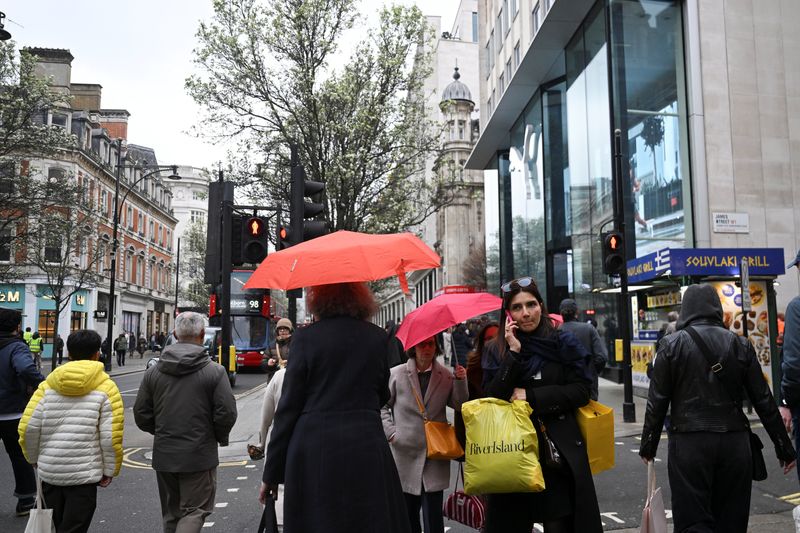
POLICY WIRE — London, UK — The rattle of shopping trolleys on Britain’s high streets just got quieter. The once-dependable thrum of consumerism—the very heartbeat of a post-industrial economy—has all but flatlined, signaling a malaise far deeper than mere post-holiday blues. New data paints a stark picture: the nation’s households, squeezed dry by inflation and stubbornly high interest rates, have slammed the brakes on discretionary spending. For the first time in a substantial period, money isn’t flowing.
It’s not just a statistic on a spreadsheet; it’s the untold story behind every half-empty high street shop, every postponed purchase, every sigh of resignation at the petrol pump. And it’s worse than many imagined. Barclays card data, a sprawling testament to the ebb and flow of everyday British commerce, confirms what anecdotal whispers have long suggested: UK consumer spending declined by 0.8% in May 2024 compared to the previous year. This marks the first annual contraction since the depths of the 2020 pandemic lockdowns, an almost uncanny echo of an economic paralysis most thought was long behind them.
Chancellor Jeremy Hunt, always quick with a polished soundbite, acknowledged the data with a practiced nod to resilience. “We’re acutely aware that families are feeling the pinch,” he stated in an official release. “But our economy is proving more robust than many predicted just months ago. This adjustment in spending, while challenging, reflects necessary measures to tame inflation and pave the way for sustainable, long-term growth.” A predictable message, delivered with an unblinking earnestness that belies the grinding reality for millions.
But analysts aren’t buying the government’s rosy projections quite so readily. Dr. Evelyn Thorne, Chief UK Economist at Ascendant Capital Partners in London, offered a more unvarnished perspective. “Frankly, we saw this coming. Years of suppressed wage growth, followed by an inflationary spike unlike anything in a generation, was always going to hit households right in the wallet,” she mused during a press briefing, adjusting her spectacles. “People aren’t just being careful; they’re making tough choices between new clothes — and keeping the heating on. That 0.8% isn’t just a number; it’s a hundred thousand quiet renunciations every day.”
The impact stretches far beyond the island’s shores. Because Britain remains a major trading partner, a slowdown here reverberates. Consider the textile exporters in Pakistan, for example, whose fortunes are intricately tied to Western demand for garments. A faltering British consumer means fewer orders, factories idling, and ultimately, fewer remittances sent back by Pakistani diaspora working in the UK – a vital lifeline for many families. It’s a cruel economic domino effect.
That subtle shift in buying patterns—a new dress forgone here, a gadget put back on the shelf there—isn’t confined to high street retailers or online behemoths. It trickles down, affecting everything from logistics companies to commodity markets, sending tiny ripples through global supply chains. For emerging economies in the Muslim world, heavily reliant on export markets and overseas worker remittances, the UK’s economic cough can feel like a genuine chest infection. That’s just how interconnected things are.
📄 POLICY WIRE WHITEPAPER PUBLISHED: PAKISTAN'S NATIONAL SECURITY POLICY PRIORITIES
👉 READ BY CLICKING HEREThe latest Office for National Statistics (ONS) figures show core inflation, while down from its peak, still hovers uncomfortably above the Bank of England’s 2% target, forcing policymakers into a perpetual high-wire act. They want to cut rates — and stimulate growth, but they also fear reigniting the inflationary beast. It’s a dance as old as capitalism itself—and right now, nobody’s quite sure who’s leading.
What This Means
This widespread consumer contraction isn’t just a bump in the road; it’s a gaping pothole on the path to economic recovery. Politically, it complicates matters immensely for the incumbent government, already facing a skeptical electorate weary of promises that haven’t quite materialized. It’s hard to talk about prosperity when families are scrutinizing every supermarket receipt.
Economically, expect further pressure on retailers, some of whom won’t survive this lean period. The decline in discretionary spending also has an insidious long-term effect: it saps confidence, discouraging investment and innovation. But it isn’t just internal dynamics at play. The UK’s economic health, or lack thereof, directly influences its engagement with countries far afield. Diminished domestic consumption might mean a slightly weaker pound, making imports—including those from burgeoning markets in South Asia—comparatively more expensive for British buyers, further depressing demand.
And because the UK often acts as a barometer for broader Western European economic sentiment, its slowdown could be read as a canary in the coal mine for global demand, impacting nations like India, which relies on consistent export markets. It also puts a damper on potential BRICS expansion plans for trade partnerships if a key historical market shrinks. It means a prolonged period of economic stagnation is far more likely than a swift rebound. Don’t expect things to perk up overnight; the foundations have eroded a fair bit. And sometimes, you know, the most accurate forecasts are simply watching what people aren’t buying.