

Japan’s Silent Storm: BOJ’s Tightrope Walk Amidst Growing Dissent
POLICY WIRE — Tokyo, Japan — For years, the Bank of Japan stood as an unwavering outlier, a steadfast believer in quantitative easing even as the rest of the world fretted about runaway inflation....

POLICY WIRE — Tokyo, Japan — For years, the Bank of Japan stood as an unwavering outlier, a steadfast believer in quantitative easing even as the rest of the world fretted about runaway inflation. Now, the quiet halls of their grand Tokyo headquarters are rumbling, not with celebratory speeches, but with a growing internal chorus demanding an exit from that decades-long unconventional path. The summary of their April meeting—a document usually about as thrilling as a tax audit—shows some senior members aren’t just thinking about a rate hike. They want one. Soon. And that, my friends, is no small thing.
It’s not often you hear such candid whispers escape the famously tight-lipped central bank. For an institution long defined by its battle against deflation, this shift represents a fundamental, almost existential, realignment. The notion that the BOJ, even just a vocal minority within its ranks, believes it’s time to yank up borrowing costs speaks volumes. It speaks of a Japan grappling with price hikes they haven’t seen in ages, a weak yen squeezing household budgets, and an economy perhaps (just perhaps) shaking off its deflationary shackles for good. They’re weighing up a massive generational change in policy. No pressure, right?
The market had its little heart attack, as it always does. The yen did its typical dance, then settled back into its weary decline. But don’t be fooled. This isn’t just bureaucratic nitpicking. This is about what happens when years of careful monetary scaffolding starts to groan under the weight of new economic realities. Because frankly, maintaining ultra-low rates while global economies grapple with stickier-than-expected inflation feels, well, a tad anachronistic. Japan’s core consumer price index, excluding fresh food, surged by 2.5% year-on-year in April, according to the Ministry of Internal Affairs and Communications. That’s a far cry from the sub-zero readings of not so long ago. That’s a real shift.
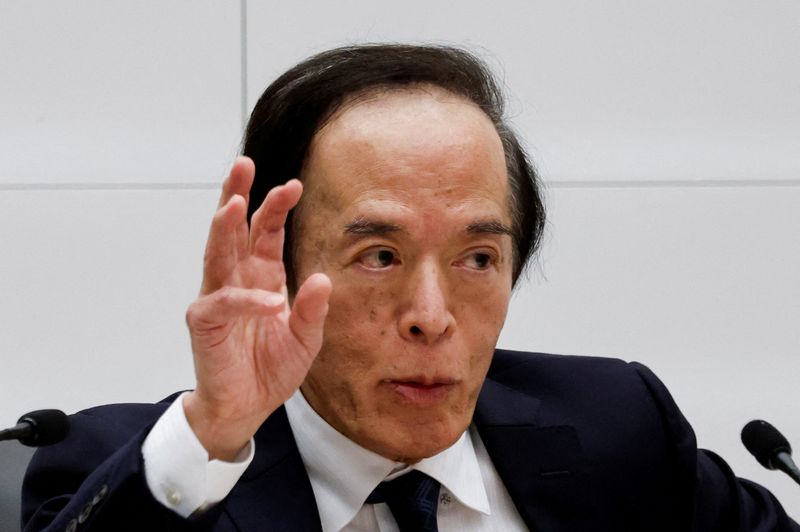
“We’re carefully assessing the sustainability of these price trends and wage growth,” BOJ Governor Kazuo Ueda reportedly stated, in his typically understated way, during the discussions. “The path forward demands prudence, not haste, especially given the historical context of our economy.” But a dissenting voice, often cloaked in anonymity, cut straight through the official line: “Waiting for perfect clarity could prove far more costly than acting with appropriate speed. The window is closing, I reckon. Delay risks igniting inflationary expectations we’ve fought for too long.”
And that’s the rub, isn’t it? The central bank isn’t just looking at the present; it’s also staring down decades of economic dogma. The fear of prematurely choking off nascent growth, of sliding back into deflationary quicksand, is deeply ingrained. But equally, the fear of letting inflation get away—a fear largely foreign to recent Japanese memory—is starting to prickle. It’s a classic Catch-22, played out in yen — and basis points.
📄 POLICY WIRE WHITEPAPER PUBLISHED: PAKISTAN'S NATIONAL SECURITY POLICY PRIORITIES
👉 READ BY CLICKING HEREThe global consequences, even of this subtle shift in tone, are not insignificant. When an economic Goliath like Japan hints at moving rates, others take note. The value of the yen, in particular, plays a critical role in international trade — and finance. A weaker yen might seem like a boost for Japanese exporters, but it makes imports agonizingly expensive. Think about how that plays out for nations that rely heavily on imported goods, often priced in dollars. Economies from Pakistan to Indonesia (which, coincidentally, has its own delicate economic tightrope act, as chronicled here) suddenly face higher import bills for oil, raw materials, even food, exacerbating their own cost-of-living crises. Global interconnectedness ensures that Tokyo’s domestic deliberations ripple outward.
What This Means
This isn’t a mere academic squabble; it’s a fight for Japan’s economic soul. The emerging dissent within the Bank of Japan suggests that Governor Ueda, despite his cautious public stance, might have less room to maneuver than previously thought. The hawks aren’t just chirping; they’re getting louder, demanding action before inflation—currently benign compared to Western standards but shockingly high for Japan—becomes entrenched. This implies that the era of near-zero interest rates could well be ending sooner than many anticipated, impacting everything from domestic savings accounts to the global carry trade. It signals a potential tightening in global liquidity, which could constrain growth in export-reliant economies and further stress indebted nations. Markets aren’t just looking for clues now; they’re scrutinizing every comma in those meeting minutes, desperate to decipher when the other shoe will drop. For other major economies facing their own economic headaches, as Britain’s experience shows, Japan’s policy pivot is a watchword, a precursor perhaps to broader central bank adjustments worldwide. Don’t think for a second that this isn’t making waves from Wall Street to Islamabad. This quiet battle in Tokyo could reshape investment flows — and national budgets well beyond its shores.