

Silent Billions: Inside Israel’s Quiet War on Dirty Money
POLICY WIRE — Tel Aviv, Israel — It’s a strange thing, isn’t it? The world hums along, worried about inflation and skirmishes at the border, while beneath the surface, hundreds of millions in cold,...

POLICY WIRE — Tel Aviv, Israel — It’s a strange thing, isn’t it? The world hums along, worried about inflation and skirmishes at the border, while beneath the surface, hundreds of millions in cold, hard cash just… appears. And then, just as swiftly, it vanishes again, whisked away by the state. That’s the unsettling rhythm that played out in northern Israel recently, a significant but quietly handled operation that ripped through the underbelly of what we might call the ‘informal’ economy—a polite term, mind you, for something far grittier.
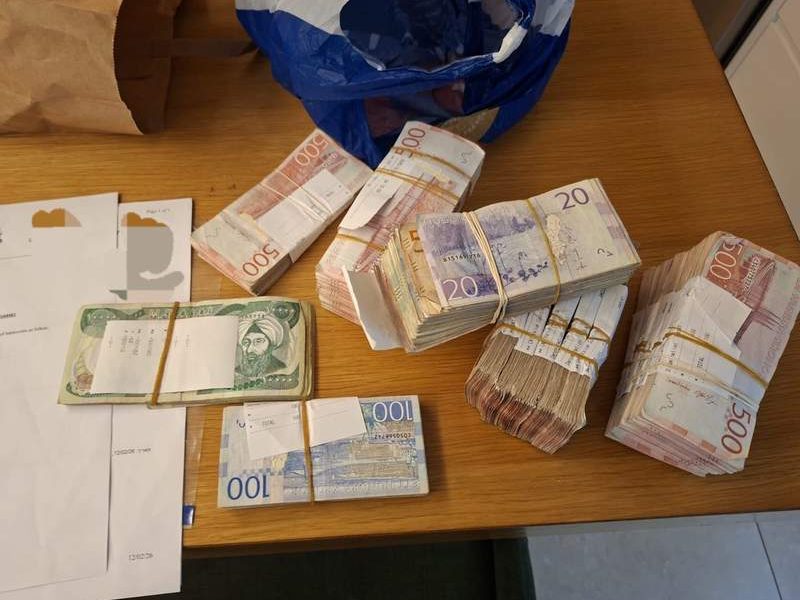
Israeli police and financial investigators, acting with the kind of calculated precision usually reserved for spy thrillers, descended on multiple locations across the Galilee region. They weren’t after flashy gold bars or encrypted cryptocurrency wallets. No, this was about tangible stacks of paper, literally hundreds of millions of Israeli New Shekels (NIS), cash so immense it practically overflows its conventional containers. This wasn’t small change; we’re talking the kind of money that fuels more than just a local syndicate. It bankrolls a shadow economy, feeding everything from drug peddling to protection rackets—and, sometimes, far worse.
But why the relative silence surrounding a seizure of this magnitude? That’s where the dry bureaucratic speak of law enforcement meets the grim realities of high-stakes finance. Authorities, particularly the Lahav 433 national crime unit, have been meticulously—and patiently, one might add—mapping these sprawling financial conduits for years. “We’re not just plucking a single bad apple; we’re uprooting an orchard,” stated Israeli Finance Minister Bezalel Smotrich, his voice firm during a rare public comment on the broader campaign. “These are operations designed to cripple the systemic flow of illicit funds, funds that actively undermine our societal fabric and our national security. It’s a relentless, often thankless, grind.” It’s.
And it’s a grind that isn’t confined to Israel’s borders, not by a long shot. The very networks moving this kind of untaxed, unexplained wealth are often global, stitching together disparate corners of the globe. You see, the cash that changes hands in a Galilee village can very easily find its next temporary home in a shell company routed through, say, Dubai, eventually linking up with other illicit flows traversing the vast informal financial pathways that often intersect the Pakistan-Afghanistan region.
These informal transfer systems, or hawala networks, don’t care much for official borders or currency controls. They operate on trust—or, more accurately, on mutually assured destruction if that trust is broken. According to a 2021 Financial Action Task Force (FATF) report, such alternative remittance systems, particularly in regions prone to conflict or with significant migrant populations, annually process sums collectively estimated to run into the hundreds of billions of dollars globally, a sizable chunk of which operates entirely outside regulatory purview.
This isn’t merely about local criminals trying to evade their taxes. When hundreds of millions surface like this, it implies a serious operational capacity—the kind that requires sophisticated logistics and deep, transnational connections. “These seizures represent more than just numbers; they’re windows into a larger, interconnected web of dark money,” explained Dr. Ayesha Siddiqa, a leading expert on illicit finance in South Asia, during a virtual Policy Wire seminar. “From the Red Sea’s shipping lanes to the bazaars of Karachi, cash movements without scrutiny remain a significant tool for everyone from smugglers to extremist groups. Any crack in that façade, anywhere, sends tremors across the whole system.”
📄 POLICY WIRE WHITEPAPER PUBLISHED: PAKISTAN'S NATIONAL SECURITY POLICY PRIORITIES
👉 READ BY CLICKING HEREBecause ultimately, where there’s that much unregulated money, there’s a serious governance deficit, a vacuum waiting to be filled by those who don’t play by anyone’s rules but their own. And that, friends, means a loss of public funds, a corrosive effect on legitimate businesses, and, let’s be frank, a direct challenge to the state’s authority. It also complicates regional stability. Dirty money is the silent fuel for all sorts of destabilizing actors.
What This Means
The quiet removal of such an immense sum by Israeli authorities isn’t just a good day for law enforcement; it’s a stark reminder of the perpetual, low-intensity war being waged against financial subterfuge. Politically, it signals an unyielding stance, particularly as the country faces domestic turmoil and external pressures. Economically, disrupting these pipelines chips away at the black market’s competitive advantage over regulated businesses, however marginally. But the broader implications extend further, acting as a crucial intelligence coup for understanding the deeper, more opaque layers of regional finance. It confirms that the lines between petty crime, organized gangs, and geopolitical destabilization are often blurrier than any official would like to admit. It isn’t just about Israeli criminals, it’s about a global problem that just happened to manifest, momentarily, in a Galilee safe house. That’s a thought to chew on.