

Silent Diplomacy or Public Outcry? Brella Family’s UK Plea Rattles Foreign Office
POLICY WIRE — London, UK — It wasn’t the usual parliamentary kerfuffle that had Westminster buzzing; instead, it was the quiet, determined arrival of the Brella family. They’re here for...

POLICY WIRE — London, UK — It wasn’t the usual parliamentary kerfuffle that had Westminster buzzing; instead, it was the quiet, determined arrival of the Brella family. They’re here for talks, or, more accurately, to drag an inconvenient truth into the daylight. The family of Harshita Brella, a British national reportedly held without clear charge in a Middle Eastern nation—a nation notoriously reticent about its judicial processes—has landed in London, ostensibly to press the Foreign, Commonwealth & Development Office (FCDO) for more decisive action. But their presence itself screams volumes about the current government’s preferred methods of ‘quiet diplomacy,’ or perhaps, its quiet paralysis.
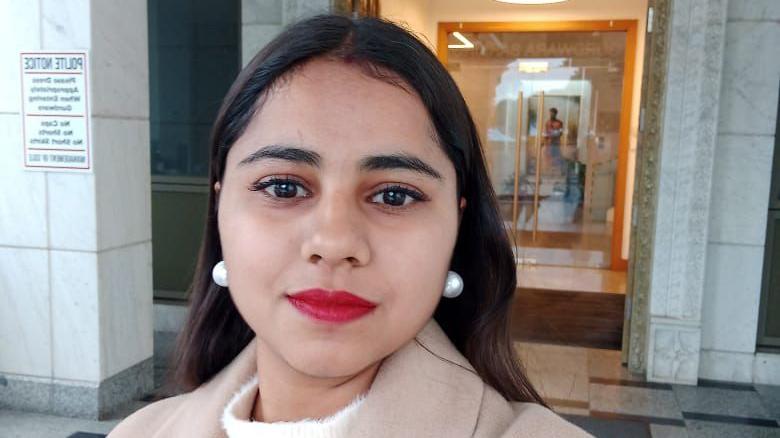
Harshita Brella, 34, a former aid worker with strong Pakistani family ties—her grandparents migrated to the UK in the 1960s—vanished five months ago during a consulting trip. Details have been frustratingly scant, a murky pool of ‘sources familiar with the matter’ and opaque state communications. The government, for its part, maintains it’s engaged in intense, high-level discussions. You know the drill: ‘consular assistance is being provided,’ ‘we’re aware of the case,’ — and so on. They always say that.
Her family, however, isn’t buying the calm facade. They want their daughter home. Now. And they aren’t afraid to turn up the heat. “We’ve waited patiently, believing in the FCDO’s assurances,” said Tariq Brella, Harshita’s uncle and a community leader, to reporters upon arrival at Heathrow, his voice a gravelly mix of grief and exasperation. “But where’s the outcome? London can’t keep hiding behind ‘diplomatic channels’ while a British citizen wastes away.”
The situation casts a stark light on the dilemmas faced by Western governments when one of their own is detained in states with vastly different legal frameworks and human rights records. It’s not a new playbook; it just feels like the pages are sticking together more often lately. Official figures from last year indicated a 30% rise in complex consular cases involving British nationals held in non-allied countries, a figure largely unacknowledged in mainstream political discourse, probably because it’s so utterly inconvenient. You see, the FCDO loves to tout its ability to protect citizens abroad, but then gets all twitchy when asked to actually do it, especially if it means ruffling feathers.
A senior FCDO spokesperson, speaking on background—because of course, they always prefer to operate in the shadows when things get truly messy—insisted on the complexity of the situation. “Our approach has always been calibrated — and designed to achieve the best possible outcome for our nationals. Public grandstanding, however tempting it may be, often complicates sensitive negotiations.” But really, doesn’t silence sometimes equate to tacit acceptance? You’ve got to wonder.
Because, frankly, these cases expose the often-stark disconnect between grand declarations of sovereignty and the grubby realities of international leverage. It’s one thing to sanction oligarchs; it’s another to extract a citizen from a nation that frankly doesn’t care about your public statements. And this isn’t just about a single family’s anguish. It’s about how Britain defines its moral red lines on the global stage, especially concerning its dual nationals, a significant demographic, particularly in communities with roots across South Asia and the wider Muslim world.
📄 POLICY WIRE WHITEPAPER PUBLISHED: PAKISTAN'S NATIONAL SECURITY POLICY PRIORITIES
👉 READ BY CLICKING HEREFor Pakistan, the situation might also be watched closely. While Brella’s detention isn’t in Pakistan itself, the broader issues of consular protection and diaspora rights are keenly felt. Many British citizens of Pakistani heritage hold dual nationality, putting them in a grey area should they encounter legal trouble in either nation, or even third countries. The delicate balance between allegiance and protection—that’s often where the actual political drama unfolds. It’s a complicated, messy business, not unlike Japan’s uneasy balancing act as it navigates economic dependencies amid Mideast political upheaval.
What This Means
The arrival of the Brella family marks a critical inflection point for the FCDO, forcing the government’s hand beyond its customary ‘speak softly’ approach. The political implications are immediate and twofold: domestically, it ratchets up pressure on the current administration to demonstrate tangible results in securing the release of British nationals detained overseas, potentially eroding public trust in their ability to protect citizens. Opposition parties will undoubtedly seize on this, questioning the government’s resolve — and efficacy. Economically, while not a direct financial threat, such cases can deter future foreign investment and humanitarian operations by British organizations in countries perceived as unstable or legally opaque, complicating bilateral relations.
the Brella case, with its strong ethnic dimension, highlights the enduring challenge of defining consular protection for dual nationals or those with strong ancestral ties. It subtly but unmistakably shifts the debate from generalized human rights advocacy to a deeply personal and politically charged test of state responsibility. The FCDO will now be fighting a battle on two fronts: the private diplomatic channels, where their preferred chess game is played, and the very public court of public opinion, where families like the Bellas have chosen to plant their flag. Their desperate hope? That some things can’t simply be swept under the diplomatic rug.