
Petro-Feud: The Hague Confronts Colonial Ghosts as Guyana’s Oil Wealth Ignites Venezuela’s Essequibo Claim
POLICY WIRE — The Hague, Netherlands — For decades, the Essequibo was just a vast, verdant expanse—a mere geographical curiosity marking the boundary between a resource-rich...

POLICY WIRE — The Hague, Netherlands — For decades, the Essequibo was just a vast, verdant expanse—a mere geographical curiosity marking the boundary between a resource-rich leviathan and its diminutive, often overlooked neighbor. Then came the oil. Not just a trickle, but a deluge. A geologic lottery win that transformed Guyana from a largely agrarian backwater into a petro-state-in-waiting, projecting a staggering 11 billion barrels of recoverable oil and gas resources. And just like that, what was once a dormant, almost forgotten dispute has roared back to life, its ancient colonial roots now soaked in crude.
It’s this explosive cocktail of history, hydrocarbons, and simmering nationalistic fervor that now occupies the dignified chambers of the International Court of Justice (ICJ). The world’s highest court is poised to adjudicate Venezuela’s century-old claim to more than two-thirds of Guyana’s sovereign territory—a claim reignited with an intensity that threatens regional stability, all because of what lies beneath the sea. This isn’t merely a squabble over lines on a map; it’s a harbinger of new global fronts, where economic imperatives redraw geopolitical boundaries with shocking speed.
At its core, the dispute hinges on an 1899 arbitral award, which established the boundary between British Guiana (then a colony) and Venezuela. For decades following, the line held. But in 1966, just hours before Guyana gained independence, Venezuela declared the award null — and void, alleging fraud. Still, the issue largely languished in diplomatic purgatory until 2015. That’s when ExxonMobil announced monumental offshore oil discoveries in the Stabroek Block, precisely within the contested maritime zone. Suddenly, a historical footnote became a geopolitical flashpoint, turning a juridical abstraction into a tangible, immensely valuable prize.
Guyana, a nation with a GDP per capita that historically hovered near the bottom of South America’s rankings (it’s now one of the fastest-growing globally, thanks to oil), views the ICJ as the final arbiter. They’ve consistently argued for the sanctity of the 1899 award — and the fundamental principles of international law. “This isn’t about natural resources; it’s about the sanctity of international law and the inviolability of established borders,” asserted Mohabir Anil Nandlall, Guyana’s Attorney General, in a recent press conference. “Our sovereignty, reaffirmed by the 1899 arbitral award, isn’t up for negotiation—it’s for adjudication.” He’s got a point: what’s international law for, if not such intractable disagreements?
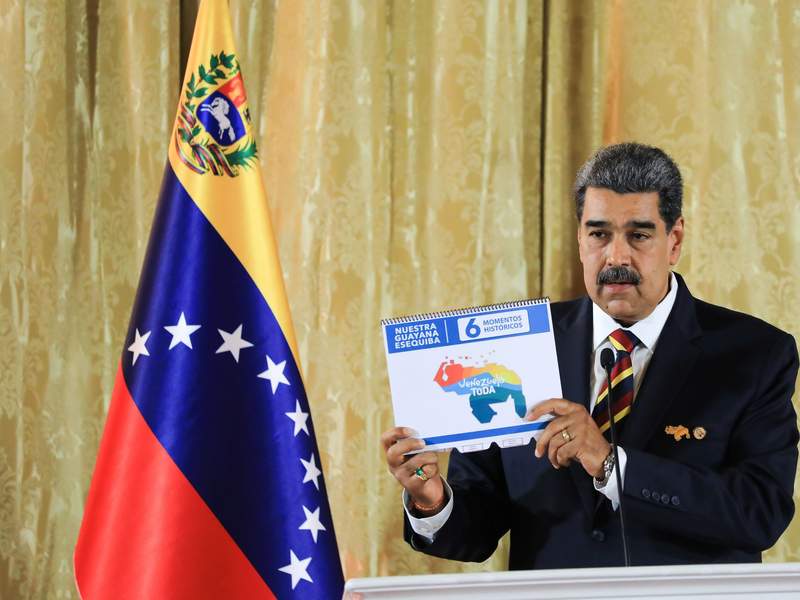
Venezuela, conversely, vehemently rejects the ICJ’s jurisdiction. Caracas maintains that the only legitimate path forward is direct bilateral negotiation, as stipulated by the 1966 Geneva Agreement. They view the 1899 award as an imperial diktat, imposed by colonial powers (Britain and Russia, acting for Venezuela) without true Venezuelan consent. “We stand firm on our historical right to Essequibo, a territory brazenly stolen through a fraudulent colonial arbitration,” shot back Venezuelan Foreign Minister Yván Gil Pinto, speaking from Caracas. “The International Court of Justice has no jurisdiction over this matter; it’s a bilateral issue for sovereign nations, not an arena for perpetuating imperial injustices.” His government even held a controversial referendum in December 2023, where voters overwhelmingly backed annexing the Essequibo, a move dismissed by Georgetown and much of the international community as a transparent land grab.
Behind the headlines, this dispute is a stark reminder of the enduring fragility of post-colonial borders, often drawn arbitrarily by distant empires. In many corners of the globe, from Africa to Asia, such historical cartographic injustices continue to fuel conflict. Consider, for instance, the unresolved legacy of colonial partition in South Asia, where the enduring tensions over Kashmir—itself a product of hasty British withdrawal—underscore how 19th-century decisions can breed 21st-century flashpoints. The mechanisms for resolving these grievances—or failing to—often echo themes playing out in The Hague, where the ghosts of empire still cast long, acquisitive shadows.
The burgeoning wealth has, however, introduced a brutal calculus of returns that now complicates everything. According to industry estimates, largely from ExxonMobil, the dominant player in Guyana’s offshore fields, the nation’s confirmed recoverable oil and gas resources now exceed a staggering 11 billion barrels. That’s more crude than some OPEC nations possess, and it’s propelled Guyana to the forefront of the global energy conversation. For a nation of just 800,000, it’s an unprecedented economic transformation, but one shadowed by the territorial ambitions of its considerably larger, more powerful neighbor.
Neighboring countries, especially Brazil, are watching with bated breath. Any escalation could destabilize a region already grappling with its own internal complexities and the enduring influence of external powers. So the ICJ’s ruling won’t just be a legal precedent; it’ll be a geopolitical pronouncement, setting a tone for how the world navigates inherited borders and newly discovered riches.
What This Means
The ICJ’s eventual ruling on the Essequibo dispute will carry colossal political — and economic implications. For Guyana, a favorable judgment would solidify its sovereignty over its resource-rich territory, unlocking its full economic potential and validating its reliance on international legal frameworks. It would also likely encourage further foreign direct investment into its burgeoning oil and gas sector, accelerating its trajectory as a major global energy player. But it’s not without risk; a legally favorable outcome doesn’t automatically guarantee Caracas’s compliance, leading potentially to continued diplomatic friction and border militarization.
For Venezuela, a loss would be a significant blow to President Nicolás Maduro’s government, which has leveraged the Essequibo claim to rally nationalist sentiment amid severe domestic economic woes. It could further isolate Caracas on the international stage, complicating its efforts to re-engage with global financial markets and escape its pariah status. Conversely, even a partial victory—or simply protracted legal wrangling—could allow Maduro to maintain the nationalist narrative, deflecting from internal challenges. The larger concern is the precedent set: can a powerful nation simply ignore international court rulings when convenient, or will the international community find ways to enforce its decisions? The answer to that question will resonate far beyond the Caribbean, shaping the future of territorial disputes for years to come.