

Diplomacy’s Digital Death Knell: Trump Torpedoes Iran Deal as Strait Smolders
POLICY WIRE — Washington, D.C. — Another Sunday, another seismic geopolitical tremor, delivered not by earth’s shifting plates, but by a certain President’s digital decree. Barely had...

POLICY WIRE — Washington, D.C. — Another Sunday, another seismic geopolitical tremor, delivered not by earth’s shifting plates, but by a certain President’s digital decree. Barely had Pakistani envoys finished ferrying Tehran’s latest thoughts across the diplomatic chasm than Donald Trump, U.S. President, blasted them into oblivion with a succinct, all-caps declaration: “TOTALLY UNACCEPTABLE!” Diplomacy, it seems, has become a high-stakes, real-time Twitter sport—and a casualty. We’re watching it unfold, aren’t we?
It’s a peculiar rhythm, this international brinkmanship. The careful, arduous dance of emissaries and proposals—some might call it diplomacy’s last gasp—got summarily beheaded by a single social media post. Tehran’s demands, broadcast via state television, felt pretty stark. They weren’t just asking for a deal; they wanted “war reparations by the U.S., full Iranian sovereignty over the Strait of Hormuz, an end to sanctions, and the release of seized Iranian assets.” Yeah, it was a hefty shopping list. The U.S. proposal, meanwhile, had been trying to coax them into reopening the Strait — and dialing back their nuclear program. It wasn’t ever going to be an easy chat, not with nearly 50 years of bad blood churning.
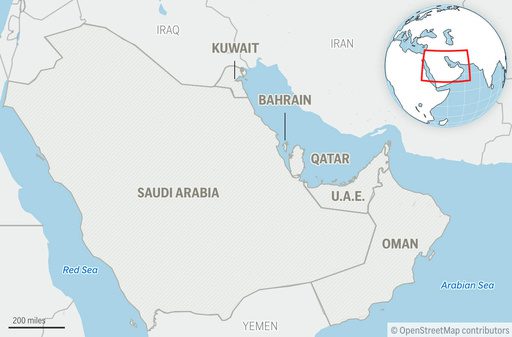
Because, really, this isn’t just about a broken proposal. It’s about a deeply entrenched rivalry that’s currently — and literally — catching fire. Even as talking heads mumbled about a path forward, drones were doing their dirty work. Small blazes on tankers off Qatar, reports of drones breaching Kuwaiti — and UAE airspace – one of which was shot down. The blame quickly pointed to Iran. No one’s taking credit, naturally. But the message is pretty clear: the Gulf remains a tinderbox, negotiations or no negotiations.
So, where do we go from here? Mike Waltz, the U.S. ambassador to the United Nations, had earlier told ABC News that the administration was still “giving diplomacy every chance we possibly can before going back to hostilities.” That sentiment now sounds rather quaint, doesn’t it? Like something from another, less impulsive, era. But then, you’ve got to wonder how many “chances” are truly left. Because Iranian state media also piped up, citing their new Supreme Leader, Mojtaba Khamenei, issuing “new and decisive directives for the continuation of operations.” Vague, yes, but hardly reassuring.
The stakes couldn’t be higher. Iran has, for months, largely bottled up the Strait of Hormuz—the skinny little choke point where something like a third of the world’s seaborne oil passes. And it’s not just oil; fertilizer, natural gas, you name it, it’s in play. The Hormuz situation has world markets totally jangled. But don’t imagine the U.S. isn’t hitting back. They’ve got a blockade running since April, turning away dozens of commercial vessels, even dinging a couple of Iranian oil tankers just last Friday. That’s an escalation. And Iran’s Revolutionary Guard? They’ve warned that any attacks on their ships will be met with “a heavy assault” on U.S. regional bases. It’s not just talk; it’s a terrifying potential roadmap.
📄 POLICY WIRE WHITEPAPER PUBLISHED: PAKISTAN'S NATIONAL SECURITY POLICY PRIORITIES
👉 READ BY CLICKING HERELet’s not forget the nuclear elephant in the room. The U.N. nuclear agency states Iran now holds more than 440 kilograms (970 pounds) of uranium enriched up to 60% purity. That’s a short hop from weapons grade, a fact that certainly isn’t lost on Israel. Benjamin Netanyahu, Israel’s Prime Minister, isn’t sugarcoating it. He told CBS’s ’60 Minutes’ that President Trump had personally confessed, “I want to go in there,” to deal with the enriched uranium, adding that Netanyahu himself believed “it can be done physically.” Casual words for contemplating something so utterly destructive.
And let’s pause for a moment to consider Pakistan’s role here. They’ve been playing intermediary, trying to calm the waters. It’s a delicate diplomatic tightrope in a region that desperately needs stability—something that this current deadlock isn’t delivering. The consequences of outright conflict here wouldn’t just rattle the Gulf; they’d echo through all of South Asia and the broader Muslim world, with oil prices rocketing and geopolitical fault lines deepening. Nobody wants that. But don’t hold your breath.
What This Means
This rejection marks a near-complete breakdown of traditional diplomatic avenues between Washington — and Tehran. For the short term, expect increased volatility in energy markets and continued, perhaps even intensified, low-level military exchanges within the Gulf. The immediate implication is that both sides feel they can still gain leverage through escalation, or at least avoid looking weak. Trump’s blunt rejection—his signature move, if we’re honest—signals a clear preference for coercion over compromise, potentially pushing Tehran closer to a maximalist stance. Economically, this means higher oil prices are likely here to stay for a while, hurting global consumers, particularly in energy-importing nations across Asia. Politically, Washington and Tehran now seem locked into a cycle where face-saving gestures trump actual de-escalation, making a genuine off-ramp incredibly difficult to construct.