

Beyond the Bleachers: Lee Faria’s Legacy as a Microcosm of Local Media’s Shifting Plateaus
POLICY WIRE — ALBUQUERQUE, N.M. — It wasn’t the roar of a championship crowd, nor the clamor of a Hall of Fame induction, but the quiet, dignified applause for Lee Faria at an Albuquerque...

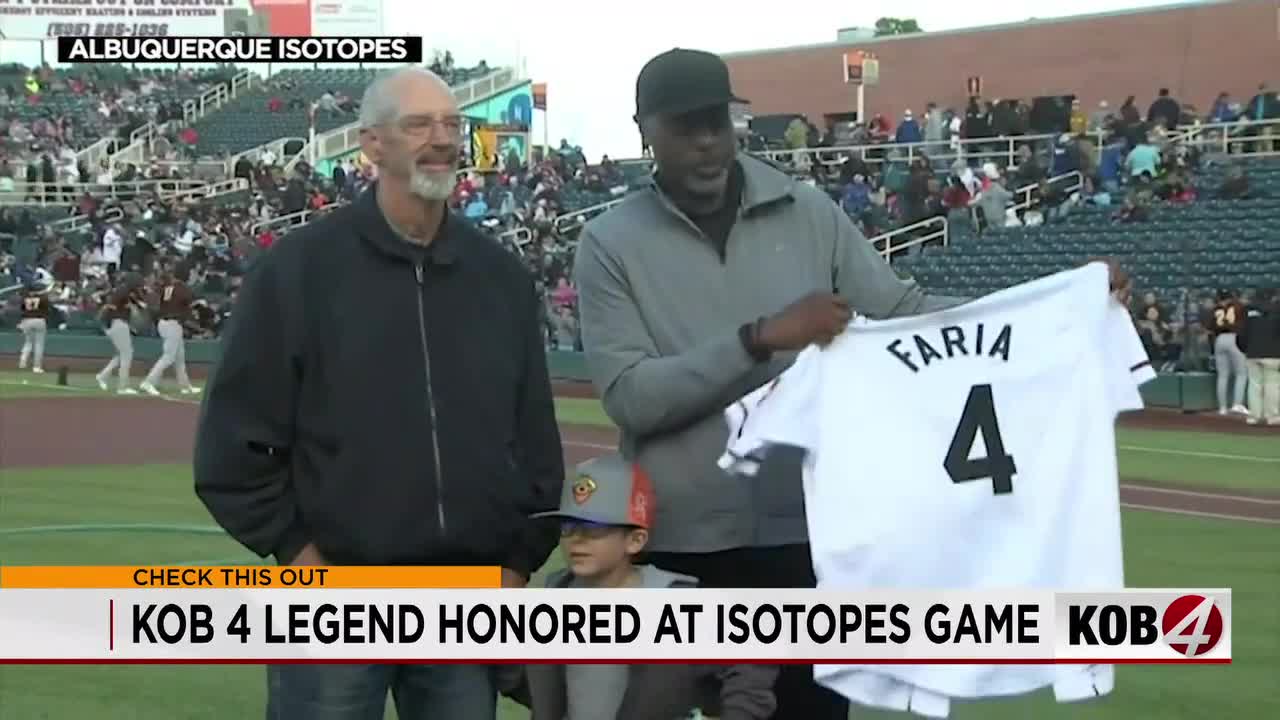
POLICY WIRE — ALBUQUERQUE, N.M. — It wasn’t the roar of a championship crowd, nor the clamor of a Hall of Fame induction, but the quiet, dignified applause for Lee Faria at an Albuquerque Isotopes game that truly underscored a seismic shift in American media. The veteran KOB 4 sports director, a fixture for decades, received a jersey—number 4, of course—and threw out a ceremonial first pitch. But behind the benign veneer of local homage lay a more profound narrative: the precarious, yet tenacious, grip of regional journalism in an increasingly homogenized, digitally-driven world.
For twenty years, Faria wasn’s just reporting scores; he was weaving the fabric of community identity. His longevity, a quarter-century commitment to New Mexico’s athletic narratives, feels almost anachronistic now. It’s a testament to an era when local broadcasters were more than mere conduits of information; they were trusted arbiters of shared experience, faces as familiar as one’s neighbors. Still, that era, with its comfortable certainties, has been steadily eroding, its foundations chipped away by economic pressures, fragmented audiences, and the relentless march of digital disruption. One can’t help but note the irony: celebrating a local legend while the very ecosystem that produced him struggles for oxygen.
“Lee Faria isn’t just a sports anchor; he’s an institution,” Senator Patricia Montoya (D-NM) shot back when asked about the cultural significance of such figures. “He’s chronicled generations of triumphs — and heartbreaks, giving voice to our aspirations. In a state like New Mexico, where local identity is paramount, these connections—these tangible bonds forged through shared stories—are what hold us together. We don’t just lose a reporter when these giants retire; we lose a piece of our collective memory, a thread in our community’s tapestry.” Her sentiment, though heartfelt, belies the stark fiscal realities that often preclude the cultivation of such enduring local talent today.
But the story doesn’t end with quaint nostalgia. Its tendrils stretch into the broader geopolitical landscape, where the role of media in shaping and sustaining national identity is a perpetual, often fraught, endeavor. Consider a nation like Pakistan, where media—be it state-controlled or independent—grapples with a dizzying array of ethnic, linguistic, and political divisions. The idea of a single, universally beloved local news figure, transcending partisan lines and regional rivalries for twenty-five years, is, frankly, a fantasy. Localism in South Asia frequently devolves into factionalism, making figures like Faria—who could effortlessly unite a diverse audience around a shared love for the Lobos or Isotopes—a rare, almost mythical, construct. It forces one to ponder the inherent stability of civil society that allows such journalistic tenures to flourish in the first States.
And it’s not merely anecdotal. A 2022 Pew Research Center study revealed a stark decline in the number of Americans who say they regularly get news from local TV, with only 48% reporting regular viewership, down from 60% in 2016. This erosion, coupled with a shrinking advertising pie, means fewer resources for local stations to invest in the very human capital—the Farias of tomorrow—that built their credibility in the first place. It’s a vicious cycle, isn’t it?
“We’re witnessing a fundamental recalibration of what ‘local’ means in the age of global content,” offered Dr. Alistair Finch, a media economist at the University of New Mexico. “While Mr. Faria’s legacy is undeniable, the economics of local broadcasting have mutated. Stations are asked to do more with less, to compete with TikTok — and ESPN. Building a quarter-century career on regional sports stories—that’s a luxury few media organizations can afford to cultivate today. It speaks volumes about the value of continuity, yes, but also about the brutal calculus of modern media markets.” His assessment, while pragmatic, stings with the cold reality of profitability over permanence.
So, as the Albuquerque Isotopes celebrated Lee Faria, the moment, pregnant with nostalgia, also served as a subtle elegy for a disappearing breed. It was a nod to the irreplaceable value of local connection, a value that’s often undervalued until it’s nearly extinct. The question isn’t just about who will replace Faria; it’s about whether the structural conditions even exist to foster another like him, another anchor who can become so deeply embedded in the heart of a community.
What This Means
The veneration of figures like Lee Faria is more than just a feel-good story; it’s a critical indicator of the health—or illness—of local democratic institutions. When local news diminishes, civic engagement often follows. The economic implications are equally stark: dwindling ad revenues force consolidation, leading to less diverse voices and a greater reliance on syndicated, often nationalized, content. This homogenizes public discourse, potentially eroding the unique cultural touchstones that figures like Faria help to maintain. Politically, a weakened local media allows for unchecked power and reduces accountability, as watchdogs become fewer and less resourced. For communities striving for unique identities, particularly those in diverse cultural landscapes like New Mexico (and, by extension, developing nations with complex identity matrices), the absence of consistent, trusted local voices can lead to increased social fragmentation and a greater vulnerability to external narratives. This moment, therefore, isn’t just about sports; it’s about the scaffolding of society itself.