Kremlin’s Schröder Gambit Hits European Wall, Brussels Bites Back
POLICY WIRE — Tallinn, Estonia — They say audacity gets you nowhere in international diplomacy when the stakes are this high. But try telling Vladimir Putin that. Because Russia’s President...

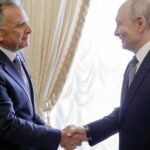
POLICY WIRE — Tallinn, Estonia — They say audacity gets you nowhere in international diplomacy when the stakes are this high. But try telling Vladimir Putin that. Because Russia’s President recently floated a suggestion, rather casually, one might say, that former German Chancellor Gerhard Schröder – a man more famous these days for his deep, controversial ties to the Kremlin than his past statesmanship – might just be the chap to broker peace in Ukraine. A mediator. Yes, a mediator.
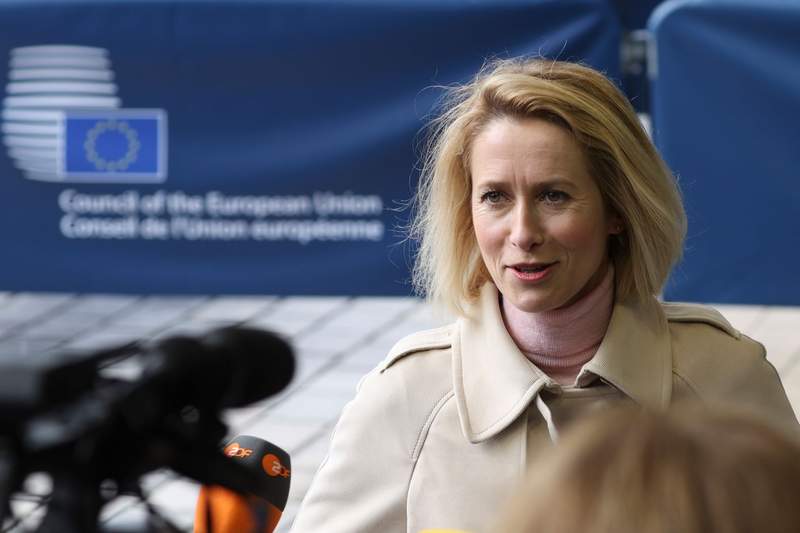
And then Europe collectively arched an eyebrow. Because seriously? Estonian Prime Minister Kaja Kallas, never one to mince words or shy from calling a spade a bloody shovel, didn’t hesitate. She smacked the notion down with the force of a geopolitical sledgehammer. “The European Union operates with a very clear principle here: we don’t appoint wolves to guard the henhouse,” Kallas quipped to Policy Wire, her tone dry as old parchment. “It’s frankly insulting to suggest that a figure so deeply compromised by ties to the very regime prosecuting this horrific war could somehow objectively broker peace. That’s a non-starter. Full stop.”
This isn’t some polite disagreement over parliamentary procedure; it’s a blunt, public rejection of a strategic, if transparent, Kremlin maneuver. Schröder, if you’ve forgotten, became something of a pariah in Berlin after he parlayed his chancellorship into lucrative, high-profile roles on the boards of Russian state-owned energy giants, including Gazprom and Rosneft. We’re talking direct connections, folks—the kind that scream conflict of interest louder than a rock concert.
Because Europe’s moved on. That’s a crucial bit of context often overlooked. Gone are the days when German Ostpolitik meant cozying up to Moscow for gas dividends. Germany, for instance, once imported roughly 55% of its natural gas from Russia—a staggering figure that plummeted to zero within two years following the full-scale invasion of Ukraine, according to data from the German Federal Ministry for Economic Affairs and Climate Action. It wasn’t an easy pivot; it cost dearly. But it happened.
So, the suggestion that Schröder, once a key architect of that former reliance, could now be a neutral arbiter is, well, pretty rich. It’s a brazen attempt by Moscow to insert a friendly face—or at least a historically accommodating one—into any future peace talks, seeking to crack the united European front.
But the Europeans aren’t biting. The consensus, for the most part, is that mediators need to be genuinely impartial. They’ve gotta have clean hands. And frankly, Schröder’s hands look about as clean as a mechanic’s after a long shift, drenched in Russian oil money. It’s not just a matter of optics; it’s about legitimacy. If you’re serious about peace, you don’t send someone who was literally on the payroll of the belligerent state.
Even President Putin’s official spokespeople couldn’t quite land the pitch without a hefty dose of euphemism. “Mr. Schröder possesses unparalleled experience and contacts across the European political landscape,” a Kremlin source, speaking anonymously on background to Policy Wire, relayed. “He is, shall we say, a bridge-builder, dedicated to dialogue — and finding mutually acceptable resolutions. His independence and commitment to achieving a just peace are, to us, without question.” They always say that, don’t they? ‘Independent’ figures with ‘unquestionable’ commitments.
This isn’t merely a European skirmish; its echoes reverberate across the globe. Nations far removed from the conflict’s direct frontline, like Pakistan or its neighbors in South Asia, keenly watch such exchanges. Many in the Muslim world, often grappling with complex geopolitical alliances and energy security concerns, seek genuine, equitable resolution to international conflicts. They don’t typically see a compromised figure as a step towards peace, particularly when principles of sovereignty and non-aggression are on the chopping block. How the West deals with a compromised intermediary impacts perceptions of fairness and justice, whether it’s in Islamabad or Jakarta.
This diplomatic face-off is really about who defines acceptable conduct in the twenty-first century, especially during wartime. It’s a reminder that political alliances and personal allegiances carry weight—sometimes a heavy, compromising weight—that can derail even the most ostensibly noble peace offerings. Europe’s position isn’t just about Ukraine; it’s about drawing a line in the sand. About what’s acceptable, — and what simply isn’t, in the grim theatre of war and peace.
What This Means
This swift, unequivocal rejection of Schröder’s candidacy as a mediator holds significant political and economic implications. Politically, it confirms Europe’s hardened stance against Russian influence peddling. There’s little appetite for backroom deals or leveraging historical connections that run counter to current strategic objectives. It means the EU isn’t going to falter, not when it comes to individuals whose allegiances are so clearly split, or, more accurately, explicitly aligned with an aggressor. It reinforces the bloc’s unity—or at least its major players’ resolve—in confronting Russia, a resolve that had seen Germany itself undergo a martial metamorphosis since the invasion.
Economically, this rejection serves as a stark message: business as usual with Russia, particularly through compromised intermediaries, is over for the foreseeable future. The past economic dependencies that fostered figures like Schröder—the lucrative gas deals, the intertwining of corporate and political interests—are viewed now as strategic vulnerabilities. This decision might even empower stronger scrutiny over other former European officials with dubious post-office roles abroad, especially if those roles benefit adversaries. For economies like India, grappling with global resource volatility as explored in India’s Scorched Earth, this steadfastness from the EU on matters of principle will be noted. It’s a testament to the fact that principles can sometimes, just sometimes, outweigh profits, at least for a while.