


IPL’s Financial Behemoths Falter: Mumbai and Lucknow’s Early Exit Rocks India’s Cricket Economy
POLICY WIRE — Mumbai, India — The stadium floodlights, those temporary suns, have dimmed prematurely for two of cricket’s colossal spenders. Forget the final whistles or the last-ball heroics. For...

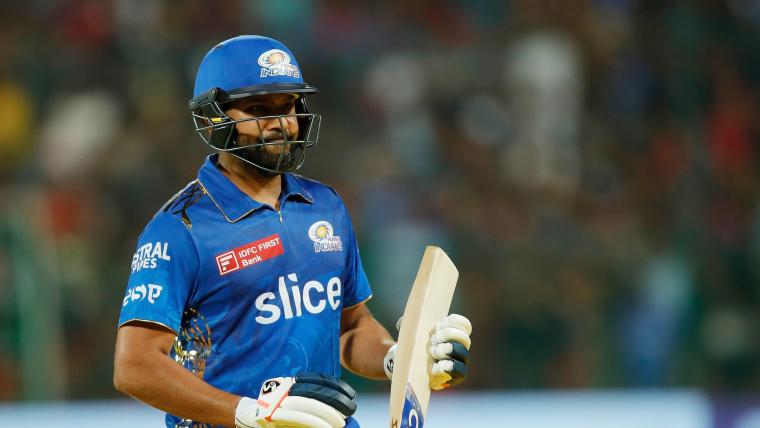
POLICY WIRE — Mumbai, India — The stadium floodlights, those temporary suns, have dimmed prematurely for two of cricket’s colossal spenders. Forget the final whistles or the last-ball heroics. For the Mumbai Indians and the Lucknow Super Giants, the roar of the crowd has become a whisper of what-ifs, not with a crescendo, but with the flat note of mathematical impossibility. Their abrupt elimination from the IPL 2026 playoffs, sealed during Sunday’s relentless double-header, wasn’t just a cricketing defeat; it’s an economic tremor across the league, a blunt reality check for franchises that operate more like publicly traded companies than sports teams.
It’s barely mid-May, yet the dream’s evaporated for two clubs often found at the sharp end of the financial — and on-field — arms race. Both sides, despite rosters packed with global superstars and dizzying salary caps, managed a mere six points from eleven grueling encounters. That puts their theoretical maximum at 12 points, a figure now woefully insufficient when Punjab Kings, perched precariously in fourth, already boast 13. The cut is clean. It’s brutal.
Lucknow felt the axe first, wilting against the Chennai Super Kings at their home ground, Chepauk. Hours later, the Royal Challengers Bengaluru, defending champions mind you, snatched a nail-biting, two-wicket victory in Raipur, extinguishing Mumbai’s last flickering hope. And just like that, the multi-million dollar investments, the brand sponsorships, the ad revenues tied to deep playoff runs—they’ve hit an unexpected, early wall.
“Look, you build a squad, you put in the capital, you expect results,” stated a visibly deflated Nita Ambani, co-owner of the Mumbai Indians, to Policy Wire, her usual poise replaced by a candid exhaustion. “But sometimes, the game just… doesn’t give you what you paid for. It’s a bitter pill, financially — and emotionally. Our fans, they don’t just watch; they invest their very souls in this. We owe them better.” Her words underscore the profound disconnect between economic might — and on-field alchemy.
This league isn’t just a sport; it’s a cultural juggernaut, a symbol of India’s economic aspirations, and a viewing obsession that sweeps through the subcontinent like wildfire. Because when Mumbai—a financial titan of Indian cricket—and Lucknow—a significant market entry—stumble, the reverberations extend far beyond the boundary ropes. For players and hopefuls across South Asia, including neighboring Pakistan where political tensions often sideline cricketing cooperation, the IPL represents an unparalleled zenith of commercial success and athletic validation. The sheer, unfathomable scale of it all—with an average match viewership of 145 million, as reported by Brand Finance India in 2023—means these early exits are more than just sports news; they’re a hiccup in a major entertainment industry.
The business of cricket, folks, is rarely dull. While two giants fall, others like Kolkata Knight Riders and Delhi Capitals teeter on the precipice, their nine and eight points respectively leaving them with virtually no margin for error. They’re technically still in it, barely. But their path, you see, is steep, narrow, — and looks increasingly grim.
“The competitive landscape of the IPL is by design,” remarked Arun Dhumal, Chairman of the IPL Governing Council, with a detached professionalism that bordered on clinical. “We ensure every team has a fighting chance, that money alone isn’t the sole determinant of victory. This outcome, unfortunate for those specific franchises, reinforces the integrity of the format. It’s a reminder that even the biggest budgets can’t buy chemistry or plain luck on a given day.”
What This Means
The early departure of perennial contenders like the Mumbai Indians, a team synonymous with IPL dominance and a beacon of brand power, isn’t merely a sporting footnote; it’s a significant policy and economic marker. For one, sponsors, already having shelled out colossal sums for association with these high-profile teams, are now staring down a dramatically shortened promotional window. That’s cold hard cash with less visibility than promised. We’re talking millions in potential missed eyeballs, merchandising slumps, and regional tourism dips in cities banking on playoff enthusiasm.
But there’s also a subtle political undercurrent. The IPL, for all its glitz, functions as a powerful instrument of soft power for India. Its appeal stretches across borders, engaging massive fan bases—a phenomenon that even transcends political hostilities, often shaping regional popular culture. A perceived dilution of the ‘star power’ by early exits, particularly of franchises associated with India’s most influential industrialists, could, in theory, subtly impact its overall global appeal, even if temporarily. More profoundly, it raises questions about competitive balance: is the format too punishing? Or does it merely underscore that in this cutthroat environment, even bottomless wallets can’t guarantee victory? It suggests that the glamour of celebrity and capital, while powerful, has its limits when confronting the unpredictable whims of sport.