


The Unpredictable Contender: How One Bout Sent UFC’s Middleweight Market into Turmoil
POLICY WIRE — CHICAGO, ILLINOIS — In the cutthroat world of elite combat sports, fortunes aren’t made; they’re wrestled, choked, and punched into existence. And just as swiftly, they can...

POLICY WIRE — CHICAGO, ILLINOIS — In the cutthroat world of elite combat sports, fortunes aren’t made; they’re wrestled, choked, and punched into existence. And just as swiftly, they can vanish. Forget the clean lines of corporate mergers or carefully negotiated treaties—the Ultimate Fighting Championship (UFC) middleweight division, post-UFC 328, looks less like a hierarchy and more like a volatile stock market after a Black Monday crash, all because Sean Strickland decided to reclaim his previous championship status.
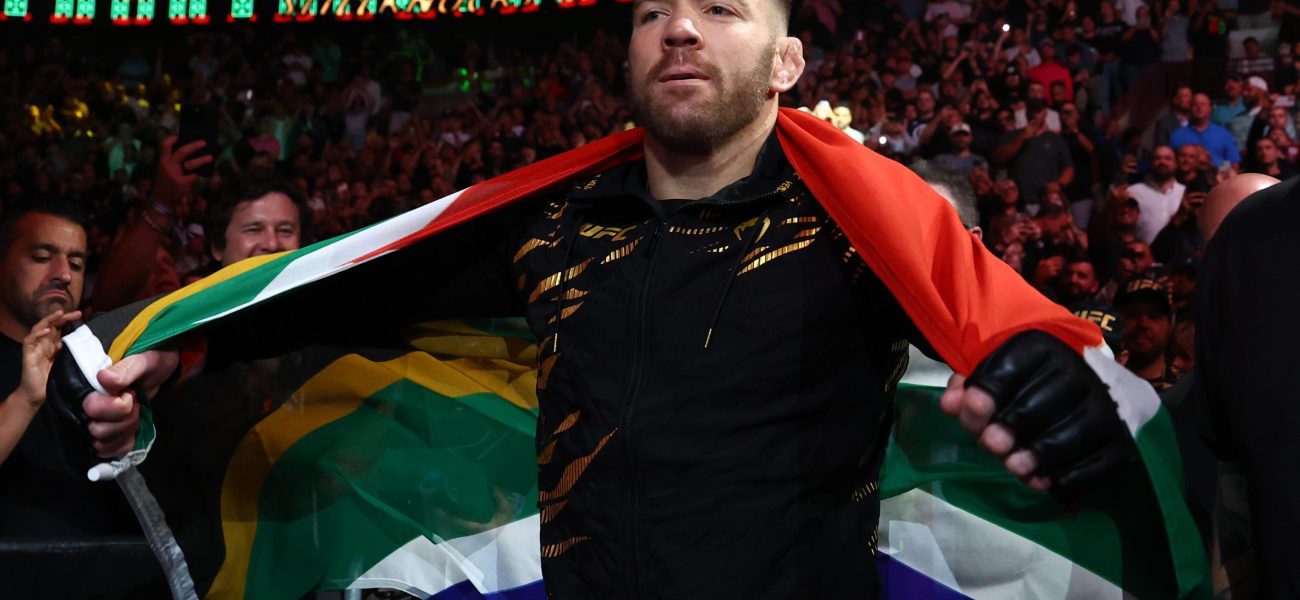
It wasn’t a policy summit, no, it was a brutal cage fight. But the outcome, Chimaev’s defeat by Strickland, carries an almost disproportionate weight, particularly for one man: Dricus du Plessis. The South African fighter, who’d captured the 185-pound strap from Strickland himself—and then dominated him in a rematch—found his world upside down last August when Khamzat Chimaev, the relentless Chechen powerhouse, ground him into submission. That defeat had, for all intents — and purposes, relegated Du Plessis to the back of the line. But here we’re, months later, — and the universe has, in its own peculiar way, tossed him a lifeline.
His joy was, let’s just say, evident. A video surfaced of Du Plessis, eyes wide, smiling ear-to-ear, applauding Strickland’s victory like a proud manager whose long-shot bet just hit big. “Fight went exactly the way I thought it would,” Du Plessis reportedly mused, a quote dripping with a particular kind of schadenfreude one only earns after a personal athletic humiliation. “Great, great fight by Strickland. Like I said, it’s so hard to keep that man on the ground… I guess this makes me world champion again.”
It’s not just a declaration; it’s a strategic maneuver. And it’s one Strickland, the newly crowned king (again), has already dismissed with his signature bluntness. “Dricus? He’s been chasing my belt, now he’s chasing his own shadow, if you ask me,” Strickland reportedly snarled during a post-fight press conference, clearly relishing his unexpected return to the top. “I just put a whole division on blast, — and I’m gonna take a damn break. The fans want to see me, sure, but I earned a vacation, and you bet your ass I’m taking one.” He then immediately suggested Nassourdine Imavov for the next shot, a tactical diversion worthy of any geopolitical maneuver.
This whole situation speaks volumes about the raw, sometimes brutal, economics of modern professional fighting. These aren’t just athletes; they’re assets. Their records, their marketability, their title reigns – it all translates into pay-per-view buys, sponsorships, and the value of broadcast rights. Consider this: according to Nielsen, the UFC consistently pulls in a global audience, with their pay-per-view events for high-profile cards routinely exceeding 500,000 buys, even pushing into seven figures for megastars. Every shake-up at the top alters the value proposition for the entire roster — and the promotion itself. When a dominant, exciting figure like Chimaev gets upset, it creates immediate unpredictability, sometimes viewed as a loss of a guaranteed draw, other times as exciting parity. But make no mistake, every punch, every takedown, every unexpected outcome is meticulously calculated in boardrooms as much as in locker rooms.
📄 POLICY WIRE WHITEPAPER PUBLISHED: PAKISTAN'S NATIONAL SECURITY POLICY PRIORITIES
👉 READ BY CLICKING HEREFor regions like South Asia and the Muslim world, where Chimaev’s Chechen heritage resonates strongly, his rapid ascent had symbolized immense potential. Many fighters from countries like Pakistan, Iran, and various former Soviet republics dream of similar paths, seeing combat sports as one of the most accessible routes to global recognition and economic stability. The celebratory fervor seen in nations marking ‘national unity’ finds its mirror in the hero-worship of athletes who achieve success on the world stage, often overcoming significant odds—economic or otherwise—to get there. Chimaev’s brief reign, even in its ending, still acts as a powerful, if temporary, narrative for these aspiring athletes. Because in a landscape where geopolitical headlines often dominate the discourse, sports offers a different kind of, well, aspiration. A tangible, if bloody, path forward.
What This Means
The immediate political implication, if we can draw one, isn’t about traditional governance but about internal power dynamics and resource allocation within a massive sports empire. The middleweight division is now a hot potato. Strickland’s victory, instead of consolidating power, has fragmented it, creating multiple viable claimants. This isn’t just about who gets the next shot; it’s about control over narrative, sponsorship dollars, and the scheduling of mega-events. Dana White, UFC President, is essentially the central bank here, managing demand, supply, and—crucially—perception. Does he fast-track Du Plessis, or let Strickland cool his heels? Do they push the emerging French-born contender Imavov for market diversity? These aren’t minor athletic decisions; they’re high-stakes calculations determining the economic health of a multi-billion dollar enterprise. An immediate trilogy fight for Du Plessis and Strickland, while marketable, might not be the most strategic move from an empire-building perspective, which often demands creating new stars, not just recycling old feuds. This uncertainty, this sudden shift in a seemingly clear succession plan—it’s reminiscent of minor political coups, isn’t it? The unexpected often reshapes the entire game board, not just a single square.