


Graves in Limbo: State’s Tactic Tests Humanity, Angers Families Amidst Holy Land’s Quiet Battle
POLICY WIRE — Jerusalem — The sanctity of burial, a silent promise whispered across millennia, has lately become yet another contested frontier in the intractable struggle of the Holy Land....

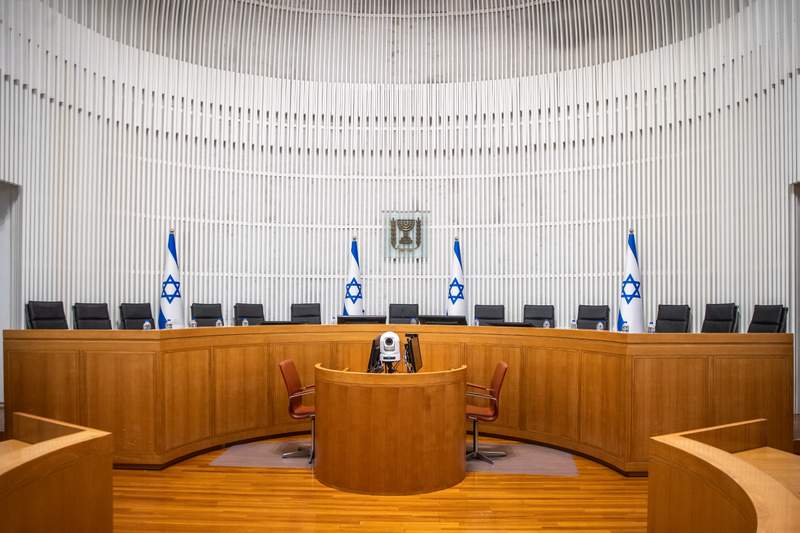
POLICY WIRE — Jerusalem — The sanctity of burial, a silent promise whispered across millennia, has lately become yet another contested frontier in the intractable struggle of the Holy Land. It’s a cruel twist, really. But even in death, bodies, it seems, aren’t always granted peace here; they’re often treated as — what else?—bargaining chips. Families already reeling from loss find themselves in a grotesque limbo, pleading not just for justice, but for simple dignity. This grim reality simmered back to the fore as the state quietly—some might say cynically—sought more time from the High Court, delaying judgment on a petition demanding the release of Arab-Israeli bodies it currently holds.
No grand pronouncements, just procedural wrangling. A request for an extension, slipped into the court’s docket like an afterthought, nonetheless reverberated like a fresh wound among the families involved. For them, it wasn’t just bureaucracy; it was another delay, another agonizing wait, another confirmation that their deceased remain ensnared in a geopolitical chess match that often feels more ancient than modern. It’s an almost biblical sense of anguish, but played out in a sterile courtroom.
The state’s rationale? Always national security. But for the grieving families, it’s a strategy steeped in collective punishment, a cold calculation that violates universal tenets of human rights and religious observances. Many families just want to lay their loved ones to rest, to finally observe their faith’s traditions. This isn’t just about Israeli Arabs, by the way, it’s also Palestinian bodies. And it cuts across a swathe of people who often find their very identities weaponized. You don’t have to be a geopolitics scholar to grasp the underlying current of grievance here.
Ambassador Karim Al-Fahd, a seasoned diplomat known for his often-hawkish security analyses, quietly conceded to Policy Wire, “It’s never a choice made lightly, of course. National security isn’t afforded the luxury of sentiment. Some actions, however regrettable, are seen as a deterrent, as unfortunate as that sounds.” A deterrent, perhaps, to others contemplating similar acts. But a profound agony for those already bereaved.
But Dr. Lena Shah, head of the Palestinian Families’ Solidarity Committee (PFSC)—an organization tirelessly documenting abuses—didn’t pull punches. “They’re not just bodies; they’re our loved ones, held hostage. It’s collective punishment, plain and simple, designed to break spirits, to sow despair in communities already suffering. The very idea makes a mockery of any pretense to justice or even basic human decency.”
The issue has garnered significant attention from international human rights organizations, who consistently highlight it as a serious breach of international law. According to data compiled by Addameer, a Palestinian prisoner support and human rights association, since 1967, Israeli authorities have withheld the bodies of more than 250 Palestinians. This policy often cites security reasons, preventing funerals that could become flashpoints, or using bodies as leverage in negotiations for the return of Israeli casualties or captives. It’s a grisly strategy, — and one that doesn’t sit well with a lot of observers.
Consider the deeply rooted traditions in the Muslim world, from Lahore to Rabat. Immediate burial, usually within 24 hours of death, is a central tenet of Islamic practice. It’s not a mere preference; it’s a religious obligation, seen as essential for the soul’s journey. Holding bodies for extended periods isn’t just an administrative delay; it’s an existential trauma. Families can’t begin their prescribed mourning, they can’t achieve that sense of closure—the kind you and I take for granted.
📄 POLICY WIRE WHITEPAPER PUBLISHED: PAKISTAN'S NATIONAL SECURITY POLICY PRIORITIES
👉 READ BY CLICKING HEREAnd because the vast majority of these individuals are Muslim, the policy clashes directly with deeply held religious sensitivities that stretch across South Asia and the broader Muslim world. Governments in countries like Pakistan, often vocal on Palestinian issues, would naturally view such actions as profoundly disrespectful, fueling broader narratives of injustice. It’s not just a localized legal battle; it’s an ideological fault line laid bare, one that resonates far beyond the immediate region. Remember how religious desecration often sparks global outcry? This isn’t so different.
What This Means
The state’s persistent tactic of body retention, alongside its legal foot-dragging, illuminates a deeper strategic calculus—one that prioritizes perceived security imperatives over human and religious rights. Economically, this plays into a narrative that complicates international investment and diplomatic relations, particularly with Muslim-majority nations that watch such violations with keen interest. Politically, it hardens resolve among Palestinian communities and their allies, painting the state as unyielding and even cruel, driving further polarization. For governments around the world, balancing relations here becomes a far trickier proposition, a walk on a razor’s edge.
This isn’t some obscure legal quirk, it’s a policy with broad humanitarian implications — and potent symbolic weight. It shows, plainly enough, how the lines of conflict can bleed into every facet of life and death—even impacting the perceptions of regional stability and global diplomatic maneuvering. The continuous withholding of bodies, even if presented as a ‘deterrent,’ effectively undermines any goodwill or potential for reconciliation. It fosters deep resentment that will linger long after any eventual release of remains. It keeps the wounds fresh, purposefully. They’re playing a long game, these powers, but sometimes, the price—measured in human suffering—is just too high. And we haven’t seen the last of it, not by a long shot. There’s another High Court session coming. The limbo, it seems, isn’t ending soon.