

Disease Diplomacy: When a Cruise Ship’s Contagion Unites, Divides Nations
POLICY WIRE — Madrid, Spain — Even as a multi-national flotilla of charter jets converged on Tenerife, ferrying hundreds off a pathogen-struck cruise liner, the real drama — a chilling prelude,...

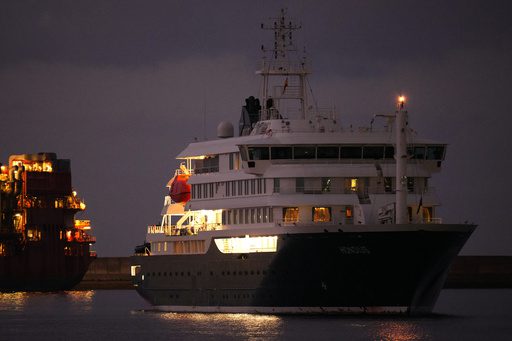
POLICY WIRE — Madrid, Spain — Even as a multi-national flotilla of charter jets converged on Tenerife, ferrying hundreds off a pathogen-struck cruise liner, the real drama — a chilling prelude, really — unfolded not on the sunny Canary Islands, but on a lonely, volcanic outpost 1,500 miles into the South Atlantic. There, six British Army paratroopers — and two medics plummeted from the sky. Their mission? To reach a tiny island, Tristan da Cunha, home to just 221 souls, and — get this — attend to a single suspected hantavirus patient who’d once been on the very same MV Hondius.
It’s an image that captures the grotesque sprawl of a globalized crisis. A hantavirus scare, typically associated with rodent droppings and hushed, local health alerts, has somehow mushroomed into an international headache, grounding cruise ships and prompting a frantic medical airlift the world over. You’d think the COVID era taught us a thing or two about disease control. Apparently, some lessons just don’t stick.
The MV Hondius, now a global lightning rod, disgorged its first, thoroughly sanitized passengers in Madrid and Paris Sunday afternoon. Others soon followed, destined for a dozen more countries, an unscheduled — and deeply unwelcome — tour of the globe’s finest quarantine facilities. Spain, predictably, found itself scrambling, setting up a logistical hub in Granadilla, Tenerife. Imagine the sheer undertaking: managing over 20 nationalities, each with its own frantic government on the line. But they managed it. For the most part.
Health officials, predictably, moved to calm frayed nerves. “We have been repeating the same answer many times,” asserted WHO Director-General Tedros Adhanom Ghebreyesus, almost weary in his insistence. “This is not another COVID. And the risk to the public is low. So they shouldn’t be scared — and they shouldn’t panic.” Spoken like a man who’s been down this road before, haven’t you? His chief epidemiologist, Maria van Kerkhove, chimed in, noting the recommendations for countries to “have active monitoring and follow up, which means daily health checks, either at home or in a specialized facility.” Sensible, right? Because nothing says ‘relax’ like daily health checks.
Yet, the visuals told a different story. Passengers, wrapped in hazmat suits, their belongings whittled down to a charger — and essential docs. They were getting sprayed with disinfectant before stepping foot on tarmac. That’s not exactly a ‘low risk’ aesthetic, is it? Spanish Health Minister Mónica García, however, put on a brave face, her ministry leading the intricate dance of international cooperation. “Our priority is safeguarding public health, both for those repatriated and our own citizens,” she told Policy Wire, a subtle nod to the enormous, unforeseen burden placed on Tenerife’s infrastructure. “Every flight, every national, represents a careful, coordinated effort to contain what could become an international public health dilemma. We’re working around the clock; it’s an immense task.”
The Andes hantavirus, a rare strain capable of human-to-human transmission, remains the boogeyman here, even if only five passengers are confirmed infected and three have died since the outbreak. Not huge numbers, no, but enough to spark panic and, critically, enough to disrupt the delicate ecosystem of global travel and public trust. Who, after all, wants to step onto a pleasure cruiser only to return home in a hazmat suit, effectively branded a potential vector?
📄 POLICY WIRE WHITEPAPER PUBLISHED: PAKISTAN'S NATIONAL SECURITY POLICY PRIORITIES
👉 READ BY CLICKING HEREAmong the disparate nationalities on board, individuals from South Asian and Muslim-majority nations likely faced particular anxieties, and potentially distinct repatriation challenges. While European and North American countries quickly dispatched planes and formalized quarantine protocols, the infrastructure for sustained medical monitoring can be scarcer, or just stretched thinner, in nations further afield. Picture the logistical maze for someone returning to a sprawling urban center in Pakistan, for instance, compared to the structured isolation waiting in Germany or Canada. Because disease doesn’t care about your passport; but governments, you bet, they do.
What This Means
This incident isn’t just a medical footnote; it’s a policy litmus test. It lays bare the fissures in international coordination, highlighting how rapidly a localized health issue can morph into a geopolitical hot potato. Each government, understandably, acted to protect its own — but the mosaic of differing quarantine protocols (72 hours hospitalization in France, 45 days at home; mandatory medical centers in Nebraska) illustrates a disjointed global response. This fragmentation suggests a lingering post-COVID weariness, perhaps, or a collective inability to forge a truly unified health security architecture, even when the blueprints are staring us right in the face.
Economically, this is bad news for the already-fragile cruise industry, desperate to shed its image as a petri dish on the waves. Expect another dip in consumer confidence, certainly. But it also presents a fascinating case study in emergency diplomacy: a rapid, often improvisational, response from capitals around the globe to protect their own citizens and manage a looming public health — and public relations — disaster. And it leaves us with an unsettling question: if a relatively rare virus on a single cruise ship can mobilize such an expansive, costly global reaction, what happens when the next big one hits? Will we still be parachuting medics into remote corners of the world, or will we have finally learned to stitch together a coherent, international defense? One can only hope we’re moving towards the latter, though recent evidence isn’t exactly encouraging.