
Empathy’s Uncouth Chuckle: Melania Trump’s Unscripted Comedy and America’s Political Stage
POLICY WIRE — Washington, D.C. — It wasn’t the kind of applause line she was going for, surely. When former First Lady Melania Trump recently stepped to the microphone to speak about her...

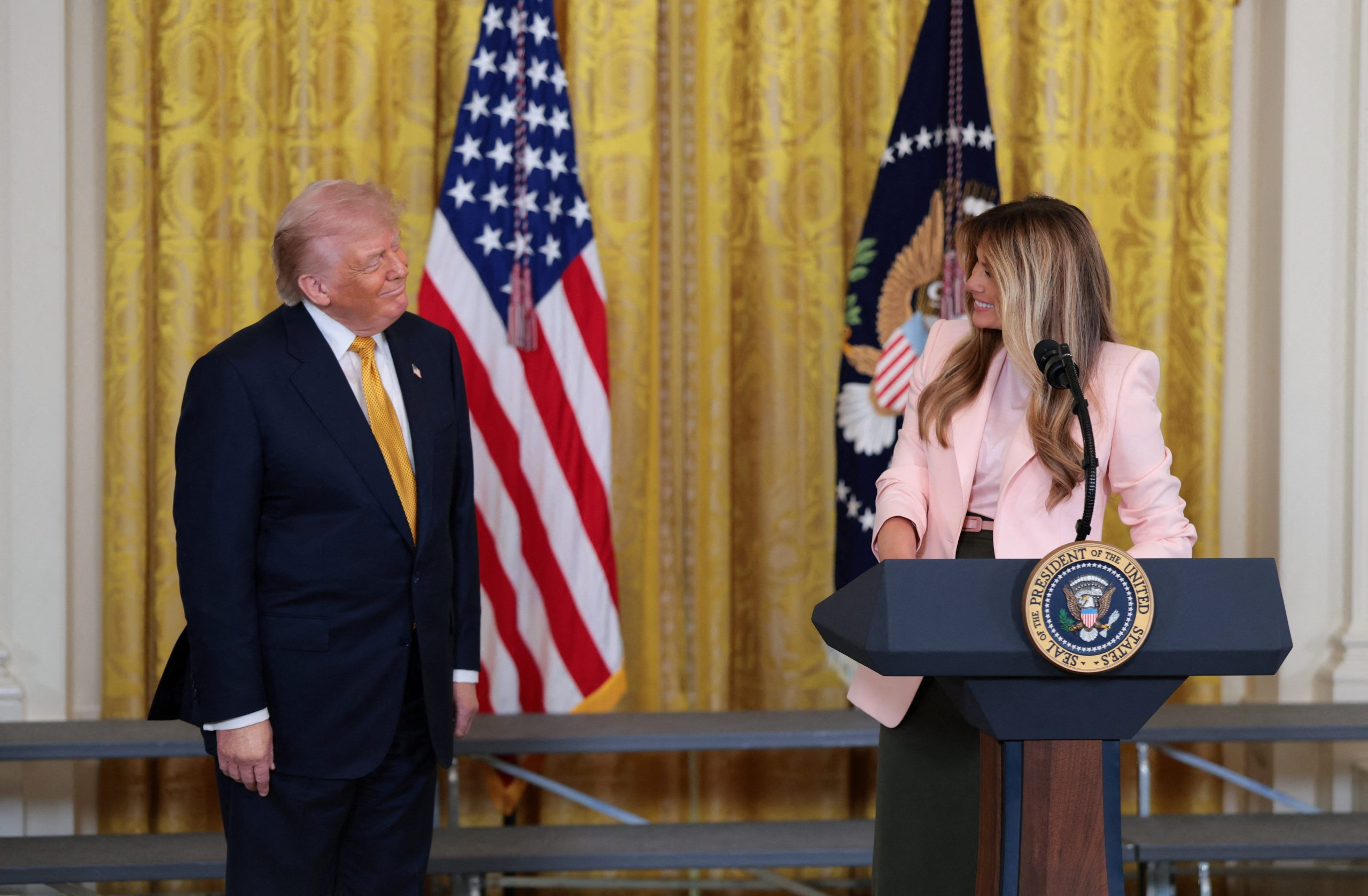
POLICY WIRE — Washington, D.C. — It wasn’t the kind of applause line she was going for, surely. When former First Lady Melania Trump recently stepped to the microphone to speak about her husband’s — wait for it — “empathy,” a surprising wave of laughter washed over the crowd. Not a gentle titter, mind you, but an audible ripple of amusement, leaving the speaker in an almost theatrical tableau of momentary disbelief. The moment wasn’t just awkward; it was a candid, unscripted glimpse into the often-jarring chasm between carefully crafted political narratives and the stubbornly persistent public perception.
It happened fast, a blink-and-you-miss-it incident that nonetheless spoke volumes about the current state of America’s political discourse. Here was the stoic former First Lady, rarely given to public ad-libs, attempting to humanize one of the nation’s most polarizing figures. But, it appears, some truths — or perceived truths — are simply too stubborn for polite political gloss. And really, isn’t that just how politics works sometimes? You prepare the script, you practice the delivery, — and then, life happens. Or in this case, laughter.
Because let’s be frank, Donald Trump’s political career hasn’t exactly been defined by his public displays of warm, fuzzy feelings. His brand, love it or hate it, is built more on raw power, unapologetic defiance, and a certain combative bluntness that usually leaves little room for sentiment. So, the crowd’s reaction? It wasn’t malice, perhaps, but a sort of collective recognition of the incongruity — a comedic beat delivered straight from the heart of their own shared experience with his public persona. One might call it the ultimate celebrity ego check.
Long-time political strategist, James Carville, wasn’t mincing words when Policy Wire reached out for comment. “You can’t sell a Porsche as a pick-up truck — and expect folks not to notice,” he quipped. “People have memories, see. And that kind of laughter? It tells you everything you need to know about where people’s heads are at. The disconnect? It’s Grand Canyon-sized, and it’s gonna keep causing problems for any politician trying to ignore reality.” Indeed. It’s hard to spin that one. Roughly 58% of U.S. adults polled in a recent Pew Research Center study reported a significant decline in public trust for political figures’ sincerity over the past decade — a sentiment such moments only seem to solidify.
But others offered a different read. “They’re just folks, y’know? And he feels deeply, always has,” countered a former senior White House official who requested anonymity to speak candidly. “The crowd was probably just reacting to — to the intensity of the moment, to the idea that even political families are like yours or mine. It was affectionate, not disrespectful.” Such generous interpretations, while charming, tend to skirt the plain truth. There’s a theatrical quality to these events, after all. The audience, often, doesn’t just listen; it participates.
This incident also doesn’t play out in a vacuum. It underscores a larger phenomenon in modern politics, particularly in an interconnected world where every gaffe, every unguarded moment, travels at light speed. Imagine such a scenario playing out in a nation like Pakistan, where public perceptions of leadership — their piety, their resolve, their humanity — are inextricably linked to national pride and foreign policy implications. Leaders there, from Islamabad to Lahore, walk a similar tightrope, often having to project both strength and profound empathy for their populace. An empathetic leader, in that context, isn’t just a political advantage; they’re a societal balm. Here in America, it can apparently be a punchline. This difference, these nuances, profoundly impact how global leaders — particularly from Washington — are perceived on the world stage.
What This Means
The chuckles Melania Trump unwittingly elicited weren’t just about one man’s perceived lack of tenderness; they represent a deeper vein of voter fatigue with political artifice. It’s a collective shrug at narratives that simply don’t square with observable reality, a pushback against attempts to whitewash personas ingrained in the public consciousness. Economically, such moments, however small, chip away at brand credibility, not just for the individual, but for the entire political machine they represent. Investors, allies, — and even adversaries pay attention to the subtle cues emanating from the heart of American power. An administration perceived as lacking in basic human understanding — even if only in the public’s imagination — can face headwinds when trying to forge complex international agreements or rally domestic support for challenging policies. The episode underscores a political environment where authenticity, or the perceived lack thereof, increasingly dictates not just popularity, but legitimacy itself. Voters, it seems, have developed a keen sense for when a politician’s message strains credulity. And they’re not afraid to laugh. This isn’t legislating leisure or invoking irony; it’s an involuntary public audit of a political figure’s character, plain and simple.