

Mother’s Day Mirage: New Mexico’s Shifting Skies Reflect a Fractured Global Climate
POLICY WIRE — ALBUQUERQUE, N.M. — It’s Sunday, Mother’s Day, and much of New Mexico can expect what seems like a pleasant day. Highs in the 80s for Albuquerque, they’re saying. Sunshine. Sounds...

POLICY WIRE — ALBUQUERQUE, N.M. — It’s Sunday, Mother’s Day, and much of New Mexico can expect what seems like a pleasant day. Highs in the 80s for Albuquerque, they’re saying. Sunshine. Sounds idyllic, right? A pretty postcard for folks celebrating their mothers—maybe brunch on a patio, or a stroll through a high desert park. But scratch that shiny surface, peel back the saccharine marketing, and you’ll find a far grittier, more erratic reality lurking beneath.
Because while one part of the state basks, another readies for a rough ride. Forget the easy pleasantries. We’re talking localized downpours, winds whipping up to 45 mph through places like Tijeras Canyon. Storms, possibly packing hail or nasty gusts, are forecast for the mountains, from the Sangre de Cristo range right down to Ruidoso. A “small severe weather threat,” they’re calling it. It’s less a gentle shift, more a geographic roulette wheel.
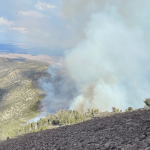
And then there’s the longer view, isn’t there? By Tuesday, some areas here could be hitting record high 90s. The wildfire risk might not be screaming bloody murder just yet, but that mercury climb tells its own story. It’s a whisper, for now, of deeper trouble. The planet’s climate doesn’t do tidy; it’s got no regard for sentiment or holiday cheer. Its disruptions aren’t confined to a single mountain range, or even a single Mother’s Day.
State climatologists, the few who still get airtime when it’s not a disaster, have been issuing these stark warnings for ages. “We’re seeing a clear trend toward more extreme variability,” notes Dr. Elena Rodriguez, director of the New Mexico Climate Data Center, speaking exclusively to Policy Wire. “One day you’re enjoying mild temperatures, the next you’re watching for flash floods or bracing for intense heatwaves. It’s not just a bad season; it’s a redefinition of normal, and it’s taxing our infrastructure and our psyche.” And she’s not wrong; you just don’t usually hear it between forecasts for picnics.
This localized chaos—this oscillation between sun-drenched ease and sudden tempest—it isn’t just an American West peculiarity. It’s a microcosm of a much larger, more volatile world. Consider Sindh, Pakistan, where communities reel from unprecedented floods one year, then suffer crushing heatwaves and prolonged drought the next, jeopardizing agricultural yields and livelihoods. What happens in the high desert of New Mexico often has echoes, grimly magnified, across less resilient geographies. According to a 2023 report by the Intergovernmental Panel on Climate Change (IPCC), the global frequency of extreme weather events—intense heat, heavy precipitation, and severe droughts—has increased by over 30% in the last decade alone, disproportionately affecting developing nations.
But back here, folks will likely still try to make the best of it. They always do. But can we afford to ignore these unsettling signs? This Mother’s Day might feel calm in Albuquerque, but those looming storms elsewhere, the persistent wildfire threat, the coming record heat—they’re all urgent dispatches from a changing planet.
“We can’t just react; we must anticipate, innovate, and adapt, or face catastrophic consequences,” states Representative Tanya Sharma, an outspoken advocate for climate resilience in Congress, reflecting a growing urgency among a new crop of policymakers. But actual implementation? That’s another thing entirely. Because, you know, there’s always an election coming.
What This Means
The erratic nature of New Mexico’s forecast—from placid sunshine to violent microclimates—offers a disturbing snapshot of the broader climate destabilization that politicians consistently grapple with, often poorly. Economically, this translates to heightened costs for emergency services, damaged agricultural outputs (particularly sensitive in arid regions), and increased insurance premiums. For states like New Mexico, whose economy relies significantly on tourism and outdoor activities, unpredictable weather can be an existential threat. A single Mother’s Day forecast becomes a mirror reflecting the agonizingly slow pace of policy change versus the accelerating pace of environmental degradation.
Politically, the constant toggling between pleasant weather and immediate threats provides convenient cover for inaction. When a wildfire is out, or the storm has passed, the urgency fades. This cycle prevents sustained investment in resilience—things like robust water infrastructure or sustainable energy policies. It means communities in the Global South, especially those in regions like Pakistan, are already living this future of instability—their vulnerabilities magnified by global climate shifts they contributed little to. Their annual fight against the monsoon’s caprice or the sun’s scorching indifference serves as a stark, human cost warning for wealthier nations like ours, who, for now, mostly just fret over whether Mother’s Day brunch gets rained out.