


Rally Portugal Chaos Exposes FIA’s Gripping Reality: Public Trust on a Fast Lane to Nowhere
POLICY WIRE — Lisbon, Portugal — Imagine tearing through a dusty, winding forest track at insane speeds, engine screaming, the world a blur outside your windscreen. That’s Rally Portugal,...

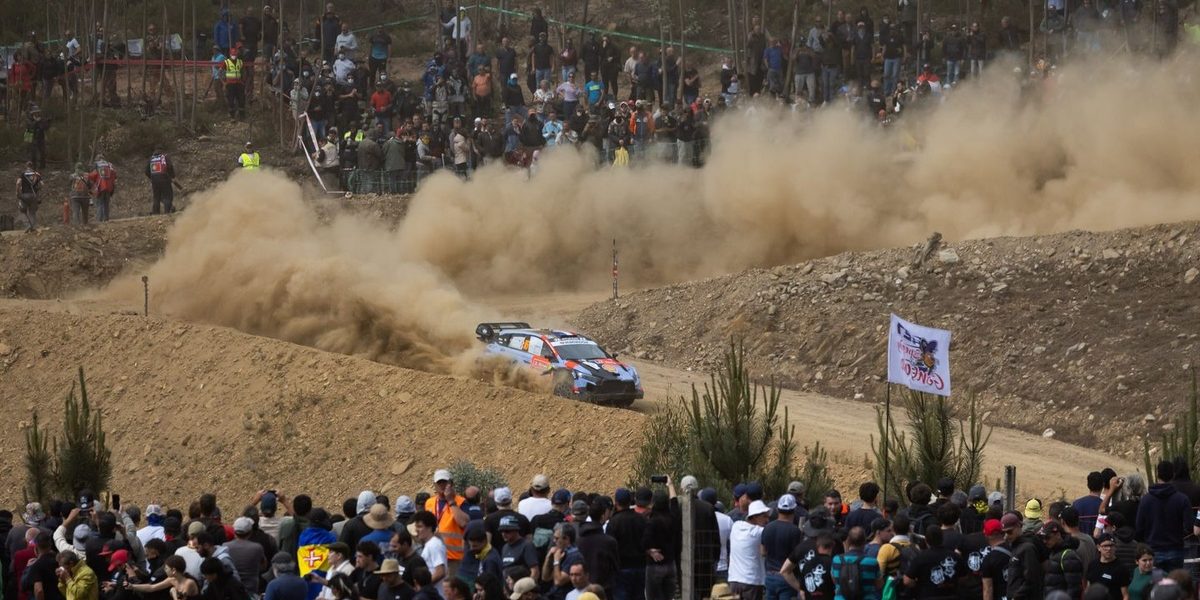
POLICY WIRE — Lisbon, Portugal — Imagine tearing through a dusty, winding forest track at insane speeds, engine screaming, the world a blur outside your windscreen. That’s Rally Portugal, right? Now, imagine, mid-corner, you’re not seeing just the timer, but a damned recovery truck heading your way. Or an anonymous sedan, oblivious, tooling along what’s supposed to be a live race stage. Because that’s exactly what WRC drivers Elfyn Evans and Yohan Rossel encountered during the second pass of the infamous Arganil test, shaking them, and frankly, the entire sport to its core. A simple safety lapse—or rather, a glaring abyss of it—left drivers staring down civilian vehicles where only high-performance machinery should’ve been. Talk about a thrill no one signed up for.
It wasn’t some minor detour. It was the absolute breakdown of perimeter control. First, Toyota’s Evans faced a recovery vehicle on stage seven, barely avoiding what could’ve been an absolutely catastrophic collision. Minutes later, race officials—too slow, it seems, to connect the dots—had to wave a red flag as a second civilian car, driven by someone allegedly helping the first misguided truck, blithely entered the same, very active, section of the track. WRC2’s Rossel almost ran straight into it. The irony? Both these errant machines were from the same recovery company, suggesting a level of systemic operational blindness that just boggles the mind. It makes you wonder: who’s really minding the store?
The FIA, motorsport’s governing body, didn’t exactly drag its feet handing out a suspended €15,000 fine and a stern reprimand to the Rally Portugal organizers. A slap on the wrist, some might say, considering the stakes involved. The incident, as detailed in the stewards’ report, laid bare a frightening communication failure: the Clerk of the Course, Horacio Rodrigues, confirmed “that at no time was the entry of these vehicles on to the stage communicated to Rally Control.” A recovery vehicle driver, following GPS, ended up on a live stage. Think about it. Because technology, it seems, doesn’t always account for common sense, or a live rally stage.
And so, while apologies flowed freely—Mr. Rodrigues and Joao Paulo Jordao, representing the organizing committee, were quick to offer their contrition for what transpired—the damage was already done. They’ve stated they had “arrangements in place with the relevant civilian authority to provide security and road closures for the rally stages.” That arrangement, frankly, didn’t work. Not even a little bit. It points to a broader problem, one where formal protocols often buckle under real-world pressures or, worse, simple negligence.
For some, this sort of organizational fragility echoes louder than an accelerating rally car engine. It forces a stark comparison with the public safety challenges seen in mega-events across South Asia and the Muslim world, where millions often gather, and infrastructural shortcomings or logistical misfires can spell tragedy. Think about the complexities of managing the Hajj pilgrimage or a massive cricket fixture in Lahore; the sheer volume of humanity makes meticulous planning paramount. A recent industry survey found that, globally, security lapses and organizational oversight failures in major sporting events contributed to over $75 million in direct costs and reputational damage for host cities and organizing bodies in 2023 alone. These aren’t just minor headaches; they’re economic — and civic body blows. The integrity of the sport itself suffers, fostering cynicism among fans — and investors alike.
“We trust the organizers to provide a safe environment, not just for the drivers, but for everyone,” an exasperated FIA official, speaking anonymously due to ongoing investigations, reportedly remarked. “When basic perimeter security collapses, it makes a mockery of all the regulations and millions we spend on safety measures.”
📄 POLICY WIRE WHITEPAPER PUBLISHED: PAKISTAN'S NATIONAL SECURITY POLICY PRIORITIES
👉 READ BY CLICKING HEREBut the consequences stretch beyond the immediate fine. For a sport like WRC, battling for mainstream attention against other high-octane spectacle, such blunders aren’t just inconvenient; they’re toxic. They paint a picture of amateurism — and chaos where precision and professionalism are demanded. The stewards’ decision didn’t just end with a reprimand; it got kicked up the chain to the FIA WRC Commission, the FIA Road Sport Committee, and a host of other acronyms. This isn’t just about Portugal; it’s about the credibility of the entire FIA apparatus.
As high-profile incidents expose organizational vulnerabilities everywhere from European rally tracks to Pakistani sporting events, public scrutiny sharpens. People are no longer content with polite apologies when safety is on the line. They want accountability, not just promises of future improvements.
What This Means
This incident, far from a isolated quirk, throws a harsh light on the global challenges of managing large-scale events. Economically, repeated security breaches erode sponsorship appeal and attendee confidence, impacting tourism revenue and local economies that rely on these spectacles. The suspended fine, a mere €15,000, feels symbolic rather than punitive, raising questions about whether regulatory bodies truly grasp the magnitude of potential catastrophic outcomes—or simply opt for optics over genuine deterrents. Politically, the blame game invariably begins, challenging the competence of host country authorities and casting a long shadow on national brand image. This isn’t just motorsport; it’s a policy nightmare for event planners worldwide. Organizations, be they government agencies or private entities tasked with such operations, must demonstrate an ironclad commitment to safety. Because, when that trust fractures, it isn’t easily mended.