


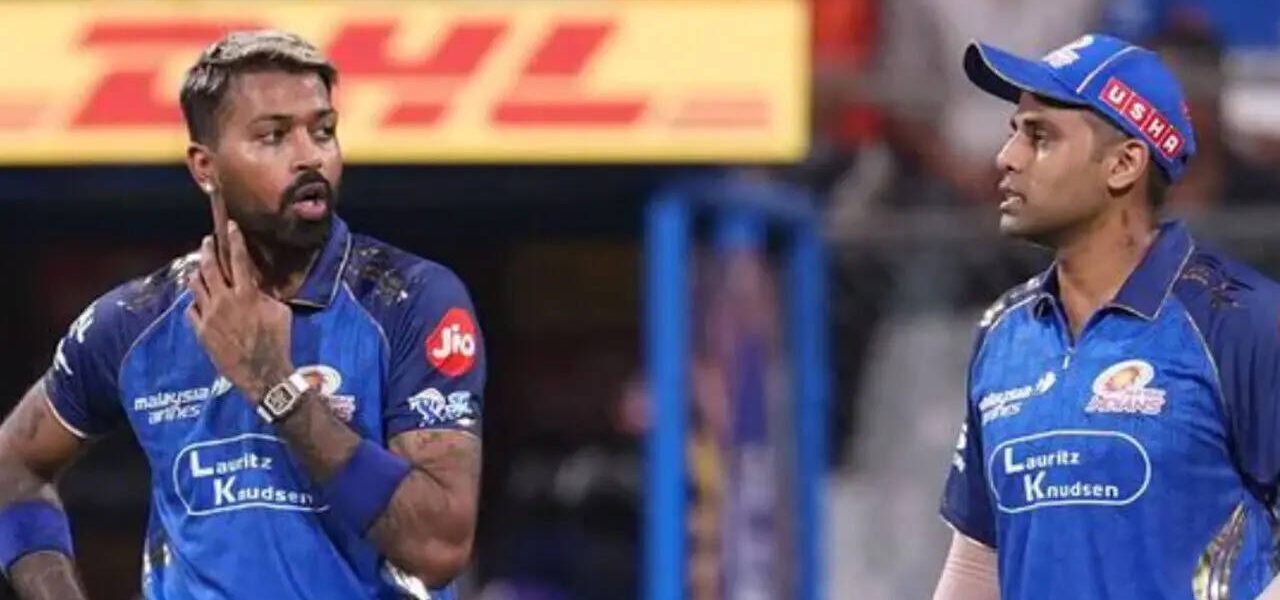
Pandya’s Back, MI’s Backs Against Wall: IPL’s Unforgiving Grind Claims Another Star
POLICY WIRE — Raipur, India — The glittering spectacle of the Indian Premier League isn’t just about sixes and catches; it’s a multi-billion dollar economic juggernaut, a crucible where...

POLICY WIRE — Raipur, India — The glittering spectacle of the Indian Premier League isn’t just about sixes and catches; it’s a multi-billion dollar economic juggernaut, a crucible where careers are forged and broken on the whims of a hamstring twitch or a shoulder strain. Forget the romantic narratives; this is big business, played at breakneck speed. So, when Hardik Pandya, captain of the Mumbai Indians and one of India’s most recognizable cricketing brands, suddenly vanishes from the team sheet, it’s more than just a squad reshuffle—it’s a ripple effect through the league’s high-stakes economy.
Pandya’s recurring back spasms have become a dark cloud hanging over the MI camp, sidelining him from a critical showdown against Royal Challengers Bengaluru. He already missed the last outing against Lucknow Super Giants—and now this, a consecutive absence that speaks volumes about the relentless physical toll demanded by T20 cricket. Suryakumar Yadav, ever the reliable lieutenant, steps up again to helm the side, but it’s an uncomfortable reminder of the team’s precarious position.
“Hardik continues to be evaluated by the medical team and then they will inform us on his progress,” a Mumbai Indians spokesperson announced with a terse professionalism only understood in sports injury communiqués. “The second one is Surya’s coming in tomorrow.” No dramatic flourishes, no emotional laments—just the cold, hard facts of professional sport. And what facts they’re. Mumbai Indians, the five-time champions, currently languish at ninth on the points table, clutching a mere six points from ten games. They’re facing what any armchair analyst will tell you is a ‘virtual must-win situation.’ Another loss, and they could become the first franchise knocked out of the playoff race, a humbling descent for a team with such a storied past.
But it’s not just Mumbai in a spot of bother. Royal Challengers Bengaluru, despite sitting third, has stumbled lately, nursing two successive defeats. They desperately need to regain momentum. “Look, every game is a grand final for us now, isn’t it?” Rajat Patidar, RCB’s captain, was heard quipping to teammates during a pre-match practice, reportedly with a forced smile that barely masked the pressure. “We can’t afford any more slips; the margins are just too thin in this league.” That’s the brutal truth: a healthy net run rate might cushion a team temporarily, but losing streaks have a nasty habit of turning advantages into quicksand.
This IPL season has already demonstrated the fierce competition that makes it one of the world’s most lucrative sporting properties. The league’s brand valuation, according to a recent industry report from Brand Finance, has soared past $15 billion—a staggering figure illustrating the colossal stakes involved, far beyond just batting averages. These aren’t just cricketers; they’re walking, talking financial assets, each injury a potential hit to franchise value and fan engagement. Just consider the sheer amount of money—and hope—riding on these performances.
And let’s be frank, the fervent cricket passion here isn’t confined to India. Across the border, in Pakistan, Afghanistan, and indeed, throughout the broader South Asian and Muslim world, the IPL is watched with an almost religious zeal. Youngsters dream of emulating these heroes, even if political currents mean their own national stars can’t play in the league. It’s a regional obsession, transcending borders through satellite dishes and streaming services, shaping aspirations from Karachi to Dhaka, a cultural anchor even amidst geopolitical turbulence.
What This Means
The immediate implication of Pandya’s absence and Mumbai’s precarious standing is straightforward: increased volatility in the playoff race. Teams are closely packed, meaning every point, every net run rate decimal, is fought for with desperate intensity. Economically, a prominent team like MI crashing out early means reduced advertiser visibility for later games featuring them, impacting broadcasting revenues and franchise merchandise sales. It’s a chain reaction. Politically, the IPL’s dominance—it’s the financial heart of modern cricket—subtly but definitively positions India as the unchallenged gravitational center of the sport. Smaller cricketing nations, even Pakistan, must contend with this reality. This dynamic plays out not just in player markets but in cricketing administration, effectively granting the Board of Control for Cricket in India (BCCI) unparalleled leverage in global cricket policy. The spectacle might seem light-hearted, but the undercurrents are weighty—economic might translating directly into geopolitical soft power. It’s an arena where even a simple back spasm can become a point of national conversation, illustrating just how entwined sport and society truly are in this part of the world. Because for many, the IPL isn’t just a game; it’s a reflection of ambition, status, and the unforgiving nature of a winner-take-all global economy.