


The Reluctant Ledger: How Manchester United’s £38M Sale Exposes a Deeper Rot
POLICY WIRE — London, UK — A ledger entry, dry and clinical, often masks a more profound narrative. And so it’s with the reported £38 million Manchester United stands to recoup from Napoli for...

POLICY WIRE — London, UK — A ledger entry, dry and clinical, often masks a more profound narrative. And so it’s with the reported £38 million Manchester United stands to recoup from Napoli for striker Rasmus Hojlund. It’s a transaction that, on paper, appeases the relentless demands of Financial Fair Play, yet in the sprawling, often illogical theatre of global football, it confesses to a colossal misjudgment, echoing far beyond the hallowed turf of Old Trafford.
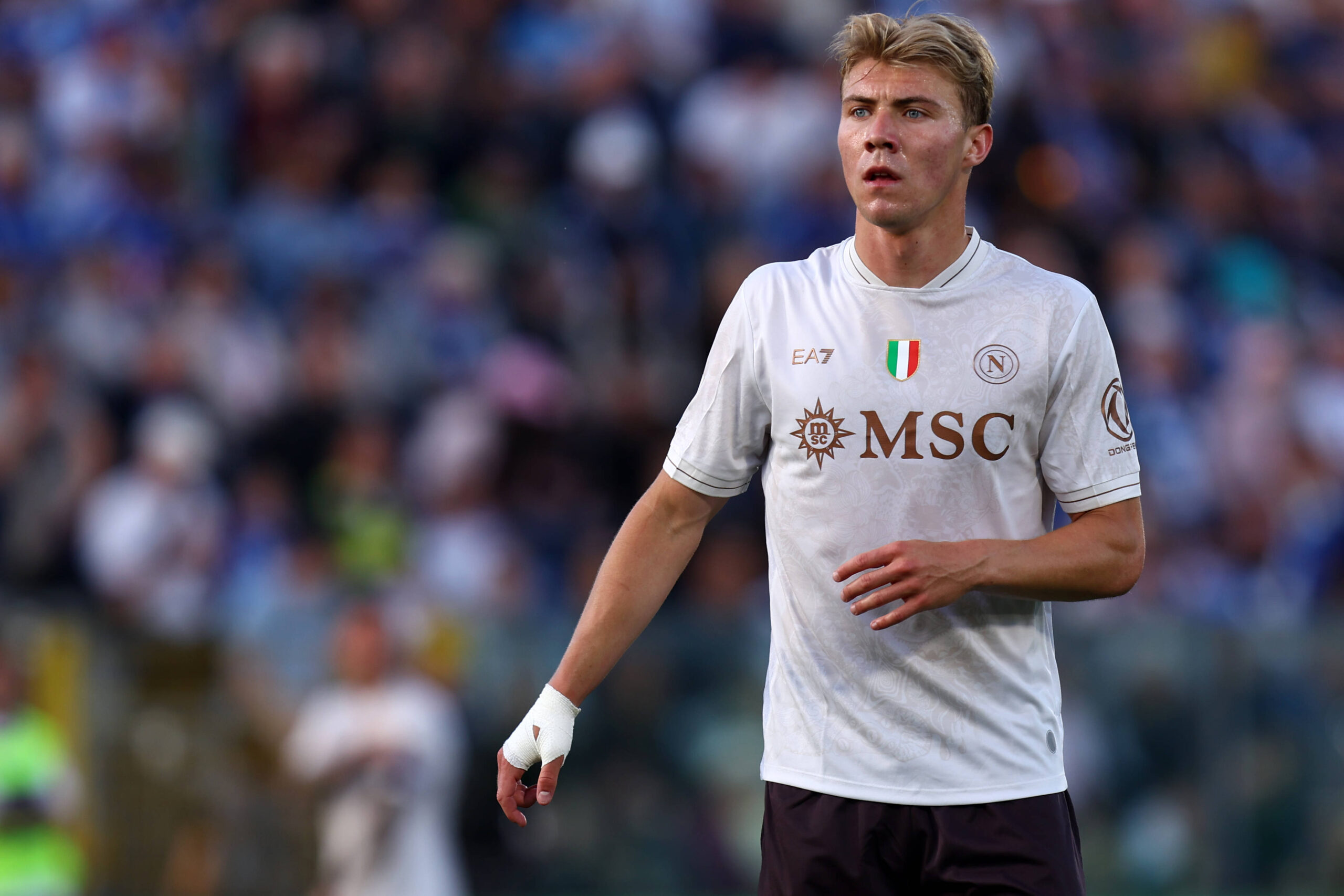
This isn’t merely about a player moving clubs. It’s a stark, public autopsy of a footballing institution’s continued struggle to nurture — or even recognize — genuine talent. Hojlund, once lauded as the Danish prodigy, arrived from Atalanta for a princely sum of £76 million, burdened by the hopes of a club desperate for a talisman. But the crucible of Manchester proved too hot, too quickly. He leaves having netted 26 goals in 95 appearances, a figure respectable enough, perhaps, but nowhere near the instant, saviour-like impact demanded by the Premier League’s most voracious fanbase.
So, what went wrong? Across the Mediterranean, in the vibrant chaos of Naples, Hojlund found a different narrative. Antonio Conte, Napoli’s often-combative manager, appears to have sculpted an environment where the young forward could breathe, could develop, could score. Eleven Serie A goals in 30 appearances there aren’t just numbers; they’re a testament to tailored tactics and, crucially, patience. Giovanni Manna, Napoli’s sporting director, left absolutely no room for conjecture. “There are no doubts. Rasmus will stay here,” he declared, adding, “We have an obligation to buy from Manchester United, in case of Champions League access, but he’s in our plans regardless of this condition.” That’s a stark contrast to United’s apparent willingness to offload.
But this isn’t an isolated incident. It’s another chapter in a sprawling saga of recruitment blunders and developmental voids that have plagued United for years. A former club legend, speaking on condition of anonymity due to ongoing media commitments, didn’t mince words. “They brought a young boy in with no Premier League experience and basically told him to carry the entire club on his shoulders. That’s not development; it’s dereliction. It’s a betrayal of potential,” he shot back, encapsulating a widespread sentiment among disillusioned supporters and pundits alike. The club, it seems, has become a masterclass in buying raw materials and then wondering why they don’t instantly assemble themselves into a finished product. At its core, that’s just not how it works.
This narrative, you see, isn’t confined to the British Isles or even continental Europe. Manchester United boasts one of the planet’s most colossal fan bases, stretching from the rain-soaked terraces of Salford to the bustling metropolises of South Asia. In Karachi or Lahore, where millions avidly follow the Premier League – often sacrificing sleep to catch late-night matches – the club’s consistent strategic missteps resonate deeply. It’s a question of prestige, of belonging, — and of the aspirational narrative that football often provides. When a club of United’s stature continually fumbles basic player management, it doesn’t just erode local goodwill; it chips away at the soft power narratives that European football weaves globally, impacting perceptions of its entire infrastructure. The emotional investment from these distant shores is immense, and its erosion has tangible, if intangible, consequences for the brand’s enduring allure.
What This Means
The Hojlund transfer, ultimately yielding a loss of £38 million on the initial investment according to reporting from the Mirror and other wire services, underscores a critical dichotomy in modern football: the tension between financial prudence and sporting ambition. For Manchester United, this seemingly pragmatic accounting move allows them to navigate UEFA’s stringent Financial Fair Play regulations – a constant shadow for many top European clubs. Yet, by offloading a player who’s clearly thriving elsewhere, they’ve inadvertently highlighted a deeper organizational malaise. It implies a lack of coherent sporting strategy, a rotating door of managers with conflicting visions, and an inability to cultivate young talent under pressure.
Economically, while recovering some capital might seem sensible, the cost in terms of brand equity and fan morale is steep. Each such public misstep diminishes United’s global standing, making it potentially harder to attract top-tier talent or retain commercial partners in an increasingly competitive global football’s economic currents. Politically, if you will, the saga points to a deeper systemic issue within the club’s governance – a failure to create a stable, performance-driven culture. This isn’t just about an individual player; it’s about the club’s long-term sustainability as an elite sporting entity. And that, for millions of fans worldwide, is a far more consequential concern than any balance sheet adjustment. One has to wonder, frankly, if they’ll ever truly learn from these recurring lessons.