


Hoops and Hard Cash: Knicks’ Playoff March Tests Philly’s Economic Grit
POLICY WIRE — Washington D.C., USA — It’s often said that professional sports are about more than just the game. They’re a gladiatorial spectacle, a shared urban catharsis—a civic religion,...

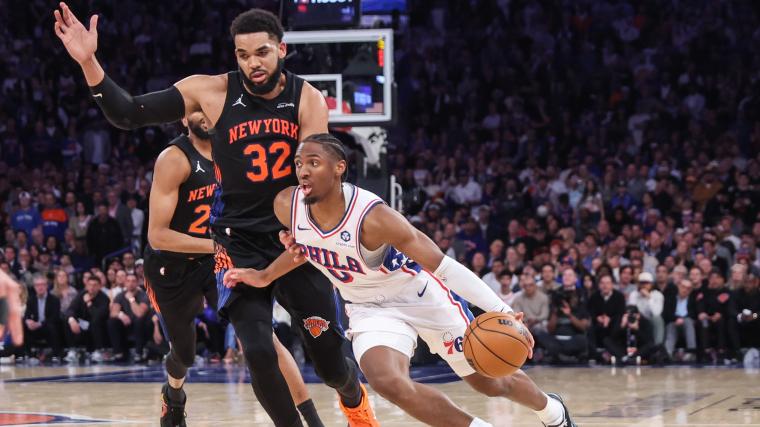
POLICY WIRE — Washington D.C., USA — It’s often said that professional sports are about more than just the game. They’re a gladiatorial spectacle, a shared urban catharsis—a civic religion, even. But beneath the thunderous cheers and dramatic narratives lies a cold, hard ledger, one currently showing a significant potential deficit for the City of Brotherly Love. As the New York Knicks, with their unyielding Jalen Brunson leading the charge, rolled into Philadelphia, holding a commanding 2-0 lead in their Eastern Conference playoff clash, what unfolded wasn’t merely Game 3. It was a skirmish in a much larger economic battle.
For weeks, the Big Apple’s resurgence on the hardwood has been a boon for everything from local pub revenues to municipal morale. And because, let’s be honest, sports franchises aren’t just entertainment vehicles; they’re economic engines, their playoff journeys funneling millions into local economies. Philadelphia, on the cusp of an embarrassing sweep, faced not just sporting ignominy, but a measurable drain on projected revenue. You don’t have to be an economist to know early playoff exits cost money.
The league, always with one eye on the global prize, is particularly invested in these narratives. “We see immense growth potential across all key demographics, especially in burgeoning markets like South Asia,” remarked NBA Deputy Commissioner Mark Tatum, a figure often tasked with bridging sport and global commerce, during a recent media briefing. “Competitive series, the ones that really captivate — those are gold for our broadcast partners in places like Pakistan, where cricket reigns supreme but basketball’s popularity is clearly on an upward trend. A quick end doesn’t quite generate that global buzz, does it?” It’s a dry, calculated assessment that puts wins and losses into stark financial context. But it’s the truth.
The 76ers’ plight, exacerbated by the knee injury sidelining MVP contender Joel Embiid (whose status was dicey right up to tip-off, keeping everyone guessing), morphed from a basketball problem into a civic confidence crisis. Tyrese Maxey’s individual brilliance, averaging 28.3 points per contest this postseason, felt almost academic against the grinding efficiency of a Knicks outfit that finished the regular season a robust 53-29. This isn’t just about pride; it’s about parking tickets, concession sales, — and regional television ratings.
Knicks General Manager Leon Rose, notoriously tight-lipped but always focused on long-term strategy, reportedly expressed quiet satisfaction, emphasizing franchise value over immediate celebration. “Our objective extends beyond any single series,” a source close to the GM divulged, attributing the comment to Rose. “We’re building something sustainable, something that commands respect on Wall Street as much as it does on Madison Square Garden’s court. Dominance is, frankly, good for business.” That sort of pragmatic calculus is the hidden hand driving professional sports.
📄 POLICY WIRE WHITEPAPER PUBLISHED: PAKISTAN'S NATIONAL SECURITY POLICY PRIORITIES
👉 READ BY CLICKING HEREThe statistical realities are harsh: Playoff runs, analysts at Sportico project, can add upwards of $20 million in local revenue per round for host cities, not including the amorphous boost to tourism and general good vibes. A mere eight games into their playoff journey, the 76ers, a No. 7 seed that clawed its way in, stared down the barrel of a financial hit almost as painful as the on-court losses.
What This Means
This playoff showdown isn’t just a simple regional rivalry; it’s a sharp case study in the intersection of sports, urban economics, and global branding. For New York, a deep playoff run reinforces its position as a cultural and financial titan, a market that commands attention and revenue. The city—and its media—feast on this success. But for Philadelphia, a swift elimination chips away at that very same economic momentum — and civic self-perception. It signals vulnerability, not strength. It implies lost opportunity, not just in terms of basketball glory, but in hotel bookings — and merchandise sales. the NBA’s push into international markets means that a compelling, hard-fought series sells better globally than a rout. Markets from Islamabad to Istanbul follow these contests through complex streaming agreements, eager for compelling theatre, not a predictable curtain call. The league, therefore, watches these outcomes with a keen eye on future broadcast deals, weighing the local cheers against the worldwide broadcast minutes. This isn’t just sports; it’s global geopolitics with a jump shot.