


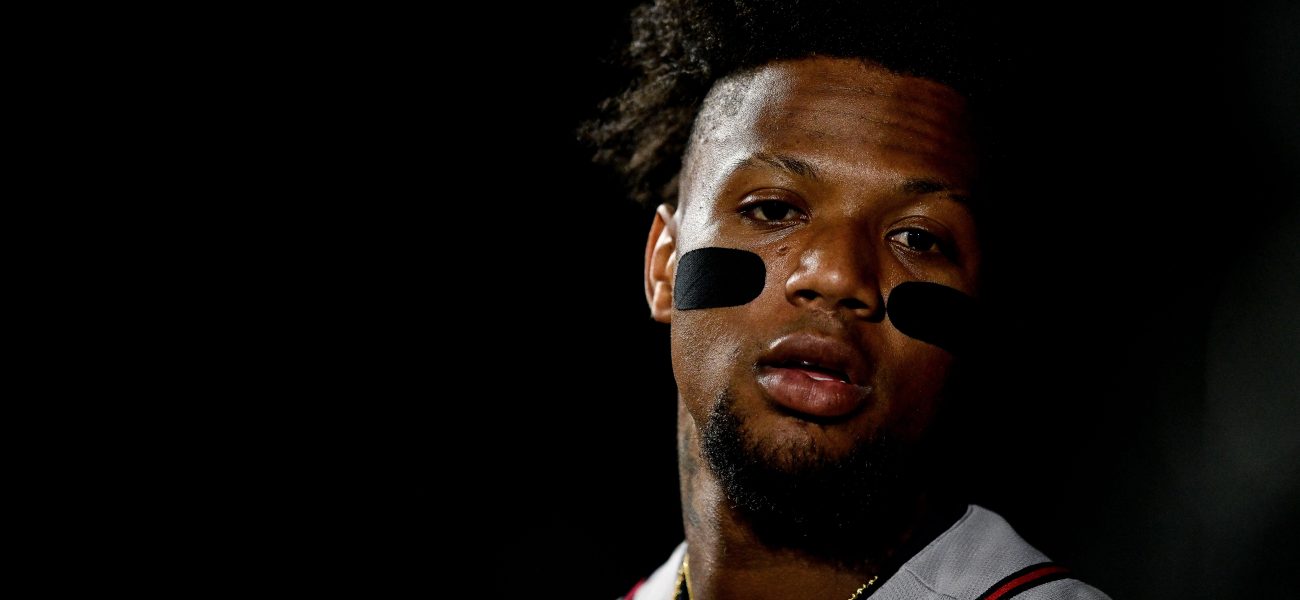
When Stars Falter: Acuña’s Injury Highlights Fragile Economics of Elite Athletic Talent
POLICY WIRE — DENVER, CO — The collective gasp that swept through Coors Field last Saturday wasn’t merely the lament of a fanbase watching a superstar hobble off the diamond; it was, for the...

POLICY WIRE — DENVER, CO — The collective gasp that swept through Coors Field last Saturday wasn’t merely the lament of a fanbase watching a superstar hobble off the diamond; it was, for the discerning observer, a stark, visceral demonstration of the inherent fragility of human capital in a meticulously calibrated, multi-billion-dollar enterprise. Ronald Acuña Jr.’s hamstring tweak—a fleeting muscular rebellion—has, with the almost surgical precision of a market correction, underscored the precarious economic architecture underpinning elite professional sports.
For weeks, the Atlanta Braves had been a statistical marvel, a juggernaut of offensive output defying early-season anxieties. Matt Olson, specifically, wasn’t just hitting; he was crushing, an elemental force at the plate. Through approximately 20% of the season, his metrics placed him on pace for a staggering 55 homers and 65 doubles, boasting a colossal 171 wRC+ (Weighted Runs Created Plus), according to Baseball Savant data. He also anchored elite defense at first base and currently leads the National League in FanGraphs Wins Above Replacement (fWAR). But such individual brilliance, however transcendent, often masks the systemic vulnerabilities inherent in over-reliance on a few marquee talents. And that, in essence, is the rub.
Acuña’s exit from the game, his grimace an involuntary broadcast of pain, swiftly shifted the narrative from sustained dominance to strategic recalibration. It’s a moment that sends ripples far beyond mere box scores, provoking existential questions about roster construction, injury insurance, and the valuation of irreplaceable skill. So, what does a star’s physical setback truly signify in an industry perpetually chasing optimal performance and maximum marketability?
Atlanta’s General Manager, Alex Anthopoulos, a man whose reputation is built on shrewd management of both talent and ledger, was characteristically pragmatic. “We’re always evaluating our roster’s depth and resilience,” Anthopoulos recently opined in a conversation regarding the club’s injury contingencies. “It’s about navigating the inevitable bumps – not just on the field, but in the broader economic landscape of talent acquisition. You plan for these eventualities, even as you hope they never materialize.” It’s a sentiment that speaks volumes about the constant, intricate dance between ambition and caution that defines modern sports administration.
The immediate consequence is clear: others must now shoulder a greater burden. Austin Riley, for instance, a player whose considerable salary dictates consistent offensive production, finds himself under heightened scrutiny. His recent uptick in performance at Coors Field, punctuated by a crucial Saturday night homer, offers a glimmer of hope – a testament to the ‘next man up’ philosophy, perhaps, but also a stark reminder of how quickly the spotlight can intensify. Still, relying on a single player’s sudden surge is hardly a sustainable long-term strategy, is it?
Beyond the Braves’ immediate concerns, the episode illuminates broader patterns of resource allocation and risk management that resonate across industries. Dr. Aisha Rahman, Director of Sports Economics at the Institute for Global Policy Studies, framed it incisively. “The Acuña situation isn’t merely a setback for a baseball club; it’s a stark reminder of how concentrated human capital risk can destabilize even the most robust organizations, echoing market vulnerabilities seen from Silicon Valley to Karachi’s stock exchange,” she observed, drawing a direct parallel between athletic prowess and economic stability. “Nations, too, struggle with similar challenges, whether it’s brain drain or over-reliance on single commodities. The principles are remarkably consistent.” Her analysis highlights how the global appreciation for elite athletic talent—and the subsequent investment in it—often transcends traditional geographic boundaries, forging economic connections that might seem improbable on the surface.
📄 POLICY WIRE WHITEPAPER PUBLISHED: PAKISTAN'S NATIONAL SECURITY POLICY PRIORITIES
👉 READ BY CLICKING HEREAnd it’s not just about star power. The strategic deployment of less celebrated assets also dictates an organization’s resilience. The Braves’ decision to option Anthony Molina while re-signing Carlos Carrasco to the major league roster demonstrates the constant, often thankless, roster churn that keeps teams afloat. Chris Sale’s dominant outing and Drake Baldwin’s contributions in the recent 9-1 rout of the Rockies further underscore this point: depth, like capital reserves, is critical. This relentless optimization of talent, this diamond diplomacy, is a constant policy challenge.
Across the league, other teams grapple with similar dynamics. Lars Nootbaar’s impending rehab assignment for the Cardinals, the Mets’ extension of catcher Luis Torrens for $11.5 million over two years, and JT Realmuto’s return from injury for the Phillies all represent distinct facets of talent management: rehabilitation, retention, and timely reinforcement. Each move, seemingly isolated, contributes to a collective tapestry of an industry navigating the inherent volatility of human performance.
What This Means
At its core, Acuña’s injury serves as a microcosm for the larger economic principle of systemic risk tied to irreplaceable assets. For the Braves, it means a tangible dip in projected offensive output, potentially impacting ticket sales, merchandise revenue, and, critically, postseason prospects – a direct link to the team’s market valuation. It forces a strategic pivot, demanding that secondary assets perform at a primary level, a phenomenon common in businesses facing supply chain disruptions or sudden loss of key personnel. The financial implications extend beyond salary; the perceived value of the team’s brand, its ability to attract future talent, and even broadcast rights negotiations can subtly shift. This necessitates a scrappy resilience in the face of shifting power dynamics, a constant re-evaluation of market position.
Politically, while seemingly distant, the incident can be viewed through the lens of economic policy: how much should an organization invest in mitigating such risks? What are the regulatory implications of player contracts — and injury clauses? For policy makers, the challenge of fostering sustainable talent pipelines—whether in sports, science, or technology—is a universal one, demanding proactive strategies for development and retention, especially given the global competition for skilled individuals. And don’t forget the burgeoning global sports betting market, where such injuries can create seismic shifts in odds, requiring robust regulatory oversight to prevent malfeasance. The stakes, it’s evident, are far higher than just a game.