


Milwaukee’s Uneasy Triumph: Glory, Grit, and the Grim Cost of Collision
POLICY WIRE — Milwaukee, United States — The sickening thud of bone against concrete—a visceral jolt, a stark counterpoint to the roaring crowd. That’s how victory tastes, sometimes: metallic —...

POLICY WIRE — Milwaukee, United States — The sickening thud of bone against concrete—a visceral jolt, a stark counterpoint to the roaring crowd. That’s how victory tastes, sometimes: metallic — and tinged with dread. Milwaukee’s baseball faithful might have cheered young Jacob Misiorowski’s dominating performance last week, but it was Brandon Lockridge’s agony, his leg twisted against a cold outfield wall, that truly defined the night, stripping away any easy sentiment from a dominant 6-0 shutout against the New York Yankees.
It was a masterclass, really, a pitcher’s clinic put on by Misiorowski, striking out eleven Yankees, holding them scoreless. And for eight electric innings, the stadium pulsed with the belief that a new star had arrived. But as Lockridge lay writhing in the outfield grass, carted off with a laceration down to the bone after a collision with a concrete wall, the celebration faltered. Because what’s the cost of a shutout, an ascent to stardom, when it comes with such immediate, brutal consequences for another talent?
Manager Pat Murphy didn’t mince words. “His X-rays were clean for a fracture, thank heavens for that,” Murphy told reporters later, his usual jovial demeanor replaced by a strained grimace. “But it’s a deep laceration, clear down to the bone. You just… you just hate to see it happen to anyone, especially a guy playing so hard. He’s tough, but this one’s a gut punch.” His statement only highlighted the chilling precariousness of high-performance athleticism, where one moment of brilliance can be undone by one inch of concrete.
The Brewers, meanwhile, started strong at the plate, forcing Cy Young candidate Max Fried to battle early. Gary Sánchez kicked things off with a single, then Fried walked two, setting up RBI singles for Lockridge and Sal Frelick. Joey Ortiz added another run on a fielder’s choice. Then Jackson Chourio landed an RBI knock, capping off a four-run, nine-batter second inning. But even as the scoreboard glittered with runs, the stark reality of the game’s inherent dangers hovered. This isn’t just sport; it’s a brutal occupation. As such, these athletes face risks akin to certain high-stakes industrial sectors, their bodies the very instruments of their trade.
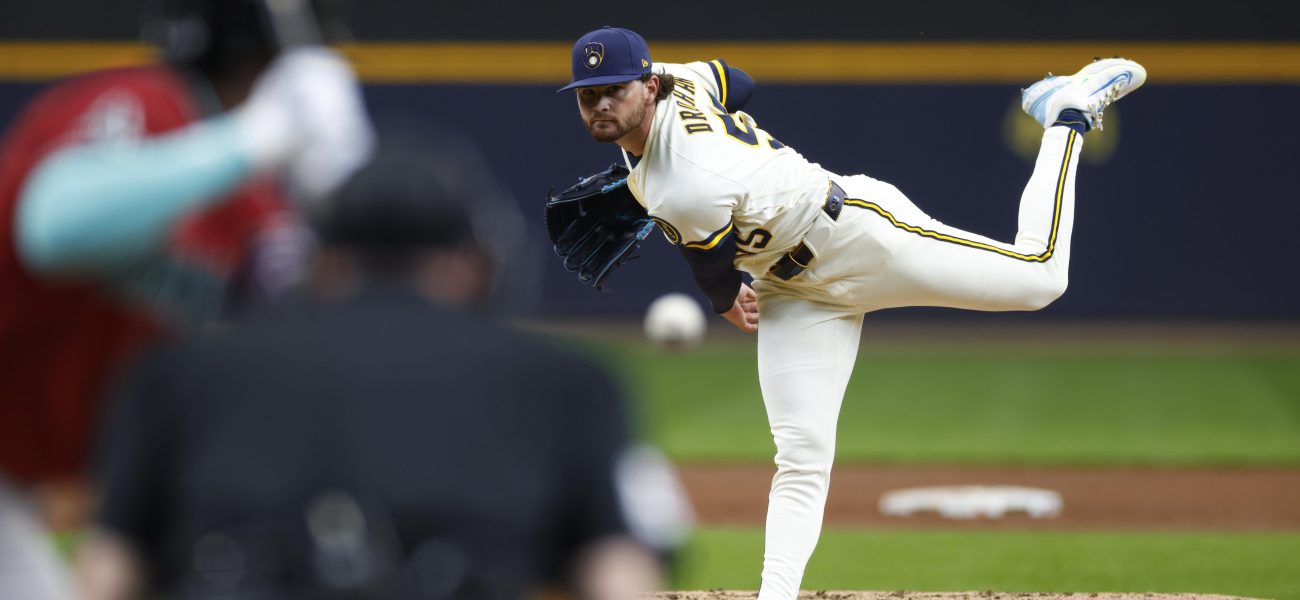
Misiorowski’s heroics continued even after the Lockridge incident. He whiffed Yankees star Aaron Judge, nearly grabbing an immaculate inning. And while the victory offered hope for the team’s often anemic offense—Ortiz even managed his first extra-base hit of the year, another minor triumph in a night of contradictions—Lockridge’s fate cast a long shadow. Shane Drohan, picking up his first career save with nearly three perfect innings, added another footnote of burgeoning talent. Yet the overarching question remained: at what human expense are these gladiatorial spectacles staged?
📄 POLICY WIRE WHITEPAPER PUBLISHED: PAKISTAN'S NATIONAL SECURITY POLICY PRIORITIES
👉 READ BY CLICKING HERE“These aren’t just athletes; they’re high-value assets,” explained Alan Carter, a prominent sports economist who advises several global franchises. “When a player like Lockridge—an established talent—goes down, it isn’t just about the current game. It’s about projected revenue, merchandise sales, fan engagement, — and crucially, the future investment return. The league’s collective bargaining agreements (CBAs) might offer some buffer, but the ripple effects are significant, often underappreciated by the casual observer.” Carter pointed to a study published last year by the University of Pennsylvania’s Wharton School, which estimated that an average season-ending injury to a key player costs an MLB franchise, on average, upwards of $12 million in direct and indirect losses.
What This Means
This incident is more than a fleeting sports headline; it’s a stark reminder of the underlying tension in professional sports between athletic spectacle and corporate responsibility. We talk about player safety, but how far does that really extend when the game demands pushing the human body to its absolute velocity’s edge, often against unyielding infrastructure? The policy implications stretch from facility design and material safety standards—a wall that shouldn’t be so rigid, perhaps—to comprehensive athlete insurance, especially for players who often come from less privileged backgrounds. In nations like Pakistan, for instance, where many athletes are the primary breadwinners, a career-altering injury isn’t just a personal tragedy; it’s an economic disaster for an entire extended family. Here in the U.S., too, the economics are brutal. These teams are multi-billion dollar enterprises, — and their ‘product’ is human talent. When that product is physically compromised, who truly bears the ultimate burden? Is it the player, left with pain — and an uncertain future? Or is it merely a balance sheet adjustment for ownership?