

Seaborne Solidarity: Gaza Aid Flotilla Gathers, Dares Mediterranean’s Murky Waters
POLICY WIRE — Marmaris, Turkey — The salty air here on the Turkish coast typically hums with tourist chatter, the clink of ice in sundowners. But down at the docks, something grittier stirs....

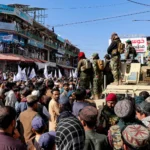
POLICY WIRE — Marmaris, Turkey — The salty air here on the Turkish coast typically hums with tourist chatter, the clink of ice in sundowners. But down at the docks, something grittier stirs. It’s not a luxury yacht rally; it’s the grim, methodical preparation of a small armada. Vessels are getting ready, hulls stocked, volunteers – an international bunch, mind you – buzzing with an almost weary resolve. They’re bound for Gaza, a journey fraught with both danger and geopolitical theatre, trying to punch a hole, however symbolic, through one of the world’s tightest sieges.
It’s the same old song, isn’t it? Another flotilla. Another attempt to get aid, or maybe just attention, into an enclave pushed to its breaking point. This isn’t just about food parcels; it’s about pushing back against a policy of collective punishment that’s left over two million people scraping by on barely anything. The boats aren’t just carrying aid; they’re carrying the weight of international frustration, the quiet outrage of people who’ve seen too many dire reports come out of the strip.
The staging ground in Marmaris, a scenic resort town, is an ironic backdrop for such a confrontational enterprise. Yet, that’s precisely the point: to cast the plight of Gaza against the world’s perceived normalcy. Aid workers, journalists, — and activists are all filtering in, prepping for what they know could be an eventful trip. But, as one veteran volunteer whispered to me near a supply pallet, We’re not just bringing flour; we’re bringing uncomfortable truths. Sometimes, you gotta make waves to get anyone to listen.
The stakes are high. Remember 2010? Yeah, everyone does. The violent confrontation, the loss of life. Turkey, back then, raged. Now, as the nation’s own diplomatic posture remains steadfast in support of Palestinian rights, this flotilla sails not just with a humanitarian cargo but with Turkish endorsement, however tacit. These brave individuals reflect the conscience of our nation and, indeed, much of the world,
remarked Ambassador Feridun Sinirlioğlu, a former Turkish Permanent Representative to the United Nations, in a phone interview from Istanbul. Their voyage isn’t an act of aggression, but a plea for humanity that the international community has consistently ignored.
He speaks with a gravitas only acquired from years of watching these cycles play out.
And Israel, of course, isn’t exactly sending welcoming parties. They’ve made it abundantly clear their naval blockade is legitimate — and necessary for their security. Any unsanctioned maritime movement attempting to breach our security cordon constitutes a clear provocation and will be treated as such,
stated Avi Hyman, an Israeli government spokesperson, via an emailed statement. We facilitate aid through established, secure channels. Those who choose extra-legal means are knowingly creating a risk.
It’s the familiar refrain, honed over years of managing international perceptions, a delicate dance between security imperatives and global public opinion.
📄 POLICY WIRE WHITEPAPER PUBLISHED: PAKISTAN'S NATIONAL SECURITY POLICY PRIORITIES
👉 READ BY CLICKING HEREBecause, for many in the broader Muslim world, particularly in South Asia, the Gaza blockade isn’t some distant conflict; it’s a festering wound on the collective consciousness. In Pakistan, for instance, public sympathy for Palestinians runs deep, fueled by historical ties and religious solidarity. Charity organizations, individuals, even official channels in Islamabad, often advocate strenuously for an end to the siege. Every flare-up in Gaza reignites passionate discourse across cities like Lahore — and Karachi. It’s why efforts like this flotilla resonate so powerfully, connecting a Turkish port to streets thousands of miles away, transforming abstract policy into visceral, shared struggle. Don’t forget that digital narratives of suffering in one region often echo intensely in another, fueling global outrage.
The situation on the ground in Gaza, even before recent escalations, was abysmal. A shocking 80% of Gaza’s population relied on humanitarian assistance even prior to October 2023, according to figures from the United Nations Office for the Coordination of Humanitarian Affairs (OCHA). That’s a stark, undeniable number, pointing to systemic failures that boats filled with goods can’t—can’t possibly—fully address. This journey isn’t just about filling bellies, it’s about pushing the conscience.
What This Means
The mere gathering of this flotilla in Marmaris sends ripples far beyond the immediate horizon. Politically, it reasserts Turkey’s role as a vocal proponent for Palestinian rights, potentially raising Ankara’s profile within the Muslim world while simultaneously straining relations with Jerusalem. It forces Israel into another difficult corner: maintain the blockade, risk international condemnation and perhaps another Mavi Marmara incident (unlikely, but the spectre looms), or make concessions that might be perceived as weakness domestically. Economically, while the direct impact of the aid cargo is negligible against the monumental needs of Gaza, the larger economic implication lies in the persistent instability these humanitarian standoffs create. They discourage foreign investment, deter economic development, and keep the region locked in a cycle of aid dependency and conflict. This cycle — let’s be frank, it’s not just a regional headache — it affects global supply chains, international aid budgets, and even broader diplomatic energy, distracting from other pressing global issues like, say, the complex geoeconomics of baseball’s past. For the region’s nations, particularly those with strong pro-Palestinian sentiments, these events act as lightning rods for public opinion, influencing domestic politics and shaping international alliances. It’s a low-tech intervention with very high-tech consequences, folks.