


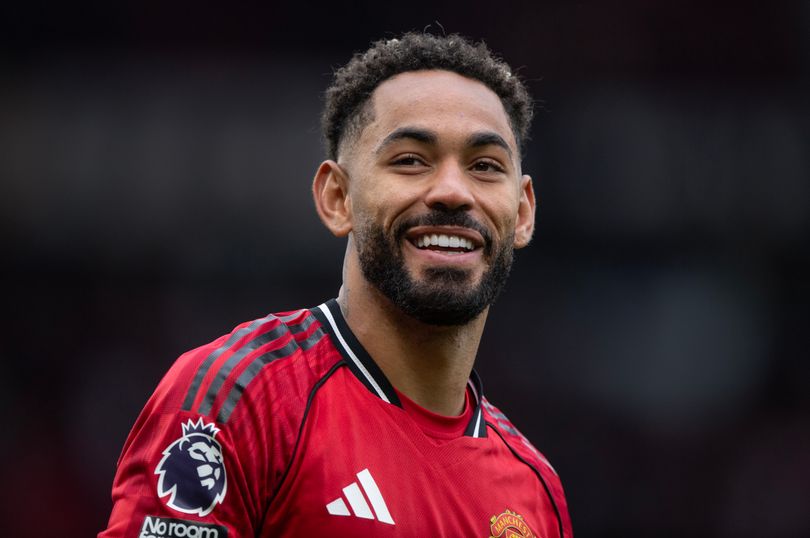
Red Devils vs. Seleção: Man Utd’s High-Stakes Standoff Over Matheus Cunha’s World Cup Fate
POLICY WIRE — Manchester, UK — The looming FIFA World Cup, a quadrennial global crucible, routinely pits club ambition against national glory, transforming star players into...

POLICY WIRE — Manchester, UK — The looming FIFA World Cup, a quadrennial global crucible, routinely pits club ambition against national glory, transforming star players into highly-prized, fiercely-contested assets. This summer, Brazilian international Matheus Cunha finds himself squarely in the crosshairs of precisely such a skirmish, with Manchester United unequivocally rejecting any suggestion he’d be rested for the prestigious tournament.
It wasn’t a casual disagreement, mind you. Reports had swirled — persistent whispers, really — that Brazil’s national team coach, Carlo Ancelotti, harbored a fervent desire to see Cunha arrive in peak, un-fatigued condition for the North American spectacle. The purported solution? A gentleman’s agreement with the Premier League powerhouse to bench the prolific forward for United’s final three league fixtures. But the Old Trafford brass, it seems, isn’t in the mood for gentility when millions, and a manager’s career, hang in the balance.
And so, United shot back, dismissing the entire narrative as utter fabrication. No discussions with Ancelotti. No concessions to the Brazilian Football Confederation (CBF). None whatsoever. It’s a stark reminder that while national pride swells, the intricate economics of elite club football often dictate the rhythm of global sport. For a club like Manchester United, every league position, every point, carries a tangible price tag. Indeed, reports suggest securing third place alone could net the club an additional £50 million ($67.9 million) in prize money, a substantial sum for future investments, as per analyses by sports financial firms like Deloitte.
“We’ve got a campaign to conclude, significant financial incentives at stake, and a manager whose future we’re solidifying. Matheus isn’t just a player; he’s a linchpin in our immediate objectives. The notion of sidelining him now, especially given his sensational form, is simply preposterous,” a Manchester United spokesperson reportedly shot back, choosing anonymity to speak candidly on internal club strategy.
Behind the headlines, interim manager Michael Carrick finds himself in an unenviable, yet potentially career-defining, position. Having already shepherded United to UEFA Champions League qualification — quite the turnaround for a club lately synonymous with on-field malaise — he’s now vying for the permanent managerial gig. Club executives are set to render their verdict within the next month, and a strong finish to the season, secured by players like Cunha, isn’t merely desirable; it’s consequential. Cunha himself, among other key players, has publicly backed Carrick for the full-time role, undoubtedly deepening the club’s resolve to keep him on the pitch.
Still, the Brazilian camp views the situation through a different lens, prioritizing national aspirations over club balance sheets. “Every nation, particularly one with Brazil’s proud footballing heritage, wants its finest talents fresh and firing for the World Cup. It’s not just about winning; it’s about national pride. We merely sought to ensure optimal conditions for our squad’s preparations, a standard practice among federations worldwide,” asserted Brazilian Football Confederation President Ednaldo Rodrigues, a subtle jab at United’s perceived inflexibility.
Cunha’s arrival at Old Trafford last summer, a £62.5 million ($83.5 million) transfer from Wolverhampton Wanderers, has been nothing short of a revelation. The 26-year-old attacking midfielder has tallied nine goals in 27 league starts, including decisive strikes against Arsenal, Chelsea, and Liverpool. He’s accumulated 21 caps for his country since his 2021 debut and is widely expected to be a pivotal figure in Ancelotti’s World Cup squad — a tournament that kicks off in less than five weeks in Mexico City.
What This Means
This fracas isn’t merely a spat between a club and a national team; it’s a microcosm of the perpetual tension at the apex of global football. For Manchester United, the stakes are undeniably economic — the aforementioned £50 million prize money directly impacts their capacity to compete for future talent and maintain their elite status. But it’s also deeply political within the club’s hierarchy; Carrick’s managerial prospects are inextricably linked to the team’s performance, making the presence of a player like Cunha invaluable. He simply can’t afford to rest his best assets, even if it means irking a national federation. And it’s not just Old Trafford’s coffers feeling the tremor; the Premier League’s colossal global brand—built, in part, on the drama of these very club-country conflicts—is nowhere more passionately followed than in the burgeoning markets of South Asia and the wider Muslim world. Fans from Karachi to Cairo, captivated by the spectacle, understand implicitly how each goal, each victory, each prize money increment underpins the very viability of the clubs they ardently support. This global engagement, both emotional and economic, further complicates the seemingly straightforward demands of national federations.
Conversely, for the Brazilian Football Confederation, the situation underscores their obligation to optimize national team performance, safeguarding player welfare to ensure a competitive edge on the world stage. It’s a delicate balancing act, one that will intensify as the World Cup approaches, testing the diplomatic and commercial boundaries between clubs that own players’ contracts and nations that claim their allegiance. For more on how global football’s calendar shapes economics, see our report on UAE’s ILT20. This entire saga — played out on the hallowed grounds of Old Trafford’s Crucible — offers a stark illustration of where power truly resides in modern football, and how it impacts everything from player health to international diplomacy.