
Moscow’s Ceasefire Gambit: A Parade of Irony Ahead of Victory Day
POLICY WIRE — Kyiv, Ukraine — In the grand, often disingenuous theatre of international power plays, nothing quite says ‘good intentions’ like a unilateral ceasefire—announced just ahead...

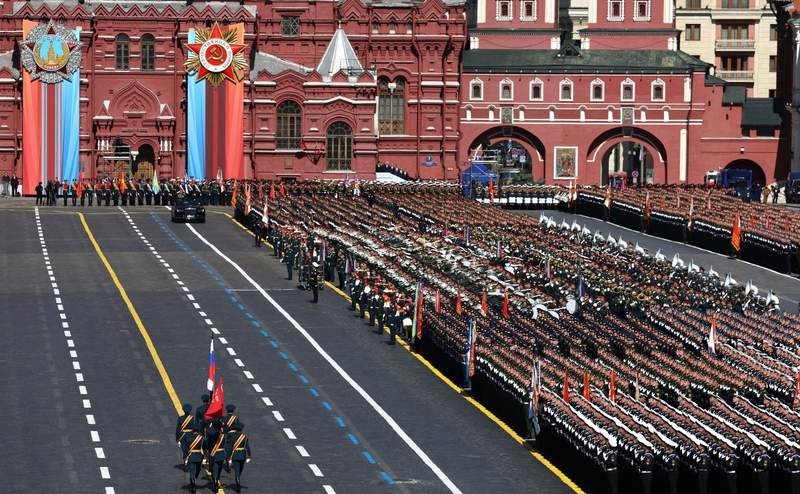
POLICY WIRE — Kyiv, Ukraine — In the grand, often disingenuous theatre of international power plays, nothing quite says ‘good intentions’ like a unilateral ceasefire—announced just ahead of a national holiday steeped in military triumphalism. Moscow’s recent declaration of a temporary halt in hostilities across Ukraine’s battlefronts, timed conveniently before its annual Victory Day parade, has been met not with relief, but with the cold, hard gaze of suspicion. It’s a move straight from the worn-out playbook of political spectacle, engineered for an audience that increasingly doesn’t buy the tickets.
Because let’s be real, Russia’s ‘humanitarian gesture,’ as some official back channels might whisper, felt less like a peace offering and more like an inconvenient truth wrapped in a parade float. Western observers—and frankly, anyone with a memory longer than a fruit fly’s—immediately saw through the veneer. This isn’t about saving lives, not primarily. It’s about optics, pure and simple. It’s about crafting a narrative, both for internal consumption and for a global audience, that Moscow still holds the moral high ground, even as the world observes its systematic dismantling of Ukraine’s infrastructure and sovereignty. And they’re trying it on for size again.
But Ukrainian officials weren’t born yesterday. They’ve watched Moscow declare ‘ceasefires’ before—only to use them for repositioning troops, resupplying units, or, worse still, continuing strikes under the guise of responding to alleged provocations. “It’s a cynical stunt, pure and simple. They’ve bombed our cities, deported our kids, — and now they want us to believe they’re taking a holiday? We aren’t fooled,” snapped Mykhailo Podolyak, a Ukrainian Presidential Advisor, his voice tight with disdain, as reported by various Ukrainian news outlets. His sentiment wasn’t an outlier; it’s a deeply ingrained skepticism forged by years of conflict.
This whole charade isn’t lost on nations further afield, either—from the corridors of Islamabad to the bustling markets of Jakarta, governments watch, weighing Moscow’s pronouncements against its actions. Pakistan, for instance, a nation constantly navigating complex geopolitical currents—often reliant on diversified energy sources and military partnerships—understands the delicate dance of international declarations. When a major power talks peace but acts with aggression, it complicates everything, forcing leaders in regions like South Asia to consider the wider ramifications for resource security and non-alignment, or how regional power balances might be recalibrated.
The U.S. State Department certainly didn’t mince words. “We view any unilateral declaration from Moscow with extreme skepticism, especially when their track record is one of consistent aggression and disregard for international law,” a spokesperson, Matthew Miller, relayed to reporters during a recent briefing. “Our focus remains on supporting Ukraine’s right to self-defense, not on theatrical pauses designed to deflect criticism.” That’s code for: we know what you’re up to.
It’s a peculiar strategy, isn’t it? To offer a temporary cessation of hostilities for a day commemorating a victory over fascism—a war that, ironically, many analysts argue Russia is now channeling, not commemorating. What’s next, an olive branch carved from a tank barrel? The hypocrisy practically drips from the diplomatic dispatches. Official Russian figures show a remarkable uptick in state-controlled media narratives promoting a ‘humanitarian’ face of the conflict, particularly around sensitive dates, yet independent reporting often indicates the exact opposite on the ground. A report by the Yale School of Public Health Human Rights Lab in 2023, for instance, documented at least 6,000 Ukrainian children forcibly transferred or deported to Russia, a stark contradiction to any humanitarian pretense.
But the broader implication—and this is key—is how such actions contribute to a global erosion of trust. When a ceasefire becomes just another rhetorical tool in a conflict, what does that say about the future of international diplomacy? It creates a chilling precedent, effectively cheapening agreements meant to save lives. It’s like a boy crying wolf, but with cluster bombs. This kind of calculated performativity risks making genuine attempts at de-escalation almost impossible.
What This Means
Politically, Moscow’s ceasefire announcement serves primarily as a domestic rallying cry for Victory Day, aiming to project strength and an illusion of control both at home and among less critical allies. It’s a nod to a national psyche that values historical grandeur and military prowess, attempting to link the current conflict to the ‘Great Patriotic War.’ Economically, it offers no tangible shift. Russia’s economy, while showing resilience in some sectors, remains under immense international pressure. For Ukraine, it’s just noise—a fleeting lull they can’t afford to trust, potentially allowing Russian forces to rearm or reposition without fear of immediate reprisal, as has happened in the past. It means their fight continues, unimpeded by theatrical declarations. And for the wider international community, especially for countries attempting to mediate or maintain neutrality, it further complicates engagement. It’s harder to broker a real peace when one party’s gestures are consistently interpreted as strategic diversions. Like a fumbled campaign, such moves reinforce the impression of insincerity, making credible negotiations even more distant prospects. This isn’t just about Ukraine; it’s about the future credibility of international law itself.