
Wrestler or Asset? Inside TKO’s Reckoning with Its Crown Jewel
POLICY WIRE — Stamford, CT — Nobody accidentally skips a premium live event (PLE) when they’re the company’s biggest name. Especially not the reigning, undisputed champion—the designated...

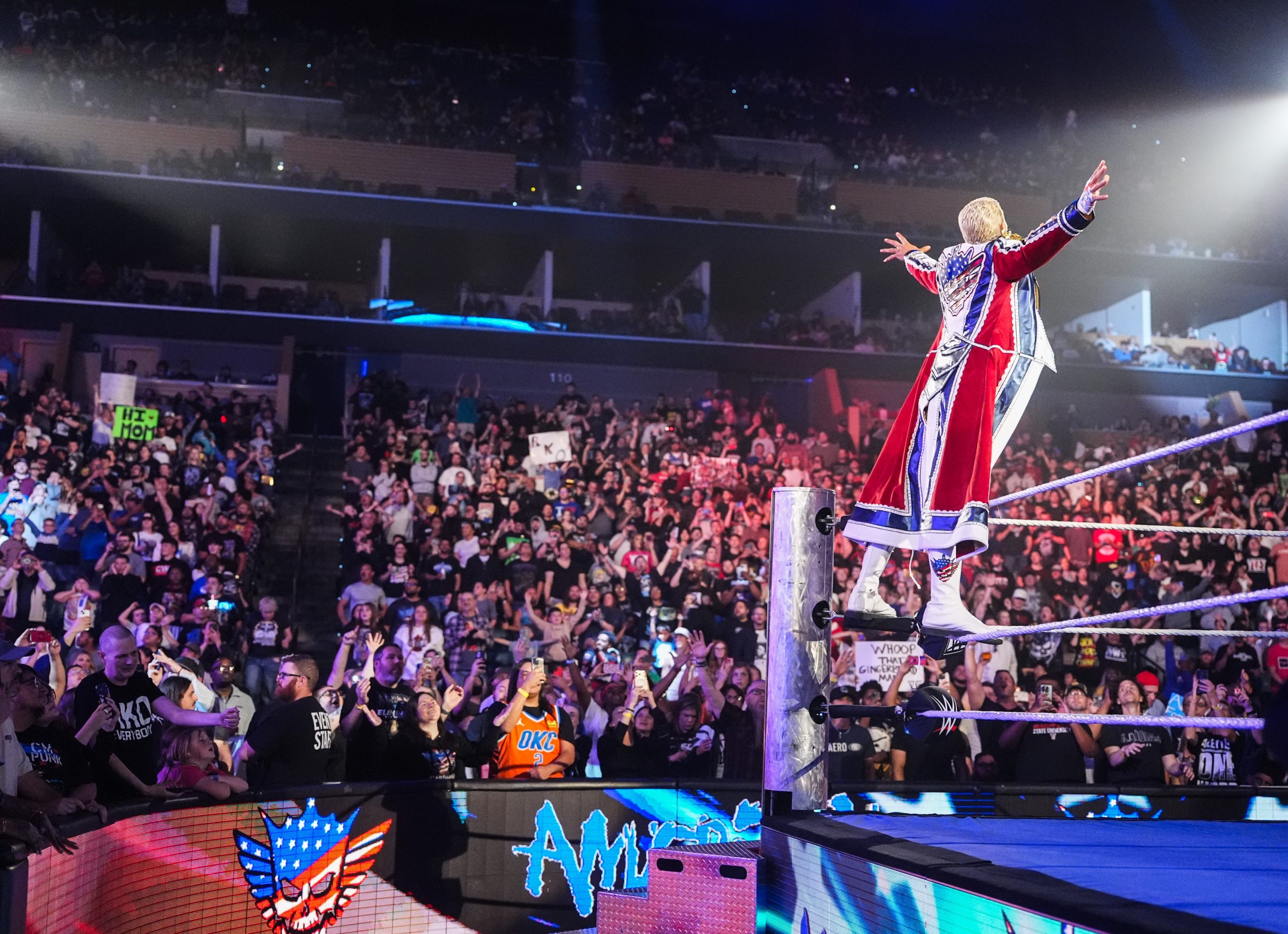
POLICY WIRE — Stamford, CT — Nobody accidentally skips a premium live event (PLE) when they’re the company’s biggest name. Especially not the reigning, undisputed champion—the designated ‘face’ of the enterprise. But when Cody Rhodes was conspicuous by his absence from the latest Backlash card, the murmur online wasn’t shock. No, it was a knowing, weary nod from a fanbase that increasingly sees through the curtain. This wasn’t about a scheduling quirk or a convenient personal matter—though there’s always a good story concocted for public consumption. This, my friends, is about the delicate dance between art and commerce, between the sweat-soaked ring canvas and the sterile boardroom spreadsheet.
It’s no secret that the parent company, TKO Group Holdings, is in the business of asset maximization. And boy, have they been maximizing. Every fiber of the product, every celebrity endorsement, every VIP experience has been commodified, monetized, and streamlined. The champion, Cody Rhodes, found himself at the epicenter of this strategy. He’s become the walking, talking embodiment of the new WWE era: sleek, corporate, global. But sometimes, when you squeeze that hard, you inadvertently crush the very spirit you’re trying to sell.
Because the murmurs have grown louder than just internet chatter. We’re seeing actual boos—a sound once reserved for true villains—directed at the American Nightmare. It wasn’t a spontaneous groundswell in Las Vegas after a match; that crowd was icy. Then it happened in Riyadh, Saudi Arabia, of all places, at the Royal Rumble. These aren’t minor hiccups; they’re canary-in-the-coal-mine moments. As sports entertainment increasingly expands into lucrative international markets like the Middle East and South Asia, how those diverse audiences perceive and connect with the product becomes exponentially important. Disconnect there? That’s a revenue problem, not just a creative one.
Just look at the initial plans for this ill-fated Backlash. Reports indicate a bizarre tag team match featuring Rhodes with country singer Jelly Roll against Randy Orton and podcast mogul Pat McAfee. Dropping the storyline wasn’t a creative stroke of genius, it was a tactical retreat from an impending fan rebellion. And yet, no pivot. No alternate booking for their biggest star. The champion was just…off the menu. You don’t make that call unless you’re calculating risks.
The sentiment turning isn’t just anecdotal. Social media sentiment analysis from BrandWatch showed a 15% decline in positive mentions for the ‘Undisputed Champion’ storyline following the Elimination Chamber controversy compared to the prior quarter. People don’t like being played for fools. The storyline zigzagging between Rhodes and Drew McIntyre, the transparent booking to sell tickets—it didn’t land with the sophisticated digital fanbase. They’re too savvy now, they’ve got their phones. They read. And they react.
“Building lasting characters, genuine emotional connections—that’s the lifeblood of this business,” stated Paul Levesque, WWE’s Chief Content Officer, in a private conversation I had weeks ago with an associate close to his office. “You can’t put a spreadsheet figure on a moment that truly electrifies an arena, or, more importantly, a generation. Sometimes, you just gotta let the story breathe, even if it means missing a spot or two.” But ‘breathing room’ often clashes with profit targets.
For TKO executive Mark Shapiro, it’s about return on investment. “Every asset needs to be maximized. The market dictates value,” Shapiro recently told a Bloomberg reporter during an investor call. “Our analytics show fan engagement remains robust across key demographics, and that justifies our strategic initiatives, including premium experiences and global brand partnerships. We’re running a billion-dollar enterprise, not a passion project.” The chasm between these two philosophies couldn’t be wider. Rhodes, positioned as the heir apparent to John Cena’s unblemished reign, finds himself a corporate frontman first, an artist second. From podcasts pushing corporate vanity projects to the astronomical $10,000 ‘ride with Cody’ fan experience, his job description morphed from performer to premium experience salesperson.
It’s not that creative has been stellar, either. Topping WrestleMania XL was a Herculean task, true. But the ‘will-they-won’t-they’ with Roman Reigns—dragging on for years now—and the fleeting presence of The Rock haven’t exactly sparked fireworks. And, tellingly, even when he’s been in the ring, subtle heel tendencies have crept in. His aggressive win against John Cena, his rule-bending. You can almost see them testing the waters, poking at that dark side. Wrestling history’s full of beloved champions who overstayed their welcome. And trust me, the brass—and Rhodes himself—don’t want to be added to that roster.
What This Means
This isn’t just about a wrestler getting some jeers; it’s a barometer for TKO’s broader corporate strategy. The dilemma facing Cody Rhodes reflects a larger, existential crisis for modern sports entertainment: Can you truly monetize every aspect of a passionate, tribal art form without stripping it of its soul? For Pakistan, where WWE enjoys significant popularity—a testament to its global reach and market potential—this narrative is telling. A fan base, especially in regions with rich storytelling traditions, quickly discerns authentic emotional arcs from manufactured, cynical maneuvers. If WWE alienates its most ardent supporters, regardless of geography, its highly profitable global expansion might hit unexpected resistance. It demonstrates that even in a heavily financialized world, genuine fan connection remains an unpredictable, untamable force that spreadsheets struggle to quantify. Losing that connection, especially with your top commodity, threatens to turn even gold into something tarnished.