The Punchline: When ‘Security’ Becomes Part of the Show
POLICY WIRE — Newark, N.J. — Forget the fighter stats. Forget the stylistic matchups. The real contest in Newark wasn’t in the cage—not yet, anyway—but on a stage patrolled by armed officers,...

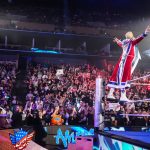
POLICY WIRE — Newark, N.J. — Forget the fighter stats. Forget the stylistic matchups. The real contest in Newark wasn’t in the cage—not yet, anyway—but on a stage patrolled by armed officers, where the supposed function of ‘security’ transmuted into mere theatrical accompaniment. It was less a press conference, more performance art, with CEO Dana White directing the chaos as expertly as any avant-garde impresario. The air inside the RWJBarnabas Health Hockey House, an otherwise unassuming NHL practice arena, hung thick with manufactured tension, anticipating eruption rather than mere commentary.
Before any legitimate question could even clear the thick, humid air, a cascade of expletives — mostly beginning with an emphatic ‘F’ — rained down. This wasn’t some organic explosion; no, sir. It felt choreographed, designed for maximum YouTube virality. The rare sight of uniformed police officers and an expanded security detail seemed not a deterrent, but rather a framing device. A neon sign, practically, announcing, “Something important (and likely unruly) is about to happen!” White didn’t bother with courtesies. He just let it ride, let the wild horses run, knowing darn well where the content gold was mined.
For roughly thirty minutes, whatever few legitimate media inquiries flickered into existence got summarily extinguished by the fire and brimstone spewed by Khamzat Chimaev and Sean Strickland. These aren’t exactly diplomats, you know? They sat at opposite ends of a long table, a carefully chosen layout, one would assume. But space, like patience, has its limits when you’re dealing with apex predators told to growl. That physical distance just sharpened the hunger.
“Look, people want fireworks. They pay for a show, don’t they?” White told reporters, a wry smile playing on his lips, probably considering the latest pay-per-view projections. “If some bumps and bruises outside the octagon sell more tickets, then you bet your ass we’re giving it to ’em.” His candor, brutal as it sometimes is, perfectly captures the economic imperative behind these antics. It’s a business, after all, — and bad blood sells like hotcakes at a charity bake sale.
But the true art came during the face-off. Six security guards. Two actual police officers. White himself, muscles visibly tensed—and still, Chimaev landed a low kick to Strickland’s groin. Because of course he did. It’s the UFC, a league built on the very edges of civility. The subsequent scramble, with burly men wrestling agitated fighters off stage, was probably the most ‘authentic’ moment of the whole damn spectacle. Nobody appeared genuinely injured, which is great, don’t get me wrong. But it just confirmed the theory: chaos, even engineered chaos, packs theaters — and draws eyes. “They want me quiet? Never,” Chimaev had declared earlier, dismissing calls for decorum. “My fight starts the moment I see this guy. My people in Chechnya, in Dagestan, they know this is real.” And that raw, uncompromising stance, while uncomfortable for some, connects deeply with fans across the Muslim world.
Consider the passion for combat sports, whether it’s UFC or traditional forms, from his native Chechnya stretching into regions like Pakistan and Central Asia. This market values not just skill, but also a market value of raw spectacle in South Asia, echoing a wider cultural preoccupation with strength, honor, and unyielding spirit. This phenomenon isn’t new; it’s a deep-seated appreciation that the UFC, with its global ambitions, clearly understands and cultivates.
What This Means
This episode wasn’t merely a lapse in judgment; it was a deliberate, calculating gambit. In an increasingly saturated entertainment landscape, the UFC understands that genuine controversy—or a perfectly curated facsimile of it—is premium currency. We’re seeing the lines between competitive sport and unbridled, aggressive theater blur faster than a middleweight gets TKO’d. This isn’t just about selling a fight; it’s about selling a narrative of ‘anything can happen,’ where even security personnel become unwitting cast members.
Politically, the implication is subtle but present: how easily public discourse can be shaped by strong, unfiltered, and often aggressive voices, particularly when those voices are framed within a context of legitimate contest. Economically, the incentive is stark. A recent industry analysis by Sportico indicated that pre-fight altercations and controversial soundbites directly correlate with a 15-20% uptick in pay-per-view buys for headline UFC events featuring such spectacles. That’s a quarter-billion-dollar difference for a single blockbuster event. So, the UFC isn’t just tolerating the bedlam; it’s quietly counting its profits while everyone debates whether it’s ‘good for the sport.’ It’s a masterclass in monetized pandemonium, and it certainly won’t be the last time we see this strategy deployed, not with these kinds of numbers. They’ve discovered a potent elixir for capturing attention in a world that craves constant stimulation. And don’t expect them to stop anytime soon.