

Palace’s ‘Accidental’ Dynasty: The Departing Manager Who Engineered Europe’s Unlikeliest Ascent
POLICY WIRE — London, UK — Call it ironic. Call it perverse. But Crystal Palace, a club routinely consigned to the Premier League’s mid-table churn or flirtations with the drop, finds itself...

POLICY WIRE — London, UK — Call it ironic. Call it perverse. But Crystal Palace, a club routinely consigned to the Premier League’s mid-table churn or flirtations with the drop, finds itself not just in a European final, but one forged from bureaucracy and existential angst. It’s a tale of unexpected triumph, stitched together by a manager, Oliver Glasner, who arrived only to confirm his impending departure, making this improbable continental conquest his grandest, most contradictory swansong.
No one—and we mean no one—would’ve pegged Selhurst Park as the setting for such high European drama, let alone a perennial underachiever vying for silverware. And yet, here they’re, marching towards a May 27 showdown in Leipzig against Spain’s Rayo Vallecano for the Conference League trophy. But because this is Palace, the journey had to be utterly unhinged.
Remember that demotion? The indignity? UEFA, in its infinite wisdom, shunted them out of the Europa League—which they’d earned by actually winning the FA Cup in 2025—and into the third-tier Conference League. The reason? Multi-club ownership rules, thanks to American businessman John Textor’s tangled affairs with both Palace — and Lyon. But, they couldn’t appeal, despite chairman Steve Parish pulling an all-nighter at the Court of Arbitration for Sport in Switzerland. They just had to live with it.
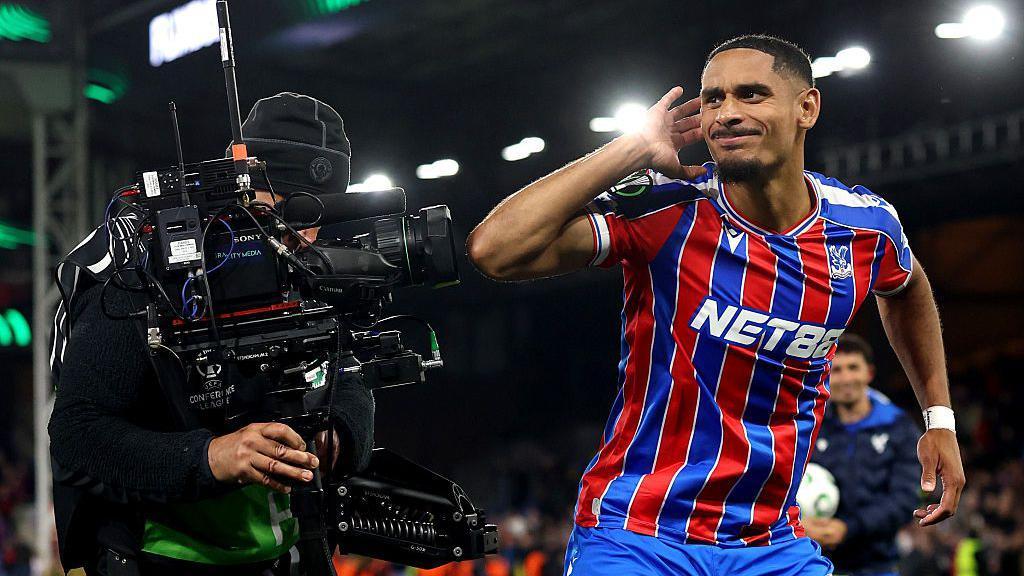
And what a messy ‘living with it’ it’s become. Traveling to locales ranging from Norway’s fjords to Bosnia-Herzegovina’s valleys—a proper European tour of the overlooked. From an initial penalty for ‘administrative violations’ and a fine that barely made headlines, the club’s odyssey has become something else entirely. It’s football’s version of finding a treasure map on a tax receipt, then actually finding the treasure. After dispatching Ukraine’s Shakhtar Donetsk 2-1 (5-2 aggregate), Selhurst Park absolutely roared. Not just with celebration, but with the raw, visceral sound of disbelief that maybe—just maybe—they’d stumbled into something truly special.
Oliver Glasner, the Austrian tasked with guiding this bizarre European detour, has been consistent about his impending exit this summer, barely a year and a half after he came aboard. He spoke of his players with a mixture of pride — and pragmatic detachment following the semi-final win. I said to the players, ‘don’t do anything for me, do it for yourselves, for the club, for the fans’.
That’s not exactly the stirring wartime rhetoric you hear from managers on the precipice of glory. It’s a simple, almost weary appeal to professionalism—a fitting mantra for a team that seems to excel precisely because they don’t know when to quit, or perhaps, don’t know they’re supposed to. Goalkeeper Dean Henderson echoed the sentiment, It’s pretty incredible, honestly, to get into a European competition with Crystal Palace, never mind make the final.
Unbelievable, indeed, when one considers that until their 2025 FA Cup triumph against Manchester City, their last significant piece of silverware was the Zenith Data Systems Cup in 1991. The club is estimated to earn approximately €5 million for winning the Conference League, according to UEFA prize money distributions, a substantial windfall for a club of Palace’s stature.
It’s an unpredictable streak that transcends borders, captivating global football audiences who appreciate a good underdog narrative, no matter the locale. In places like Pakistan, where the Premier League commands an almost religious following, fans don’t just tune in for the big six; they invest emotionally in stories of struggle and improbable success. It’s why a local hero’s unexpected rise, much like the broader narrative in South Asia’s billion-dollar cricket industry, resonates so profoundly. These sagas provide a rare, unifying escape.
And Glasner’s departing words? He suggested his squad, beset by injuries and transfers like Eze to Arsenal and Guehi to Manchester City, were being abandoned completely
by the hierarchy. But somehow, through all that chaotic static, they persevered. They lost their FA Cup defense to sixth-tier Macclesfield—a truly mortifying spectacle—and then got serious. A run of 16 European games later, here they’re.
What This Means
This Cinderella run by Crystal Palace isn’t just a feel-good football story; it’s a pointed commentary on the evolving dynamics of European football and its surprising economic ripples. For Palace, a victory—or even simply this deep run—provides a significant financial shot in the arm. The UEFA prize money, broadcast revenues, and increased global exposure contribute to strengthening the club’s brand and player recruitment appeal. For an area like South London, a club’s ascent means heightened local economic activity, from matchday spending to increased tourism interest.
Politically, while football often seems divorced from policy, the narratives of regulatory enforcement (as seen in UEFA’s multi-club ownership rules) and their unintended consequences—here, an unexpected success rather than a cautionary tale—can serve as intriguing case studies for oversight bodies across different sectors. It prompts a question: Do complex regulations inadvertently create new opportunities, even if initially framed as punitive measures? This unexpected European presence also gives a ‘smaller’ Premier League club greater leverage and visibility on a continent-wide stage, challenging the traditional hierarchy of financial power in the sport. It illustrates that sheer grit and a coherent strategy—even from a lame-duck manager—can disrupt established pecking orders. The global appeal of such an underdog story also reflects how universal tales of resilience can unite disparate audiences, underscoring the broader human connection found even amid geopolitical competition.