


The Long Game: What 200 IPL Matches Tell Us About Sport, Survival, and South Asia’s Billion-Dollar Bash
POLICY WIRE — Mumbai, India — In a sport often obsessed with fleeting moments of brilliance and younger, shinier prospects, sometimes a quiet resilience carves out the most profound narratives. While...

POLICY WIRE — Mumbai, India — In a sport often obsessed with fleeting moments of brilliance and younger, shinier prospects, sometimes a quiet resilience carves out the most profound narratives. While the Indian Premier League (IPL) juggernaut—a dazzling, hyper-capitalist carnival of bat and ball—routinely mints new stars and breaks transfer records, it also sometimes, just sometimes, celebrates the stoic endurance of its graying stalwarts. But let’s be honest, those celebrations usually involve an expensive sponsorship deal, don’t they?
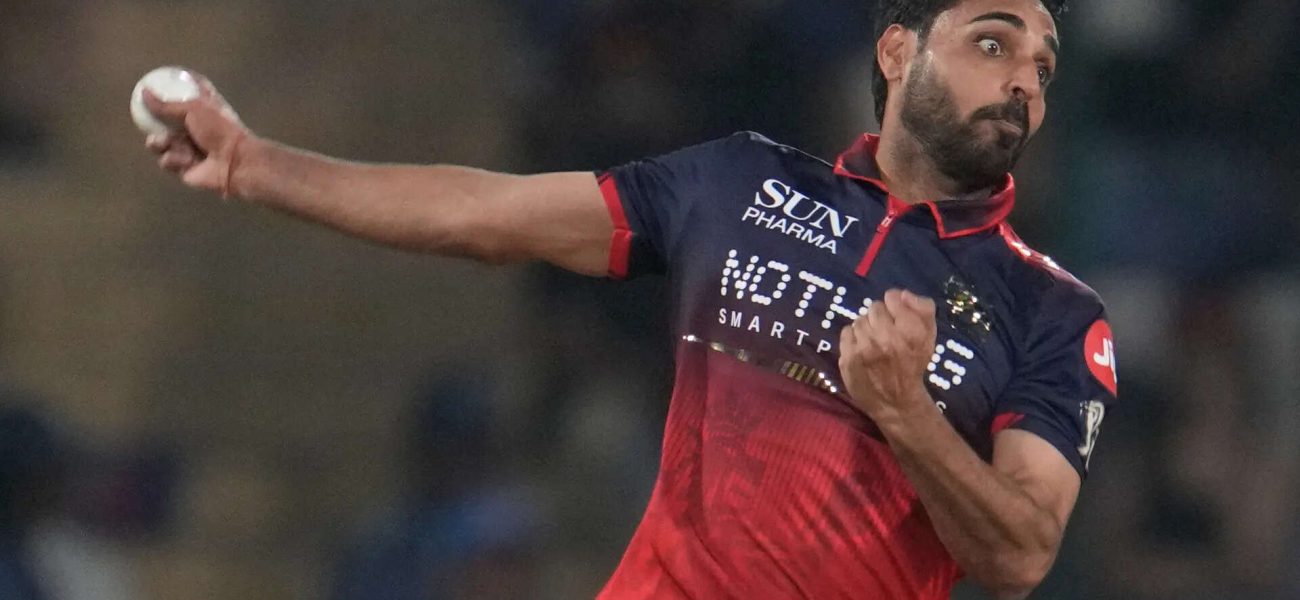
It was against this backdrop that Bhuvneshwar Kumar, a seasoned speedster who probably remembers a time when T20 wasn’t quite this frenetic, quietly ticked past his 200th IPL match recently. The milestone itself, achieved during a rather routine fixture for Royal Challengers Bengaluru against Lucknow Super Giants, hardly sent shockwaves through global markets or political capitals. But it does pull back the curtain on something larger: the brutal economics of athlete longevity in an era where professional sport increasingly resembles a high-stakes, fast-food production line. He isn’t just playing a game; he’s managing a decade-long enterprise.
Because make no mistake, playing 200 games in the most demanding, richest T20 league on the planet isn’t just a testament to athletic prowess. It’s an exercise in reinvention, body maintenance, and staying relevant amidst a perpetual churn of youthful exuberance and multi-million dollar investments. Kumar, still leading the Purple Cap standings with 17 wickets in nine matches this IPL 2026 season—a frankly absurd output for a bowler in his twelfth year in the league—has proven he’s mastered this dark art. But then, it’s not about art for these owners, it’s about return on investment, isn’t it?
And Kumar himself, when pressed on the milestone, articulated a measured satisfaction. “It’s special, no doubt. Any achievement like this—200 games—it means you’ve consistently shown up, consistently performed,” he mused, offering the kind of measured humility veteran cricketers perfect over years of repetitive media scrums. He went on to describe how achieving this with a successful franchise (the current champions, no less) only sweetened the deal. “Winning matters. Playing this long, for a winning side, that’s what makes the grind worthwhile.” Sounds about right. Winning means more visibility, which means more brand endorsements, more longevity.
Indeed, IPL record-keepers confirm only twelve players, including Kumar, have ever reached this rarefied mark, a mere handful in a league that’s seen hundreds of participants come and go. Consider the churn; consider the injuries. The average professional cricketer’s shelf-life is surprisingly short given the year-round demands. To hit 200 games means you’ve probably survived at least two significant slumps, endured three major injuries, and watched countless younger, louder talents fizzle out. It’s a brutal Darwinian theatre.
Anand Singh, a seasoned sports business analyst with close ties to IPL franchises, offered a telling perspective on this phenomenon. “Players like Kumar aren’t just assets for their team; they’re institutional memory — and commercial anchors. Their brand recognition transcends fleeting performances,” Singh observed, outlining the economic rationale. “Franchises know they bring a stability, a certain fan loyalty that money alone can’t buy. They’re—if you’ll pardon the term—the fixed deposits of the cricketing world, offering consistent, if not always spectacular, returns.” It’s cold, but it’s the truth of how these things get valued.
The league, in its ceaseless quest for expansion and higher valuations, increasingly looks at these veteran campaigns not just as personal stories, but as critical data points. They provide a blueprint for athlete management, fitness regimens, — and talent retention strategies. After all, how do you sustain a multi-billion dollar enterprise if its core product—its human talent—burns out after a few high-octane seasons? You need the long haulers. For more on the complex interplay of wealth and athletic careers, see our piece on Hoops Hustle: When the Richest Players Cry ‘Poverty’ in a Billion-Dollar Game.
What This Means
Kumar’s persistence, mirrored by others on the 200-match roster, speaks volumes about the professionalization of modern cricket and its burgeoning — often cutthroat — economy. For teams, investing in player longevity means a more stable product, a stronger brand, and often, more eyeballs, both on television screens and through digital streaming platforms, where athletes are increasingly a law unto themselves regarding media deals. And for countries like Pakistan, often barred from direct IPL participation due to political tensions, the success of Indian stars serves as a somewhat bitter, aspirational benchmark. Their own Pakistan Super League (PSL), while robust, doesn’t quite command the same stratospheric viewership or paychecks. It fosters a fascinating, often overlooked, regional rivalry of cricketing economies — and fan loyalty.
the sheer staying power demonstrated by Kumar and his few peers reinforces a new, unspoken policy: performance alone isn’t enough. You’ve got to play the PR game, keep the sponsors happy, manage your injuries meticulously, and continually adapt to evolving tactics. It’s an unspoken curriculum for aspiring athletes across South Asia and beyond, all hoping to get a slice of that incredibly lucrative IPL pie. So when Kumar says his debut wicket is his most memorable moment, you know there’s probably a knowing chuckle lurking beneath the sentiment. Because staying power in this league? That’s a legacy few ever achieve. It’s what distinguishes a good cricketer from a legitimate, enduring phenomenon. And often, a very wealthy one.