

The Emperor’s New Role: Dhoni’s Unseen Bat and South Asia’s Billion-Dollar Cricket Machine
POLICY WIRE — Mumbai, India — In a sport where the spotlight demands constant, sometimes brutal, performance, some legends manage to command attention even from the periphery. Call it the phantom...

POLICY WIRE — Mumbai, India — In a sport where the spotlight demands constant, sometimes brutal, performance, some legends manage to command attention even from the periphery. Call it the phantom limb syndrome of cricket stardom, a peculiar form of institutional memory where absence amplifies rather than diminishes. Because for MS Dhoni, the iconic figurehead of the Chennai Super Kings, the script for his IPL 2026 season has veered sharply into the enigmatic. Not a roar, not a blazing innings, but a casual flick of the wrist, a whisper for a single wicket — that’s his current performance.
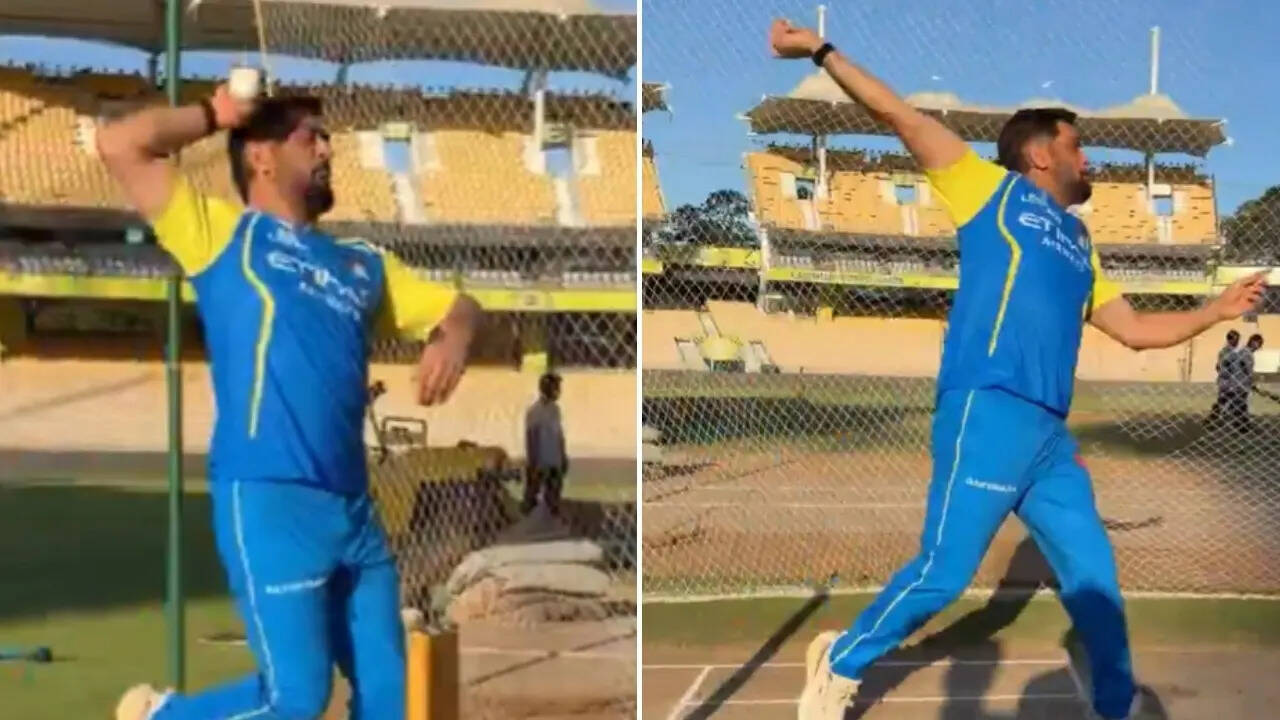
It’s an image both jarring and strangely poetic: the 44-year-old maestro, officially still part of the CSK squad, hobbled by not one, but two consecutive injuries. You’d think the man, credited with virtually inventing the concept of ‘finisher’ in modern limited-overs cricket, would be plotting heroic returns. But instead, social media is abuzz with footage of Dhoni, not strapping on wicket-keeping gloves or hefting his famous willow, but rather trundling down as a spin bowler in practice nets. “Humko bhi ek wicket chahiye,” he quipped, a phrase now echoing across fan forums like a prayer. He means, simply, “I also want one wicket.” Such a small ask from a man who delivered a nation — and a franchise — so many.
His return has been a saga of expectation management, or mismanagement, depending on your perspective. Weeks turned into months. April 23rd, the supposed date for a grand comeback against Mumbai Indians, came and went without a glimpse of the great man in playing whites. And then another game. And another. The official word is, he’s recovering, patiently, slowly. The whispers suggest something different. You don’t just ‘miss’ the biggest commercial cricket carnival on Earth, especially when your presence — even an injured one — represents tens of millions in sponsorship and brand pull. For the millions watching across the subcontinent, from Dhaka to Karachi, this absence isn’t just about runs; it’s about the emotional capital invested in a sports hero.
And yet, life, and the league, roll on. Stepping into the sizeable shoes (and gloves) has been Sanju Samson, the new acquisition tasked with both wicket-keeping and carrying a significant chunk of the batting load. He’s been performing admirably, a striking counterpoint to Dhoni’s spectral presence. Samson has tallied 402 runs across 10 matches so far this season, placing him a comfortable sixth among the tournament’s leading run-scorers, according to official IPL statistics. He’s even notched two centuries, demonstrating a clear appetite for big scores — 115 not out against Delhi Capitals and an equally emphatic 101 not out against Mumbai Indians. He needs just 98 more runs in the remaining four league matches to achieve a rare feat: becoming the first wicketkeeper to cross the 500-run mark in a single IPL season for CSK.
It’s a brutal sort of beauty, this generational shift. The king is in the practice cage, taking a playful turn with the ball, while the pretender, or perhaps the legitimate heir, is out on the pitch, smashing records. “It’s never easy to replace a legend, but the franchise model demands forward momentum, relentless growth,” observed Rohan Bhatia, a long-time cricket analyst. “The fans adapt. They’ve gotta, don’t they? The economic engine of the IPL just keeps chugging, with or without individual titans on the field.” Bhatia captures the essence; this isn’t sentimentality. It’s commerce, layered with the drama of competition.
But there’s a subtle disquiet amongst some supporters, a sense of an era quietly fading. For many in the Muslim world, especially in neighboring Pakistan, where cricket reigns supreme but geopolitical realities prevent direct participation in the IPL, Dhoni represents a rare cultural bridge, a shared cricketing deity. His persona, a blend of unflappable calm and aggressive ingenuity, transcends national borders in a way few other athletes do. And that collective gaze, from Lahore to London, is now watching a legend re-invent his own twilight, not on the grand stage, but in the subdued light of a practice net.
And now, CSK looks to secure its playoff spot, with upcoming clashes against Lucknow Super Giants, a team that has stumbled this season. The league’s gilded cage of competition is relentless, pushing narratives of redemption, discovery, and sometimes, quiet exits. They’re betting on Samson’s red-hot bat, not the retired bowler’s whim. This tournament, after all, is a billion-dollar enterprise, a cultural and economic leviathan in South Asia, where individual genius ultimately gives way to team calculus.
What This Means
The curious case of MS Dhoni’s sidelined but visible presence speaks volumes about the intersection of sports celebrity, brand economy, and generational succession in India’s massive cricketing landscape. Dhoni isn’t just a player; he’s a brand, almost a public trust. His slow fade from active play, punctuated by these viral, almost mournful, training snippets, signals a planned — or perhaps unplanned — transition of influence. For the Chennai Super Kings, — and by extension, the broader IPL, it’s a tightrope walk. They can’t alienate the immense ‘Dhoni-era’ fan base, yet they absolutely must champion the rising stars like Sanju Samson, who are the future revenue drivers. It’s an unspoken succession battle, playing out on public platforms, where sentimentality must eventually bow to statistics and market value.
Economically, it poses a question about sustained star power. How long can a brand lean on an inactive legend’s charisma? But because of his unique aura, Dhoni still generates engagement, perhaps even more in his quasi-retirement than a fully retired figure might. Politically, in a nation where sports figures often attain demigod status and influence public opinion, the handling of an icon’s twilight years can reflect a subtle shift in national mood — a quiet acceptance of change, perhaps, in a society often grappling with the weight of tradition. His casual demand for ‘one wicket’ becomes less about bowling and more about remaining relevant, perhaps even testing the waters of a new, post-playing role within the league’s grand theatrical production.