


Caracas Unearths Colonial Ghosts at UN Court, Guyana’s Oil Fields in the Crosshairs
POLICY WIRE — The Hague, Netherlands — A century-old phantom, long relegated to obscure historical footnotes, has suddenly materialized in the gilded halls of the International Court of Justice...

POLICY WIRE — The Hague, Netherlands — A century-old phantom, long relegated to obscure historical footnotes, has suddenly materialized in the gilded halls of the International Court of Justice (ICJ). It isn’t a mere academic curiosity; no, this apparition is the resurrected territorial claim by Venezuela over the Essequibo region—a vast, resource-laden swath comprising two-thirds of its diminutive neighbor, Guyana. Caracas isn’t just arguing about maps; it’s contending the very legitimacy of a 1899 arbitration award, labeling it a colonial-era fraud, conveniently (or inconveniently, depending on your perspective) as Guyana’s offshore oil bonanza continues its stratospheric ascent.
And what an ascent it’s been. For decades, the dispute simmered, a low-stakes territorial irritant. But then, the black gold gushed. Modern estimates place Guyana’s proven oil reserves at a staggering over 11 billion barrels, primarily off the Essequibo coast—a figure that has transformed one of South America’s poorest nations into a nascent energy powerhouse. This sudden, immense wealth, it seems, has lent a new, urgent gravitas to Venezuela’s historical grievance, propelling it from diplomatic communiqué to the world’s highest court.
Still, for Caracas, this isn’t about newfound riches alone; it’s about correcting what it portrays as a historical larceny. Venezuelan Ambassador to the United Nations, Samuel Moncada, didn’t mince words before the court. “For too long,” he asserted, “the echoes of colonial theft have reverberated through our nation’s history. It’s high time that justice, however belated, rectifies this blatant usurpation of our sovereign territory.” It’s a powerful narrative, one designed to resonate with post-colonial states globally, framing the 1899 arbitration as a European carve-up of South American lands, devoid of true Venezuelan representation.
But Georgetown isn’t ceding an inch. Guyanese President Irfaan Ali shot back, dismissing Venezuela’s assertions as a blatant land grab. “This isn’t about historical grievances,” Ali contended, “it’s about a desperate gambit to rewrite settled international law for economic gain. Guyana’s sovereignty isn’t for negotiation, especially not under duress.” His nation points to the sanctity of the 1899 Paris Arbitral Award, which broadly established the border, and the subsequent 1966 Geneva Agreement, which Venezuela initially signed, acknowledging the boundary dispute but not invalidating the prior award. Guyana maintains that the ICJ has full jurisdiction, a position largely backed by international legal opinion.
Behind the headlines, this dispute encapsulates the vexing legacy of colonialism that continues to bedevil the Global South. Just as arbitrary lines drawn by departing European powers carved up Africa and Asia—often leading to enduring conflicts, from the perennial tensions over Kashmir to the resource wars in the Sahel—so too does this South American imbroglio underscore the deep-seated resentment that can lie dormant for generations, only to erupt when modern geopolitical or economic forces apply pressure. It’s a bitter irony: the pursuit of resources, particularly hydrocarbons, frequently ignites long-dormant historical claims, often transforming peaceful borders into flashpoints.
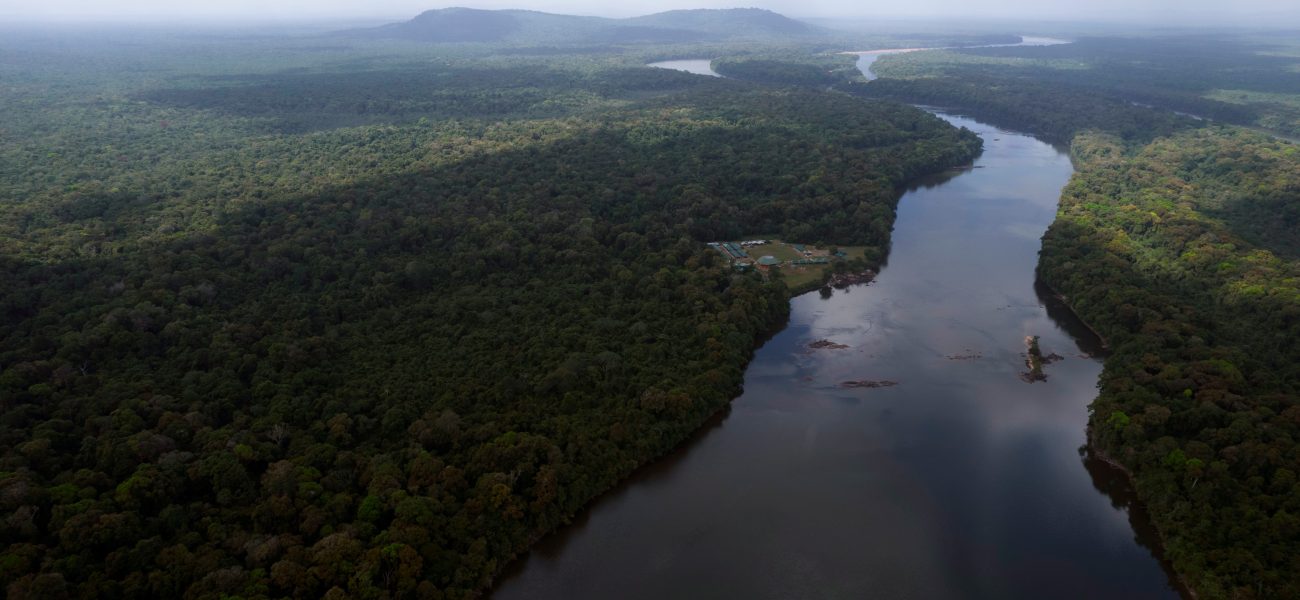
The Essequibo, a territory roughly the size of England and Wales, remains sparsely populated, home to indigenous communities and vast, untapped mineral wealth beyond the offshore oil. Its land mass alone accounts for approximately 159,500 square kilometers, with a population hovering around 125,000. Venezuela’s latest legal offensive follows a December referendum where its citizens overwhelmingly (if somewhat suspiciously) voted to claim the territory and establish a new state within it, signaling a domestic political maneuver as much as an international legal one.
📄 POLICY WIRE WHITEPAPER PUBLISHED: PAKISTAN'S NATIONAL SECURITY POLICY PRIORITIES
👉 READ BY CLICKING HEREAt its core, this isn’t just a legal battle; it’s a profound test of international law’s ability to maintain order in a world increasingly shaped by resource nationalism and historical revisionism. The court’s eventual ruling, whenever it comes, won’t merely resolve a border dispute; it’ll set a consequential precedent for other post-colonial states grappling with inherited, often contested, boundaries. And for regional stability, particularly given the already volatile political landscape of South America, the stakes couldn’t be higher. One can’t help but wonder if this simmering dispute, like the gas flares off Guyana’s coast, will burn brighter before it’s extinguished.
What This Means
The ICJ’s engagement with the Venezuela-Guyana border dispute carries substantial geopolitical and economic ramifications. Politically, a favorable ruling for Guyana would reaffirm the principle of uti possidetis juris—the idea that newly independent states should retain the colonial borders they inherited—a cornerstone of international law and a concept fiercely protected by many nations, particularly in the post-colonial Muslim world and South Asia, which inherited complex, often contested, boundaries. A ruling favoring Venezuela, however unlikely, would open a Pandora’s Box of similar historical claims, potentially destabilizing numerous settled borders globally. It’s a precedent no one wants to set, truly.
Economically, the outcome is even more pointed. Guyana’s burgeoning oil sector, largely operated by ExxonMobil, Chevron, and CNOOC, depends on the stability and clear sovereignty over the Essequibo basin. Uncertainty surrounding the border could deter future investment, impacting Guyana’s nascent prosperity and global energy markets. For Venezuela, currently under stringent U.S. sanctions, a successful claim could theoretically offer a lifeline—a fresh source of revenue without direct foreign investment—though such an outcome is highly improbable and fraught with international condemnation. This isn’t just about land; it’s about the deep pockets of crude lying beneath it. And in a world where global oil markets are always in flux, as whispers from Islamabad can attest to, the ramifications of such a dispute are rarely confined to immediate neighbors. It’s a stark reminder that history, geography, and geology are inextricably linked in the calculus of international relations.