


The Relentless Pursuit: Allyson Felix Defies Time, Igniting Olympic Legacy Debate
POLICY WIRE — Washington, D.C. — In an era where athletes often pivot to punditry or lucrative endorsement tours the moment their peak fades, the sheer audacity of Allyson Felix’s recent declaration...

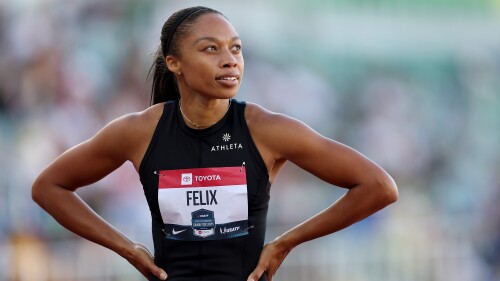
POLICY WIRE — Washington, D.C. — In an era where athletes often pivot to punditry or lucrative endorsement tours the moment their peak fades, the sheer audacity of Allyson Felix’s recent declaration hangs heavy in the air. We’re not discussing a casual return to fitness, but a calculated, full-throttle bid for the 2028 Los Angeles Olympics—a Games Felix would contest at the ripe, by track and field standards, age of 42. It’s a move that defies conventional wisdom, challenges the very notion of athletic senescence, and, perhaps most consequentially, forces a re-evaluation of what constitutes an athlete’s enduring legacy. Her surprise announcement last week, now to be dissected on NBC’s morning fixture, signals not just a personal quest, but a compelling narrative for a sport often overshadowed by its more commercialized counterparts.
Felix, whose athletic career has spanned two tumultuous decades, isn’t merely chasing sentiment. She’s already an Olympian titan, an 11-time medalist whose unparalleled success culminated (or so we thought) in Tokyo 2021 and her ‘retirement’ post-2022 World Championships. There, she added two more medals, extending her world championship haul to a staggering 20. But it’s her Olympic record that truly arrests attention: Felix currently holds the second-most Olympic track and field medals in history, just one shy of the legendary Finnish distance runner Paavo Nurmi, whose feats date back to the 1920s (source: Olympic Historical Records). To call this a comeback is almost an understatement; it’s a direct challenge to the inexorable march of time, a defiance of physiology.
“People might call me crazy, and frankly, some days I might agree,” Felix reportedly confided to an intimate circle last week, a sentiment she’s likely to echo on national television. “But there’s a fire, a drive, that just hasn’t extinguished. The idea of competing in my hometown, for what could be a sixth Olympic Games—it’s an opportunity, a challenge, I simply can’t walk away from.” Such pronouncements aren’t just feel-good soundbites; they underscore the profound, almost primal, psychological architecture of elite athletes, those rare few for whom ‘enough’ is merely a pause before the next improbable ascent.
The implications, naturally, extend beyond the emotional pull of a sporting legend’s last hurrah. For U.S. Track & Field, this represents an unexpected boon—a marketable narrative at a time when the sport desperately seeks broader appeal and sustained engagement. It’s a story tailor-made for broadcast rights holders, corporate sponsors, and even public relations firms specializing in athlete narratives. “Allyson Felix isn’t just an athlete; she’s a cultural touchstone,” observed Dr. Evelyn Reed, a sports marketing analyst and former Olympic Committee liaison, during a recent panel on athlete endorsements. “Her return isn’t just about medals; it’s about inspiring a generation, drawing eyes to the sport, and, yes, generating considerable commercial interest. It’s a gold mine, frankly, for everyone involved.” That’s a stark calculation, but it’s the cold reality of modern elite sports.
Felix’s comeback isn’t without its strategic quandaries. She plans to ease into competition in 2027, presumably to gauge her form and identify her optimal events—likely the 100m or 400m for relay consideration, or perhaps a singular individual event if her speed and endurance hold. But it’s not a given. The road to LA28 demands not just personal conviction but a gruelling, unforgiving regimen of training, rehabilitation, and competitive trials, all under intense scrutiny. It’s a public battle against the biological clock, — and we’re all invited to watch.
Behind the headlines — and the nostalgic glow, there’s a powerful undercurrent of global inspiration. Think about aspiring athletes in places like Pakistan, where resources for track and field might be nascent or infrastructure less developed. What does a comeback like Felix’s mean there? It’s a potent symbol, a testament to resilience that transcends borders — and cultural divides. It reinforces the idea that dedication, regardless of external circumstances, can indeed defy what’s considered possible. It’s a universal language of ambition, spoken by figures like Felix who become beacons for talent far beyond the immediate orbit of American athletics. It reminds us that while the ‘golden crucible’ of events like the Olympics might have a steep financial entry barrier for some nations, the spirit of competition remains universally accessible (see Policy Wire’s analysis on global sporting capital).
What This Means
Allyson Felix’s audacious bid for a sixth Olympic appearance carries multifaceted implications, extending well beyond the track itself. Economically, her return is a windfall for American track and field, offering a compelling human interest story to attract sponsors, increase viewership, and drive ticket sales for both the Olympic Trials and the LA28 Games. It’s a calculated gamble on star power in an increasingly fragmented media landscape. Politically, her narrative—a mother defying age and expectations—can be leveraged as a soft power asset for the United States, showcasing American resilience and challenging societal norms around female athletes and motherhood. It projects an image of relentless pursuit — and excellence, attributes nations often wish to embody on the global stage. Don’t forget, her previous advocacy for athlete mothers transformed policy, and this new chapter could amplify conversations around longevity, recovery, and financial support for older athletes.
Felix’s comeback directly impacts the discourse around athletic longevity. It poses pointed questions for sports science regarding optimal training regimes for veteran athletes and challenges the prevailing notion that elite performance inevitably plummets after a certain age. If successful, her journey could inspire a generation of athletes to extend their careers, potentially altering funding models and athlete development pathways across various disciplines. Conversely, a faltering performance, while understandable, would serve as a poignant reminder of the body’s ultimate limits. Still, for now, the gaze is fixed on a woman daring to run against the current, forcing us all to reconsider the finish line.