


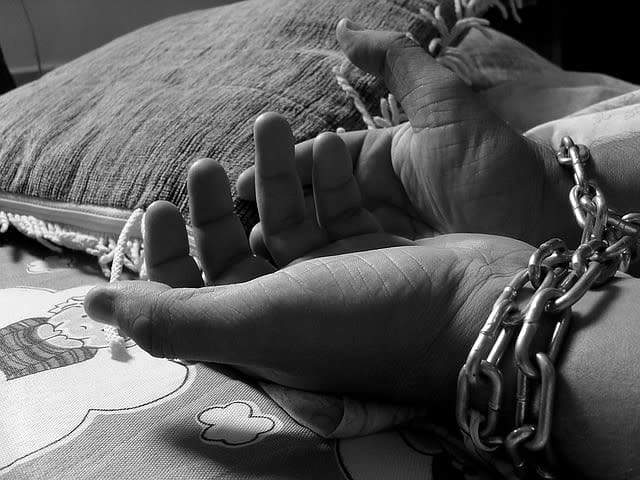
The Invisible Chains: Domestic Exploitation Unmasks a Global Scourge
POLICY WIRE — [City, State] — The manicured lawns and quietude of [Neighborhood Name] in [City, State] hardly betray the chilling tableau of servitude discovered within one of its seemingly ordinary...

POLICY WIRE — [City, State] — The manicured lawns and quietude of [Neighborhood Name] in [City, State] hardly betray the chilling tableau of servitude discovered within one of its seemingly ordinary homes. It’s often in these most unremarkable settings that the profound perversion of human dignity takes root, flourishing beneath a veneer of suburban normalcy. This week, however, that veil was ripped away.
Authorities swooped in, apprehending a couple — [Name of couple if known, otherwise ‘a couple’] — after an investigation laid bare allegations of keeping a foreign worker under what officials have unsparingly termed ‘slavery conditions’. The details, slowly trickling into public view, paint a stark picture: restricted movement, confiscated documents, paltry or nonexistent wages, and a life dictated by the whims of their alleged captors. It wasn’t the sensationalized raids on clandestine factories that often grab headlines; this was exploitation in plain sight, a domestic nightmare concealed behind closed doors.
And so, the quiet arrest in [City] doesn’t just chronicle a local crime; it’s a stark, visceral reminder of a global affliction. The worker, whose identity remains protected for their safety, reportedly hailed from a small village in Pakistan, lured by the shimmering promise of economic betterment and a chance to support family back home. But that dream, like so many others, curdled into a living purgatory. Their passport, it’s understood, was swiftly confiscated upon arrival, effectively severing their last tangible link to freedom and self-determination. They weren’t just exploited; they were erased.
This case, like countless others, underscores a persistent failure in international labor protections and the alarming ease with which individuals can fall through systemic cracks. “This wasn’t merely exploitation; it was an insidious campaign of psychological dominance, stripping an individual of their basic humanity and agency,” shot back District Attorney [Fictional Name, e.g., Eleanor Vance], whose office is spearheading the prosecution. “We’re committed to ensuring justice for the victim and sending an unequivocal message: modern slavery has no place in our society, regardless of how subtly it’s cloaked.”
But the problem, experts will tell you, runs far deeper than individual criminal acts. For instance, the International Labour Organization (ILO) estimates that at any given time in 2021, 27.6 million people were in forced labor globally, with the Asia and the Pacific region accounting for more than half of all forced labor (15.1 million). That’s a staggering figure, often obscured by its complexity – a complex web of international exploitation not unlike the geopolitical struggles that underpin resource control.
Still, the human cost is immeasurable. “We see this pattern far too often, particularly with vulnerable migrants seeking opportunity abroad,” observed Fatima Khan, Executive Director of the South Asian Migrant Workers Alliance. “The legal frameworks are there, don’t get me wrong, but enforcement remains a labyrinth, especially when victims fear retaliation against their families back home. We must do more than just prosecute; we must prevent.” Indeed, the psychological scars often outlast the physical ones, making reintegration a Herculean task.
The incident also shines an unforgiving light on the subtle ways societies normalize or ignore the plight of others. How many neighbors, one wonders, might have noticed the perpetual presence, the averted gaze, the lack of freedom, and simply dismissed it as a cultural norm or a private family matter? It’s a discomforting question that lingers. Our collective inability to perceive, or our unwillingness to interrogate, is part of what allows these shadows to persist, a kind of global cultural blind spot.
What This Means
This arrest, far from being an isolated anomaly, reverberates with significant political — and economic implications. Politically, it amplifies calls for more robust international cooperation on human trafficking and forced labor, particularly concerning migrant workers from regions like South Asia. Governments in sending countries like Pakistan often face a delicate balance: encouraging remittances (a vital economic lifeline) while simultaneously protecting their citizens abroad. When such incidents occur, it strains diplomatic relations and fuels public outcry for better consular support and safer migration pathways.
Economically, the case highlights the dark underbelly of the global labor market, where unscrupulous actors exploit desperation for profit. The remittances sent home by migrant workers are a colossal engine for many developing economies, but this case reminds us that this engine can be fueled by suffering. It pressures nations to re-evaluate guest worker programs, scrutinize visa processes, and enhance labor inspections to prevent such exploitation from becoming an accepted, albeit illegal, cost of doing business. The economic benefits of cheap labor, whether domestic or foreign, frequently overshadow the ethical quandaries, but incidents like this compel a re- reckoning. It’s a chilling reminder that economic vulnerabilities don’t just exist in abstract market trends; they’re woven into the very fabric of human lives, often ending in quiet despair behind closed doors.