


Djerba’s Precarious Peace: Tunisia’s Jewish Pilgrimage Navigates Faith, Fear, and the Allure of Tourist Dollars
POLICY WIRE — Djerba, Tunisia — The ancient synagogue on Tunisia’s Djerba island, a crucible of Jewish heritage stretching back millennia, once again echoed with the prayers of pilgrims. But it...

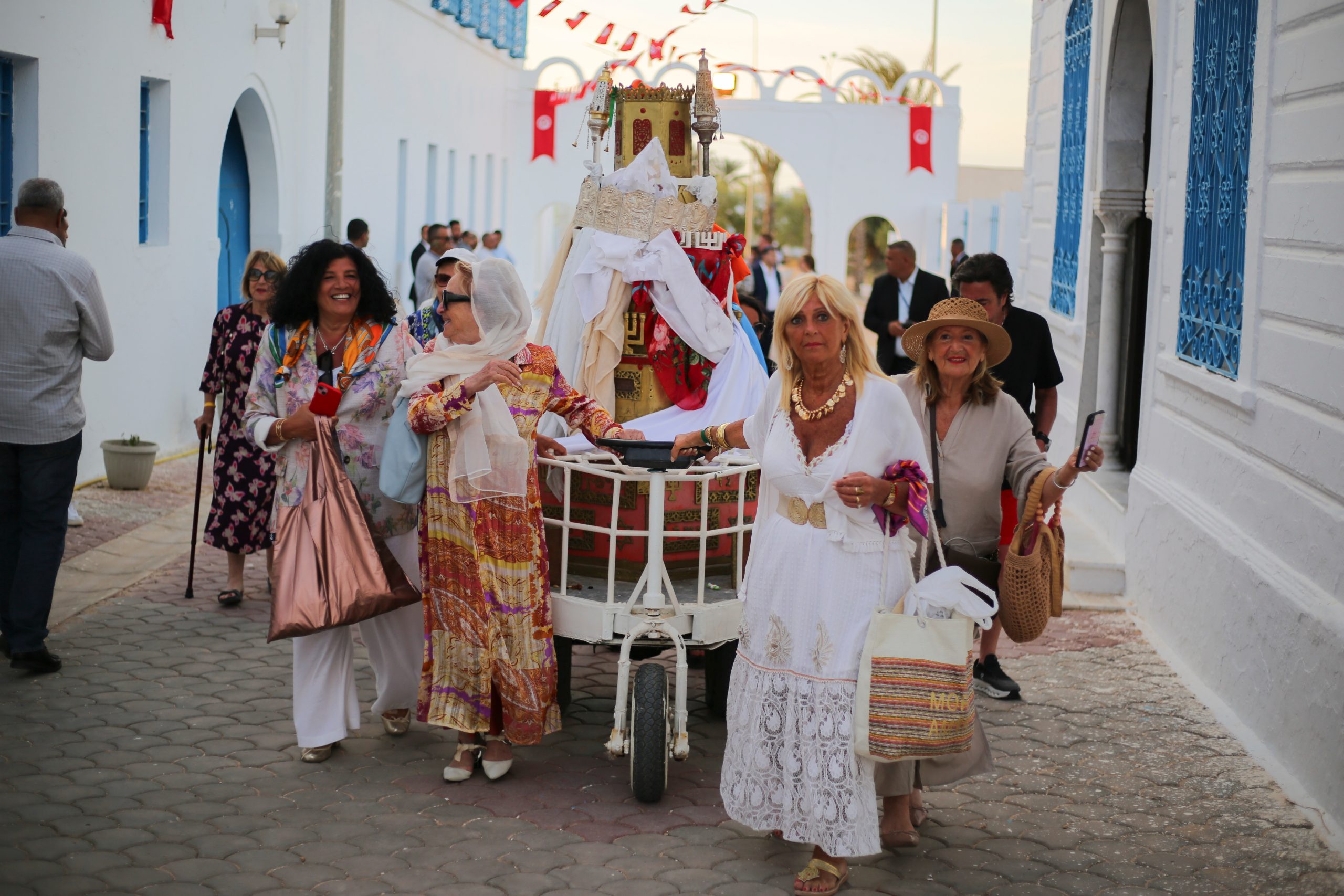
POLICY WIRE — Djerba, Tunisia — The ancient synagogue on Tunisia’s Djerba island, a crucible of Jewish heritage stretching back millennia, once again echoed with the prayers of pilgrims. But it wasn’t just devotion that hung heavy in the air; a conspicuous silence, punctuated only by the crisp commands of security forces, served as a stark reminder of the fragile peace underpinning this annual ritual.
It’s a peculiar spectacle, this annual Ghriba pilgrimage: a vibrant testament to enduring faith, meticulously chaperoned by a state acutely aware of its geopolitical tightrope walk. Foreign visitors, fewer perhaps than in gilded eras past, made their quiet return, their every movement a choreographed ballet between spiritual observance and stringent security protocols. Tunisia’s leadership, it seems, has little appetite for missteps, especially when its international image – and vital tourism revenue – hangs in the balance.
Behind the headlines, this year’s pilgrimage crystallizes Tunisia’s enduring paradox: a North African nation striving for democratic norms and economic vitality, yet perpetually haunted by the specter of regional instability and the insidious threat of extremism. And they’re not wrong to be wary; a 2002 al-Qaeda bombing at the very synagogue killed 21, then again in 2023, a shooting attack near the site left five dead. Such episodes don’t just fade; they linger, etched into the collective memory, shaping policy with an iron hand.
Still, the ritual persists. “This pilgrimage isn’t just a religious gathering; it’s a living bridge to our past, and a powerful statement about Tunisia’s commitment to pluralism,” asserted Dr. Walid Ben Amor, a spokesperson for Tunisia’s Ministry of Tourism, in an exclusive interview. “We’ve invested unprecedented resources in security measures (you can’t be too careful, can you?), ensuring that Djerba remains a sanctuary for all who seek its spiritual embrace.” His words, while earnest, couldn’t entirely mask the underlying tension – a bureaucratic euphemism for heavily armed patrols and layers of checkpoints.
At its core, this annual convergence represents a high-stakes gamble for Tunis. The economic dividends of tourism are undeniable; in 2023, the sector contributed an estimated 9% to Tunisia’s GDP, with European visitors accounting for a substantial portion. The Ghriba pilgrimage, while numerically modest compared to beach tourism, holds outsized symbolic weight, signaling a nation open to the world, capable of protecting its diverse communities, even its tiny Jewish population, estimated at just under 1,500. For Prime Minister Ahmed Hachani’s government, it’s about projecting an image of stability – a commodity far more precious than gold in today’s volatile regional landscape.
So, what does that mean for the attendees? Many arrive from France — and Israel, carrying not just prayer books, but a deep-seated hope for peace. “Every year, it’s a mix of joy and apprehension,” observed David Cohen, a pilgrim from Marseille whose family has attended for generations. “But we come back. We must. This place, it’s part of our soul. And, honestly, the Tunisian authorities have always tried their best to keep us safe, even when the world outside feels like it’s falling apart.” His voice, though resolute, carried the tremor of experience.
This careful balancing act isn’t unique to Tunisia. Across the Muslim world, nations grapple with how to manage religious diversity, particularly when it intersects with geopolitical currents and extremist ideologies. From the challenges faced by minority Hindu communities in Pakistan to the broader narratives of religious liberty within the Muslim world, the stakes are invariably high. Tunisia’s efforts, however imperfect, offer a poignant case study in navigating these treacherous waters.
What This Means
The successful, albeit heavily policed, execution of Djerba’s Jewish pilgrimage carries significant political and economic implications for Tunisia. Politically, it’s a calculated display of sovereignty and control, a message to both domestic and international audiences that the state remains capable of securing its territory and protecting its citizens and guests – a crucial flex in a region perpetually shadowed by instability. It reinforces Tunisia’s often-fragile reputation as a relatively moderate, secular state in North Africa, contrasting sharply with some of its neighbors. And it’s not just for show; it’s a real, tangible effort to demonstrate a commitment to interfaith coexistence, even if that coexistence demands a formidable security apparatus.
Economically, the pilgrimage is an indispensable, if niche, component of Tunisia’s broader tourism strategy. The images of peaceful coexistence, however carefully curated, translate into foreign currency and investment confidence. Any disruption would send ripples of doubt through an already precarious peace in the tourism sector, deterring the larger influx of European tourists whose dollars are vital for job creation and state coffers. The government’s willingness to deploy extensive resources underscores the economic imperative: the cost of security, they’ve clearly calculated, is far less than the cost of a ruined reputation and lost revenue. It’s a delicate dance, this pilgrimage, between faith, fear, — and the unyielding realities of the global economy.