


Brazil’s U-17 Dominance: A Masterclass in Soft Power and State-Backed Sporting Hegemony
POLICY WIRE — Asunción, Paraguay — It wasn’t merely a football match; it was a policy statement delivered with athletic precision. While the headlines predictably fixated on the scoreline –...

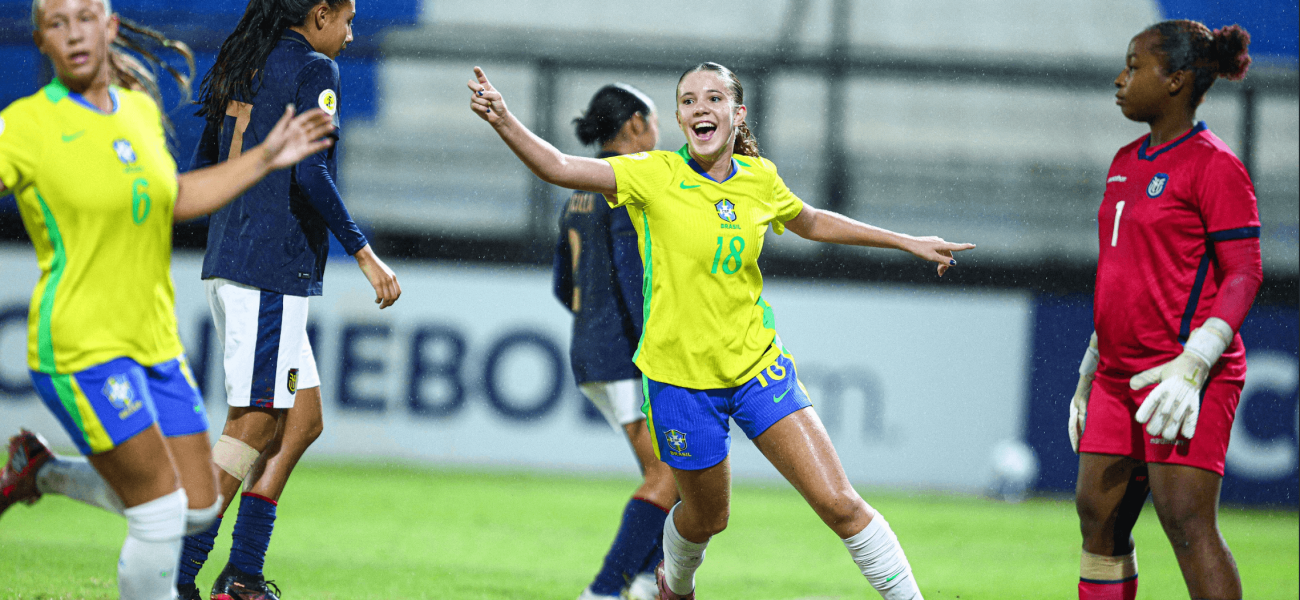
POLICY WIRE — Asunción, Paraguay — It wasn’t merely a football match; it was a policy statement delivered with athletic precision. While the headlines predictably fixated on the scoreline – Brazil’s U-17 Women’s National Team dismantling Ecuador 4-0 – the true narrative unfolded beneath the turf: a compelling exhibition of national strategy, meticulously cultivated talent, and unapologetic soft power projection within South America. The thrashing, if you must call it that, wasn’t an anomaly; it’s a predictable outcome of a sustained, systemic investment that many nations, even those with fervent footballing cultures, can only envy.
The Estádio Ameliano Villeta in Paraguay bore witness to this latest act of dominance, marking Brazil’s continued unbeaten streak in the South American U-17 Championship. Gigi, Marcela, and Mari Martins notched goals, complemented by an Ecuadorian own goal – a detail that almost felt superfluous given Brazil’s relentless attacking identity. They’d already secured their semifinal berth, yet the intensity never waned. Such unwavering focus, even in matches of diminished consequence, speaks volumes about the institutional ethos now underpinning Brazilian women’s football. It’s not just about winning; it’s about a relentless pursuit of perfection, a standard that reverberates beyond the pitch.
And so, with a perfect record intact, Rilany Silva’s charges await their next opponent, seemingly unconcerned by who might stand between them and a ticket to the FIFA U-17 Women’s World Cup. But behind the immediate sporting triumph lies a deeper truth, a geopolitical one: Brazil is asserting its regional pre-eminence not just economically or politically, but culturally, through the universal language of sport. This isn’t accidental; it’s the fruit of deliberate policy choices made years ago to prioritize women’s athletic development.
“This isn’t merely about goals; it’s about validating a national strategy,” shot back Brazilian Minister of Sport, Ana Carolina Silva, in an exclusive interview with Policy Wire. “We’re cultivating an ecosystem where female talent isn’t just identified, but rigorously nurtured, setting a benchmark for regional sporting diplomacy. This success fuels national pride, yes, but it also broadcasts a message: Brazil is a force, in all arenas.” Her conviction, one might observe, borders on an almost evangelical zeal.
Still, for nations on the receiving end of such demonstrations, the perspective shifts. “While the scoreline stings, it’s a stark reminder of the investment chasm,” lamented Dr. Ricardo Vélez, President of the Ecuadorian Football Federation, during a sideline chat after the match. “We’ve got raw talent, absolutely, but they’ve got institutional scaffolding — a structure we’re desperately striving to emulate, perhaps with greater international cooperation and sustained governmental backing.” Vélez’s sentiment underscores a perennial challenge for developing sporting nations: how to bridge the gap without the colossal resources of their larger neighbors.
At its core, this Brazilian model isn’t just about football; it’s a profound assertion of soft power, mirroring the subtle yet potent influence seen in the nuanced art of statecraft. The sport’s escalating global reach — akin to the intricate dance of global rivalries and economic intrigue in elite men’s football — ensures that success on this stage translates into tangible international prestige. It’s a compelling narrative for a nation that consistently seeks to underscore its global relevance.
📄 POLICY WIRE WHITEPAPER PUBLISHED: PAKISTAN'S NATIONAL SECURITY POLICY PRIORITIES
👉 READ BY CLICKING HEREConsider the contrast: while Brazil systematically churns out talent, many nations, particularly across the Muslim world and parts of South Asia, struggle to provide comparable opportunities for their female athletes. Pakistan, for example, a nation of over 240 million, grapples with infrastructural deficits and societal hurdles that often relegate women’s sports to the periphery, despite burgeoning interest at the grassroots. Imagine the impact if a fraction of Brazil’s investment ethos were replicated there – the untapped human potential, the seismic cultural shifts. It’s a stark comparison that highlights the long road ahead for equitable sports development globally.
What This Means
Brazil’s unwavering dominance in women’s youth football isn’t merely a string of victories; it’s a significant geopolitical marker. Firstly, it cements Brazil’s position as a regional sporting hegemon, setting a formidable standard that smaller, less resourced CONMEBOL nations find excruciatingly difficult to match. This creates a de facto competitive imbalance, pushing nations like Ecuador to reassess their own development pipelines and potentially seek external aid or partnerships.
Secondly, it underscores the efficacy of sustained state investment in sports as a tool for national branding and soft power. In an era where economic and military might aren’t the only currencies of influence, cultural projection through universally adored sports becomes pivotal. Brazil isn’t just winning games; it’s winning hearts and minds, bolstering its image as a vibrant, progressive nation on the global stage – a crucial, if understated, diplomatic asset.
Finally, this success has tangible economic implications. A robust youth system creates a pipeline for professional leagues, drawing in sponsorships, media rights, and ultimately, producing world-class talent that can command lucrative international transfers. According to FIFA’s 2023 Women’s Football Report, global participation in organized women’s football has grown by 12% in the last two years, yet investment disparities across continents remain stark, with CONMEBOL nations like Brazil showing significant commitment. This trajectory positions Brazil to capitalize further on the burgeoning global market for women’s football, turning athletic prowess into a significant economic multiplier.