
WRC’s Commercial Crossroads: M-Sport Grapples with an Uncertain Future Amidst Ownership Shake-Up
POLICY WIRE — Dovenby Hall, Cumbria — The fate of the World Rally Championship’s commercial heart, currently being bartered behind closed doors, has cast a long, disquieting shadow over one of...

POLICY WIRE — Dovenby Hall, Cumbria — The fate of the World Rally Championship’s commercial heart, currently being bartered behind closed doors, has cast a long, disquieting shadow over one of its most venerable competitors. It’s not the roar of engines or the dust of distant stages that currently dominates the strategic calculus at M-Sport, but rather the opaque machinations of corporate acquisition that will ultimately dictate its very presence in rallying’s premier echelon beyond 2026. For a team synonymous with Ford’s rallying endeavors for decades, the current stasis is less about technical innovation and more about raw, unadulterated financial pragmatism.
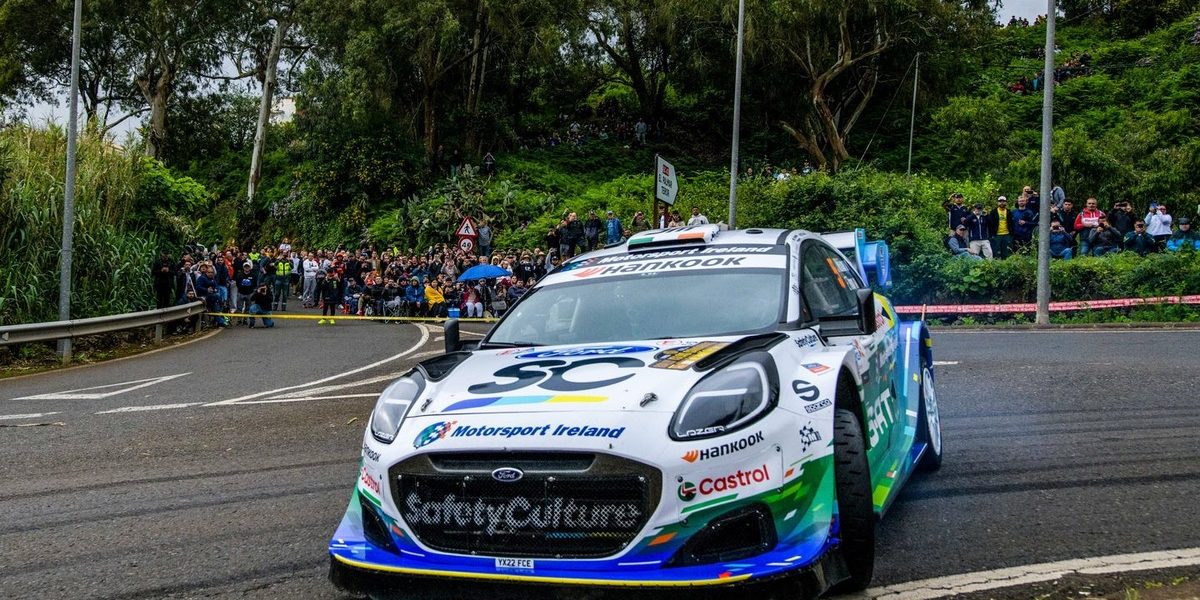
M-Sport, the Cumbrian outfit that has engineered Ford’s WRC machines since 1997, finds itself ensnared in a holding pattern. Its dilemma is stark: either forge a renewed, consequential alliance with an automotive giant, or embark on the formidable, capital-intensive journey of self-constructing an all-new car for the 2028 season. And let’s be clear, neither pathway presents itself as a simple, uncontested stroll down victory lane. The team’s immediate future, specifically for 2027, is largely settled, with plans to campaign its existing Ford Fiesta Rally2 cars against a new generation of WRC27 vehicles under the FIA’s revised technical framework. But that, as team principal Richard Millener acknowledges, is a mere curtain-raiser for the real drama.
Behind the headlines of sporting spectacle lies a foundational business reality: the proposed sale of the WRC’s commercial rights. This pivotal transaction — reportedly in its final throes with French automotive conglomerate Cosmobilis, helmed by former Formula 1 figure Eric Boullier, emerging as the front-runner — is the lynchpin. Automakers, with their sprawling global supply chains and multi-billion-dollar marketing budgets, demand long-term stability and a clear vision before committing substantial resources to a racing series. Without that certainty, M-Sport, — and potentially other privateer outfits, are left treading water.
“Absolutely, all options are open for 2028; that’s what the regulations were designed for, and we haven’t made any allegiances anywhere,” Millener shot back to reporters, underscoring the team’s precarious perch. “All those options exist, and we’re just waiting to see what will work best and what the longer-term future of the sport is. There’s nothing dramatic going on, but obviously, there are a lot of things going on, ready to be unleashed should we get the right information.” It’s a statement steeped in the dry irony of a man navigating a tempest while projecting calm, knowing full well that a colossal, unseen wave is building.
Still, the team isn’t entirely idle. Millener confirms nascent endeavors have commenced on a prospective new car, a minimal investment to ensure M-Sport isn’t starting from a blank slate should a green light eventually materialize. “In terms of developing, we have done some minimal work to ensure if something comes along we’re not starting from nothing. We have been looking at the very basics like the chassis and some feasibility studies on what body shape we would want, absolute basics.” This measured, almost cautious, approach exemplifies the fiscal tightrope walks endemic to privateer motorsport. The World Rally Championship, while niche compared to Formula 1, boasts a significant global following, reportedly attracting over 80 million unique viewers in 2023, according to official WRC figures, yet its commercial structure often leaves independent teams vulnerable.
The relationship with Ford, which saw M-Sport run the blue oval’s factory WRC team until 2012 before transitioning to a semi-works role, remains a complex tapestry. It’s M-Sport that also manages Ford’s factory program in the World Rally Raid Championship, providing an ongoing conduit for dialogue. “Ford are always asking questions and we’re always answering questions,” Millener quipped, highlighting the constant communication. “They still have an interest in WRC as we’re running the program here, and the Rally Raid, and they discuss WRC when they’re at Rally Raid events.” But Ford, like any global automotive behemoth, is simultaneously assessing its strategic investments across a multitude of racing disciplines and emerging markets, including the burgeoning automotive sectors in regions like South Asia, where the cost-benefit analysis for any global sporting venture becomes acutely critical. A significant, multi-year commitment to WRC requires a robust business case, not merely sentimental allegiance.
But the ultimate leap — for M-Sport to unilaterally commit to building its own car — hinges on a clarity that remains elusive. “For M-Sport to sign off on our own car and do our own thing, we still need to ensure the promoter sale is agreed and there’s a plan for the next 25 years,” Millener emphasized. “We’re not going to fire a lot of money into a project that maybe isn’t going to go as we planned.” This isn’t just about winning races; it’s about business viability, securing sponsorships, and planning for a sustainable future in a sport that, despite its dynamism, is perpetually in flux.
📄 POLICY WIRE WHITEPAPER PUBLISHED: PAKISTAN'S NATIONAL SECURITY POLICY PRIORITIES
👉 READ BY CLICKING HEREWhat This Means
The protracted uncertainty surrounding the World Rally Championship’s commercial rights sale isn’t just an administrative footnote; it’s a profound impediment to strategic planning for teams, manufacturers, and the sport itself. For an independent entity like M-Sport, it represents an existential threat, forcing a costly wait-and-see posture. A stable, forward-thinking promoter is absolutely paramount to attracting and retaining manufacturer investment, which in turn underpins the financial health and competitive diversity of the entire championship. Without it, the WRC risks alienating crucial players — and stifling innovation.
The economic implications extend far beyond the racetrack. The high barrier to entry and the escalating costs of developing cutting-edge motorsport technology — even with new FIA cost caps — underscore the brutal calculus faced by businesses in competitive, globalized industries. Like emerging automotive sectors in, say, Pakistan or other parts of the Muslim world that eye global competitiveness, M-Sport’s dilemma illustrates how strategic alliances, substantial capital, and a coherent long-term vision are non-negotiable. Without a clear horizon, even established players are compelled to conserve resources, prioritize short-term survival, and potentially scale back ambitions. The WRC needs a decisive outcome to its commercial sale, not just to secure M-Sport’s future, but to affirm its own trajectory as a globally relevant motorsport series.
This saga also highlights the inherent tension between the FIA’s regulatory ambition for cost control and the practical realities of automotive development. While the Rally2 category offers a more achievable budget entry point, the overarching goal of M-Sport — and indeed, the WRC — is to foster top-tier innovation. Millener’s final thought on the matter encapsulates this perfectly: “We can never guarantee anything, but I can guarantee we don’t want to not be there. The Rally2 car is a more achievable budget to find. I would hope we can be there with that. The goal is not just to worry about 2027, it’s about how we get a new car, as that’s the future and it’s more important than doing one year with the Rally2 car.” It’s a sober assessment of a challenging road ahead, one fraught with financial peril and strategic compromises. For more insights into the intricate economic decisions underpinning sports, consider The Brutal Calculus of Undrafted Dreams, which explores similar themes in a different context.