

Beyond the Boundary: Women’s T20 World Cup Squads Unveil Geopolitical Subtext and Economic Stakes
POLICY WIRE — London, UK — The cricket world typically buzzes with anticipation ahead of a major tournament, yet a peculiar quietude hangs over the impending ICC Women’s T20 World...

POLICY WIRE — London, UK — The cricket world typically buzzes with anticipation ahead of a major tournament, yet a peculiar quietude hangs over the impending ICC Women’s T20 World Cup. It’s not the usual pre-game jitters; rather, it’s the conspicuous absence of fully revealed rosters for nearly half the participating nations. As the curtain prepares to rise on June 12th — England and Sri Lanka set to clash at Edgbaston — this silence speaks volumes, perhaps more loudly than any cheer from the stands.
It’s an intriguing paradox: a global spectacle, undeniably growing in stature, still grappling with the logistical and, dare one say, political intricacies of squad finalization. While powerhouse teams like India, England, and New Zealand have presented their chosen combatants, others — including Australia, Bangladesh, and Pakistan — remain enigmatically ‘To Be Confirmed’. This isn’t just about delayed paperwork; it’s a telling glimpse into varying administrative efficiencies, internal selection squabbles, or perhaps, a calculated strategic reticence in a sport increasingly intertwined with national identity and soft power. And make no mistake, the stakes are stratospheric.
India, for one, isn’t shy. Their squad, spearheaded by the redoubtable Harmanpreet Kaur and featuring luminaries like Smriti Mandhana and Shafali Verma, signals a clear intent. It’s a testament to the Board of Control for Cricket in India’s (BCCI) robust infrastructure and commercial clout — a contrast that highlights disparities elsewhere. “The ascent of women’s cricket isn’t just a sporting narrative; it’s a profound cultural shift, demonstrating boundless talent and expanding economic opportunity globally,” opined Geoff Allardice, CEO of the International Cricket Council (ICC), underscoring the broader implications of this blossoming phenomenon. But even as the sport burgeons, the path isn’t uniformly paved.
Consider the Netherlands. Their full squad, captained by Babette de Leede, showcases a blend of experience — and emerging talent. It’s a pragmatic approach from a developing cricketing nation, one that can’t afford the luxury of prolonged internal debate. Contrast this with the opaque status of Pakistan’s selections. For a nation where cricket transcends sport and borders on religion, the delay might signal intense internal politicking — perhaps even disagreements over balancing traditional expectations with the imperatives of modern, professional women’s athletics. “Our selection process is undergoing rigorous scrutiny,” confided a senior official from the Pakistan Cricket Board, speaking on condition of anonymity due to ongoing internal deliberations. “We’re not just picking players; we’re crafting a national statement.” This meticulousness, he implied, reflected a greater socio-cultural weight.
Indeed, women’s cricket in South Asia — particularly in countries like Pakistan and Bangladesh — carries a unique burden and immense promise. Progress isn’t merely measured in runs scored or wickets taken; it’s quantified in societal acceptance, infrastructure investment, and the breaking of entrenched gender norms. According to an ICC report, the Women’s T20 World Cup 2023 in South Africa garnered a global unique viewership of 192 million, a 23% increase from the previous edition. That’s a colossal number, indicating massive untapped commercial and social capital, especially in populous regions where cricket reigns supreme.
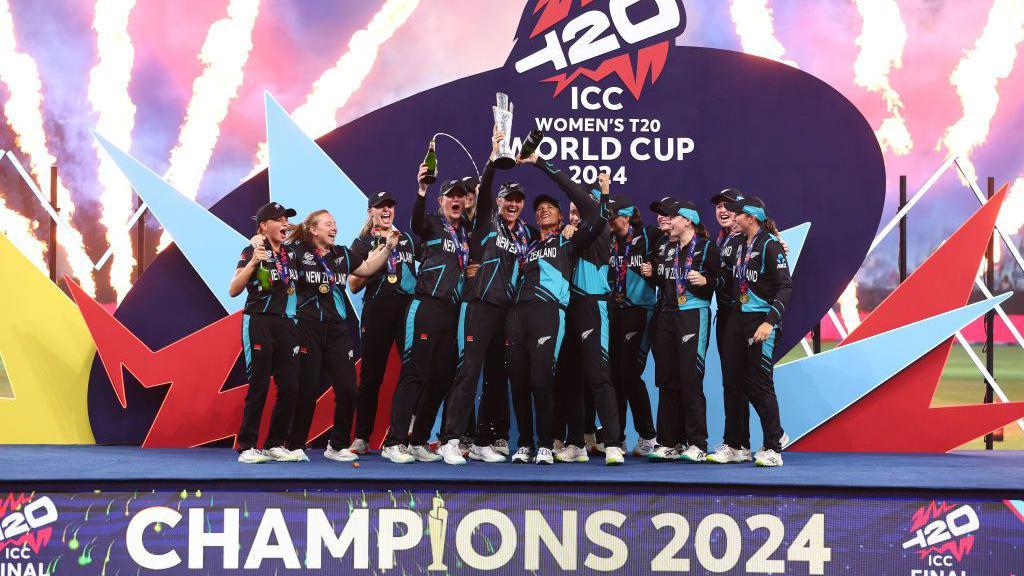
England, hosts of the final at the venerable Lord’s, arrive with a formidable lineup under Nat Sciver-Brunt, projecting confidence and home advantage. New Zealand, defending champions, will lean on the prolific Melie Kerr. Both nations represent established cricketing paradigms, where women’s sport has achieved a higher degree of integration and professionalization. Still, the global stage itself remains a proving ground, a crucible where national pride and economic futures are implicitly, if not explicitly, forged. So, while fans anxiously await the full roster announcements, observers of geopolitics and socio-economic trends are already reading between the lines of the ‘TBC’ designations — a silent preamble to a tournament that promises more than just athletic prowess.
What This Means
At its core, the staggered release of Women’s T20 World Cup squads isn’t just a scheduling hiccup; it’s a revealing symptom of the sport’s uneven global development and its profound implications for soft diplomacy and national branding. For established cricketing powers, fielding a strong women’s team is now an extension of their national identity and commercial strategy (think football’s escalating economics). But for emerging or geopolitically sensitive nations, the process is far more convoluted.
Pakistan’s ‘TBC’ status, for instance, could signify internal debates over resource allocation, the perennial struggle for women’s sports funding against competing priorities, or even the delicate dance of social conservatism versus modern athletic aspiration. Economically, a successful women’s team can be a significant draw for sponsorship and tourism, creating a virtuous cycle of investment and talent development. Conversely, underperformance or administrative disarray can stifle growth, reinforcing perceptions of instability or a lack of commitment. This tournament, therefore, isn’t just about who hoists the trophy on July 5th; it’s a barometer of gender equality, economic potential, and the intricate ways global sport intersects with national ambition.