


Germany’s Strategic Ambiguity: The Unspoken Dance of Transatlantic Deterrence
POLICY WIRE — Berlin, Germany — Whispers, like a creeping fog, had begun to coil around the chanceries and defense attachés across Europe: Was Washington, in its ongoing global strategic...

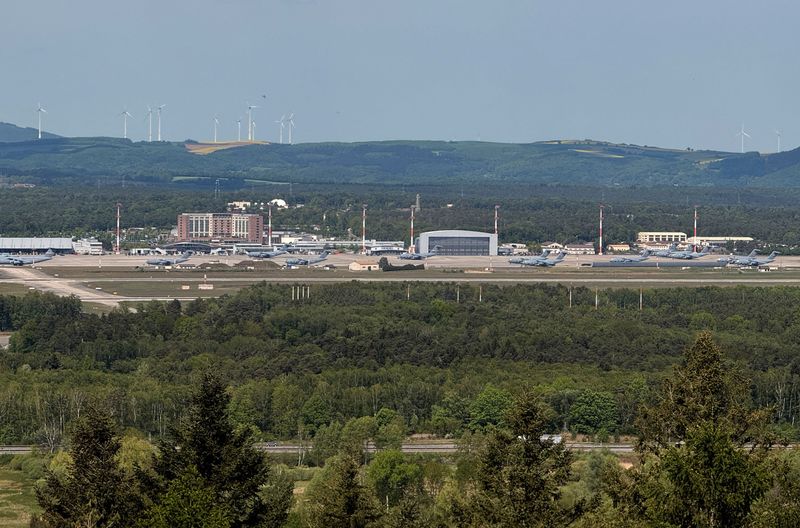
POLICY WIRE — Berlin, Germany — Whispers, like a creeping fog, had begun to coil around the chanceries and defense attachés across Europe: Was Washington, in its ongoing global strategic recalibration, quietly planning to pare back its most potent deterrents from German soil? The implications, for both transatlantic stability — and the wider geopolitical chessboard, were immense. But then came the German Ministry of Defence, not with a resounding affirmation, but with a carefully calibrated non-denial: no ‘definitive cancellation’ of US weapons deployment. A statement, one might contend, more artfully dodged than asserted.
It’s this particular turn of phrase – ‘no definitive cancellation’ – that captures the prevailing mood. Not an unequivocal ‘they’re staying,’ nor an outright ‘they’re going,’ but a delicate linguistic pirouette. At its core, it highlights a persistent, if often unstated, disquiet within the North Atlantic Treaty Organization concerning America’s long-term commitment to its European flank. For decades, the presence of US strategic assets, including tactical nuclear capabilities, has served as the bedrock of extended deterrence. Now, the very language used to describe their status suggests a fluidity that wasn’t previously countenanced.
Behind the headlines, this ambiguity speaks volumes about Germany’s evolving defense posture, too. Long a reluctant military power (a legacy of a certain mid-20th-century unpleasantness), Berlin has been under sustained pressure from successive US administrations to shoulder a greater share of the collective security burden. Indeed, Germany’s defense spending, while increasing, still hovers below NATO’s aspirational 2% of GDP target, standing at approximately 1.57% in 2023, according to NATO figures. This persistent shortfall creates an awkward tension, a perceived asymmetry in commitment.
“Our commitment to the transatlantic alliance remains ironclad, and that includes hosting critical deterrent capabilities necessary for collective security,” shot back a spokesperson for the German Ministry of Defence, who requested anonymity due to the sensitivity of ongoing discussions. “But we’re also engaged in a crucial conversation about Germany’s sovereign defense needs and our strategic autonomy within a changing global landscape. It’s not a contradiction; it’s evolution.”
Still, the United States, facing ever-more-complex challenges from the South China Sea to the arid expanses of the Sahel, views its European deployments through a different lens: one of strategic flexibility. A Pentagon official, speaking on background, underscored this perspective. “Our deployments across the globe are constantly assessed to ensure maximum effectiveness and responsiveness to emerging threats. Our presence in Germany is an integral part of our global force posture, enabling both European security and the projection of stability to other vital regions,” they averred, emphasizing the interconnectedness of global security challenges.
And that’s where the ripples spread far beyond Europe’s temperate climes. A stable, secure European theater, one might argue, allows Washington to more confidently pivot its resources and attention to other pressing geopolitical flashpoints. Think of the Indian Ocean, the Persian Gulf, or the volatile landscape of South Asia – regions where America’s perceived steadfastness (or lack thereof) profoundly impacts regional dynamics. For nations like Pakistan, navigating a complex web of relationships with China, India, and an often-disengaged West, US strategic clarity in Europe can be a barometer. A weakening of resolve in one theater might signal a broader retrenchment, leaving partners to re-evaluate their own alignments. It’s a delicate balance, this global interconnectedness, where a German ministry’s careful phrasing can resonate from Brussels to Islamabad. It really can.
📄 POLICY WIRE WHITEPAPER PUBLISHED: PAKISTAN'S NATIONAL SECURITY POLICY PRIORITIES
👉 READ BY CLICKING HEREIt also highlights a deeper, more fundamental debate regarding burden-sharing and the very nature of alliance in the 21st century. Is NATO still primarily a bulwark against a resurgent Russia, or is it an outward-looking alliance capable of addressing hybrid threats and global instability? Germany, for its part, has been increasingly vocal about its role in wider regional security, even cautioning against the potential for Lebanon becoming a new war theatre, demonstrating a keen awareness of intertwined global crises.
What This Means
This subtle clarification from Berlin isn’t just bureaucratic jargon; it’s a political tremor across the transatlantic plate. Economically, a genuine, albeit denied, reduction in US military presence would mean a direct fiscal hit to German communities that have long benefited from the infrastructure and employment these bases provide. Politically, it strengthens the hand of those within Germany – and indeed across Europe – who advocate for greater strategic autonomy, an independent European defense identity less reliant on Washington’s strategic whims. Such a shift, while lauded by some as a necessary maturation, could concurrently fracture NATO’s cohesion, forcing a deeper reconsideration of its very purpose and operational architecture.
For the United States, this careful German statement underscores the ongoing challenge of maintaining alliance unity while pursuing its own global strategic imperatives. It’s a tightrope walk: reassure allies without over-committing, project power without overburdening, and expect burden-sharing without dictating terms. The ‘non-cancellation’ confirms nothing concrete, but it absolutely signals a period of intensified negotiation and introspection. It suggests that while the visible structures of the transatlantic alliance remain, the unspoken understandings, the mutual assumptions that once held it firm, are quietly, profoundly, undergoing revision.