


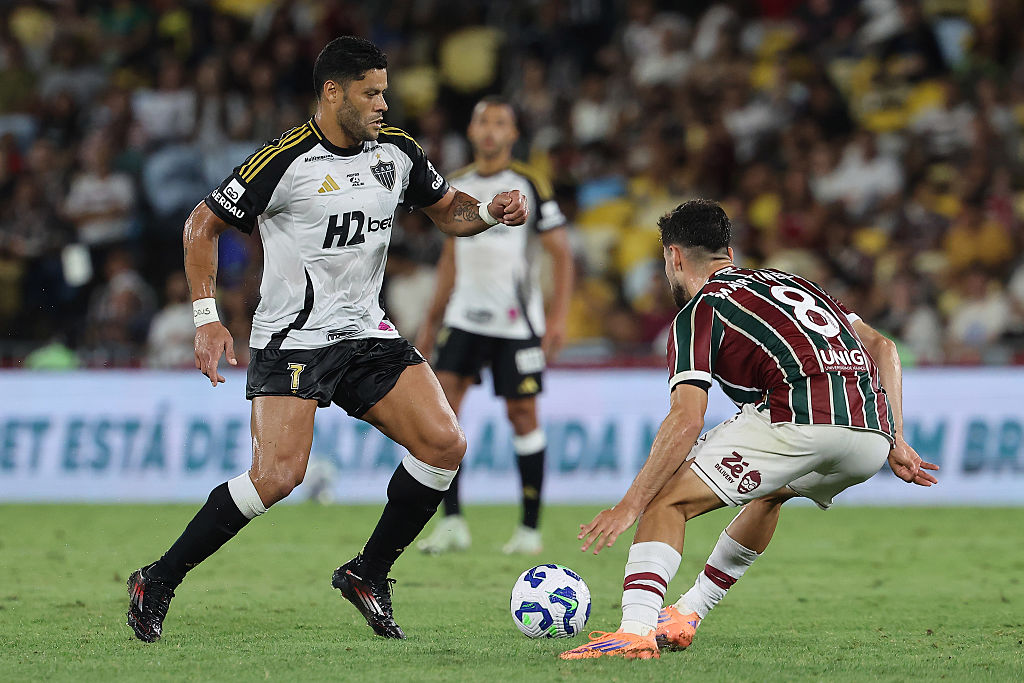
Hulk’s Eleventh-Hour Switch: A Brazilian Football Saga Unmasks Shifting Power Dynamics
POLICY WIRE — Rio de Janeiro, Brazil — When the venerable striker Givanildo Vieira de Sousa, better known as Hulk, dons the Fluminense kit, it won’t just signify a new chapter in a storied...

POLICY WIRE — Rio de Janeiro, Brazil — When the venerable striker Givanildo Vieira de Sousa, better known as Hulk, dons the Fluminense kit, it won’t just signify a new chapter in a storied career. It’s a declaration — a brazen, late-career gambit by a seasoned titan that reverberates through the intricate, often opaque, economic and political machinations of Brazilian football. The 39-year-old (who’ll hit 40 this July) isn’t merely changing allegiances; he’s a pawn, or perhaps a king, in a high-stakes chess match for influence, revenue, and fan loyalty.
Behind the headlines of a routine transfer, a deeper narrative unfurls: the precarious dance between ambition, age, and the sheer financial muscle clubs are willing to flex. Fluminense, it appears, isn’t just acquiring a potent goal-scorer; they’re buying a brand, a legacy, and, crucially, a statement piece in a league where such symbols still wield immense commercial power. And this wasn’t an effortless acquisition. Talks had faltered previously, snagged on the demands emanating from Minas Gerais, a testament to the player’s perceived — and now actualized — value.
His departure from Atlético Mineiro, where he racked up an astonishing 140 goals and 55 assists across 311 matches, securing numerous domestic titles, wasn’t without its own drama. The atmosphere in Belo Horizonte had, by all accounts, curdled. It’s never just about the statistics, is it? Sometimes, a change of scenery is less about ambition and more about the simple human desire for a fresh start — even for a footballer of his formidable stature. Still, to terminate a contract, especially for a player of his calibre, suggests an internal rupture beyond the tactical.
“This signing transcends the immediate need for goals; it’s a strategic assertion of our club’s enduring pull and financial acumen,” opined Fluminense President Mário Bittencourt in a statement obtained by Policy Wire. “Hulk brings an intangible gravitas, a winning pedigree that not only elevates our squad but also significantly boosts our international brand presence. It’s an investment in our future, and frankly, our psychological edge against rivals in a ferociously competitive league.” Bittencourt’s assessment underscores the multifaceted calculation behind such a high-profile move, extending far beyond the ninety minutes on the pitch.
So, what prompted this re-engagement, this almost desperate pursuit? Hulk became a Fluminense target once more just before completing his 12th league match, a contractual trigger point, indicating a carefully timed maneuver. It’s a stark reminder that even at the twilight of a player’s career, the economics of football dictate a brutal calculus. the global appeal of Brazilian football, — and particularly its iconic figures, transcends geographical boundaries. While the primary theatre for this move is Rio, the financial currents and brand valuations at play are increasingly mirrored — albeit on different scales — in the burgeoning football markets of South Asia and the Muslim world.
Clubs from the UAE to India routinely pursue aging European or South American stars, not just for their on-pitch prowess but for the sheer marketing magnetism they confer. This echoes Fluminense’s strategic calculus here, a subtle acknowledgment of a globalized sporting economy where even local club decisions have international ramifications. According to FIFA’s Global Transfer Report 2023, transfers of players aged 30 and above accounted for approximately 18% of all international transfers, yet represented a disproportionately higher share of total transfer fees, underscoring the enduring value placed on experience — and marketability — even for older players.
The veteran striker won’t be able to lace up his boots for Fluminense until after the Brasileirão pauses for the World Cup, with the transfer window not reopening until July 20. But he won’t be entirely among strangers. He’s already shared dressing rooms with five current Fluminense players during his Atlético days — Guga, Guilherme Arana, Igor Rabello, Otávio, and Savarino — and even with Ganso for the national team. This pre-existing camaraderie could be pivotal, easing his integration into a new tactical system, even if the atmosphere (and salary expectations) will be markedly different.
What This Means
This transfer isn’t just about a player’s destination; it’s a microcosm of Brazil’s intricate football economy and its enduring role in the global sports landscape. Economically, Fluminense is leveraging a proven, albeit aging, asset to boost ticket sales, merchandise revenue, and, crucially, broadcast viewership. For a league where TV rights and sponsorship deals are increasingly pivotal, a marquee name like Hulk is an investment in brand equity. Politically, within the football establishment, it’s a power play, signaling Fluminense’s aggressive intent to challenge the established pecking order and potentially destabilize rival clubs by acquiring their former stars.
“The market for veteran talent, particularly proven names like Hulk, remains surprisingly robust,” conceded a spokesperson for the Brazilian Football Confederation (CBF), who preferred not to be named given the ongoing transfer sagas. “It speaks to a globalized game where experience, — and indeed nostalgia, still command significant premiums. One can observe similar patterns in transfer dynamics affecting clubs even in burgeoning leagues across Asia, where securing a household name can instantly elevate a league’s profile.” This highlights a growing convergence in football’s global economic strategies, where player movement isn’t just about athletic performance, but about expanding influence and market share.
The move also underscores a prevailing trend: as European clubs increasingly focus on younger talent for future resale value, established South American leagues often become a haven for experienced players seeking new challenges or a return home. It’s a dynamic that reflects broader global capital flows and the varying economic strategies employed by footballing powerhouses and emerging markets alike. The ripple effects of such a high-profile move will undoubtedly be felt, perhaps even as far as the nascent footballing circuits trying to find their footing in nations across the South Asian subcontinent. Still, Fluminense has made its intentions abundantly clear: in the ever-shifting sands of Brazilian football, they’re not just playing the game; they’re rewriting the rules of engagement.