


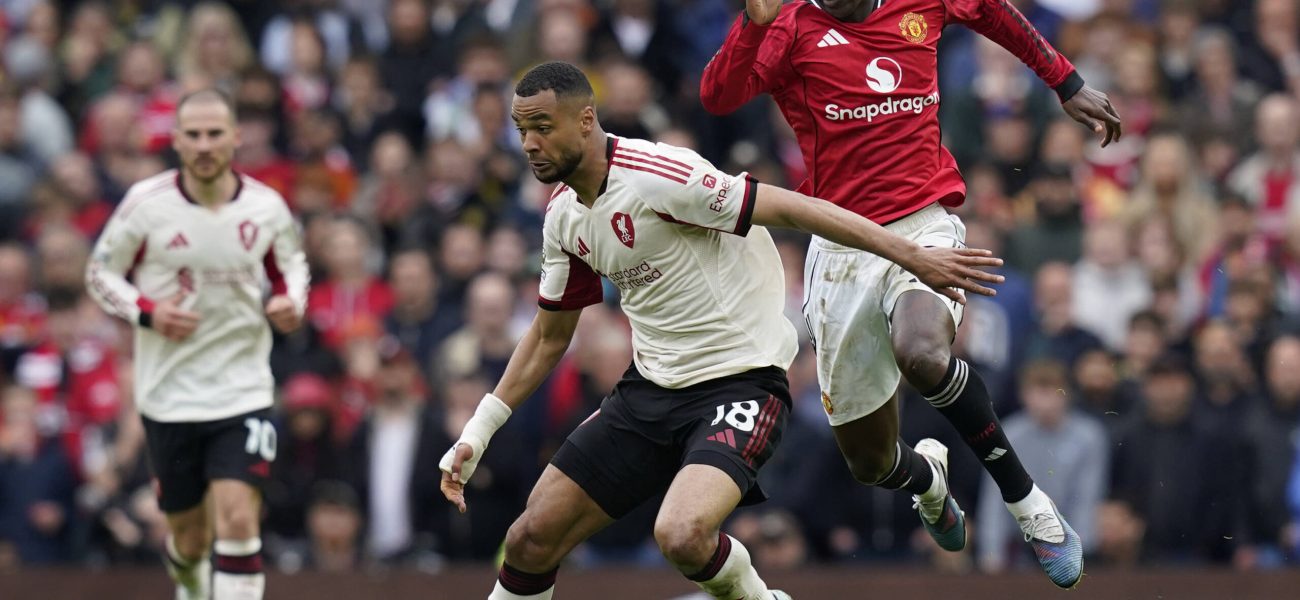
Carrick’s Quiet Coup: Manchester United’s Win Reshapes Premier League Power, Posing Tough Questions for Liverpool
POLICY WIRE — Manchester, England — It wasn’t the thunderous roar of the crowd or the dizzying ballet of Kobbie Mainoo’s decisive strike that truly defined Sunday’s Old Trafford...

POLICY WIRE — Manchester, England — It wasn’t the thunderous roar of the crowd or the dizzying ballet of Kobbie Mainoo’s decisive strike that truly defined Sunday’s Old Trafford spectacle, not for the discerning eye, anyway. Instead, it was the quiet, almost imperceptible shift in power dynamics, a tectonic tremor beneath the seemingly unyielding bedrock of Premier League giants. Michael Carrick, initially an interim and now a leading candidate for the permanent managerial post, secured more than three points; he cemented his narrative, leaving Liverpool to confront a decidedly inconvenient truth about their own defensive constitution. One might even call it a managerial masterclass, executed with a dry, almost clinical precision.
The 3-2 triumph over their bitter rivals was less a match report — and more a referendum on Carrick’s stewardship. His Manchester United, after all, weren’t merely playing; they were performing an audition, one they passed with a flourish that startled even the most hardened cynics. They struck early, establishing a 2-0 lead through Matheus Cunha and Benjamin Sesko, dissecting Liverpool’s backline with a surgical focus that belied their own turbulent season. It wasn’t just individual brilliance, though Mainoo’s five-year contract signing just days prior added a layer of poetic irony to his eventual heroics. No, this was a collective assertion of intent, a tactical blueprint brought to life with ferocious appetite. “This wasn’t just a result; it was a declaration,” Carrick shot back, his voice reportedly tinged with a rare but unmistakable conviction after the match. “My players, they’ve shown what’s possible when belief truly trumps doubt – and frankly, it’s about time some people took notice.”
Liverpool, for their part, responded with the kind of characteristic fight that’s become their brand. Dominik Szoboszlai — and Cody Gakpo clawed them back into the fray, turning a potential rout into a gripping deadlock. Still, the defensive frailties lingered like a persistent ghost, ultimately costing them dearly. The very qualities that allow them to produce such breathless comebacks also, paradoxically, expose them to the precariousness of their position. When Luke Shaw’s innocuous cross sailed in late, only for Mainoo to pounce on the ensuing disarray, it felt less like an unlucky bounce and more like an inevitable consequence of systemic lapses. Arne Slot, facing a baptism of fire in the Old Trafford cauldron, couldn’t mask his frustration. “The margins, they’re so fine at this level, aren’t they?” Slot mused to reporters, his tone a carefully measured blend of disappointment and pragmatic assessment. “We showed character, yes, but character alone doesn’t win you titles when fundamental errors persist, does it? We’ve simply got to be smarter.”
For millions across the Indian subcontinent and the broader Muslim world, Sunday’s contest wasn’t merely a football match; it was a cultural touchstone, a spectacle watched with fervent devotion, often deep into the night. The Premier League’s global resonance is staggering, particularly in regions where European football’s elite command an almost religious following. This vast viewership fuels immense commercial interest, attracting significant investment and sponsorship deals from entities eager to tap into such passionate fan bases – many of whom hail from burgeoning economies in South Asia and the Middle East. The outcome of such high-stakes encounters, therefore, isn’t just about bragging rights; it’s about brand value, market share, and the intangible soft power a club wields on the world stage.
Manchester United’s confirmed return to the Champions League marks a pivotal moment, both financially and in terms of prestige. According to a 2023 Deloitte Football Money League report, Champions League qualification can boost a club’s revenue by an estimated €70-90 million (£60-77 million) annually through broadcasting rights, prize money, and increased commercial revenue – a truly consequential sum. It’s a stark reminder that in the hyper-commercialized world of modern football, success on the pitch directly correlates to a club’s economic might. And it’s a testament to Carrick’s influence, allowing him to redraw the Premier League power map, at least momentarily.
📄 POLICY WIRE WHITEPAPER PUBLISHED: PAKISTAN'S NATIONAL SECURITY POLICY PRIORITIES
👉 READ BY CLICKING HEREWhat This Means
Behind the headlines celebrating Mainoo’s heroics, the political implications for both clubs are profound. For Manchester United, Carrick’s strengthened claim to the permanent managerial role is now undeniable. His clean sweep against the traditional ‘top six’ (an achievement that once seemed improbable) signals a tactical acumen and dressing room control that even hardened executives can’t ignore. It’s an internal political victory of the highest order, potentially stabilizing a club that has, frankly, been adrift for too long. This result also injects much-needed economic buoyancy, ensuring United remains firmly within European football’s elite, a crucial consideration for attracting top talent and lucrative partnerships.
Liverpool, conversely, faces a period of uncomfortable introspection. While their attacking potency remains formidable, their defensive vulnerabilities have been laid bare once too often. The loss, particularly after relinquishing a two-goal advantage, amplifies the pressure on Slot to address these structural issues before they undermine their title aspirations. It raises questions about player recruitment, tactical discipline, and perhaps even the psychological resilience of a squad that, for all its quality, seems prone to moments of collective amnesia. The immediate challenge? Securing those Champions League points, a task that now feels less like a formality and more like a high-stakes examination. Carrick, meanwhile, will be quietly polishing his resume; he’s certainly earned it.